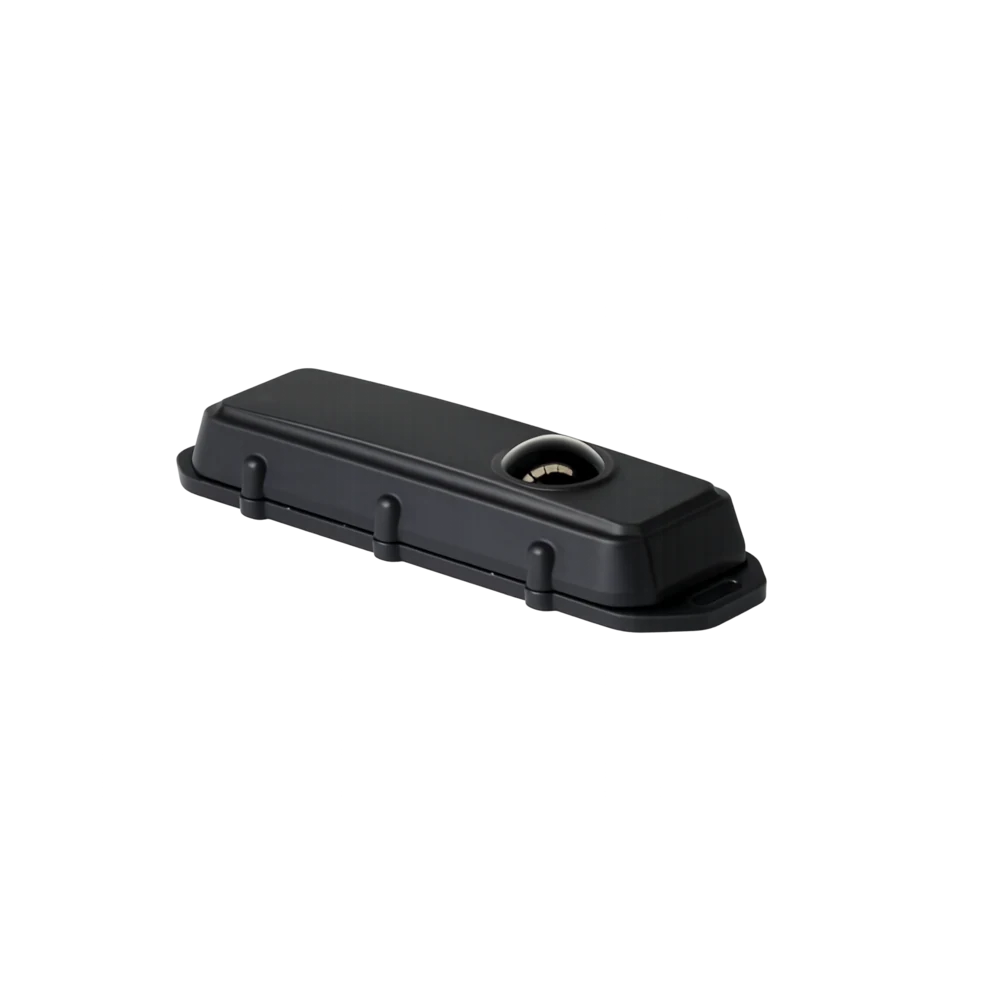
BARRA-RADAR-BLE · Wireless trackers
Barra Radar BLE
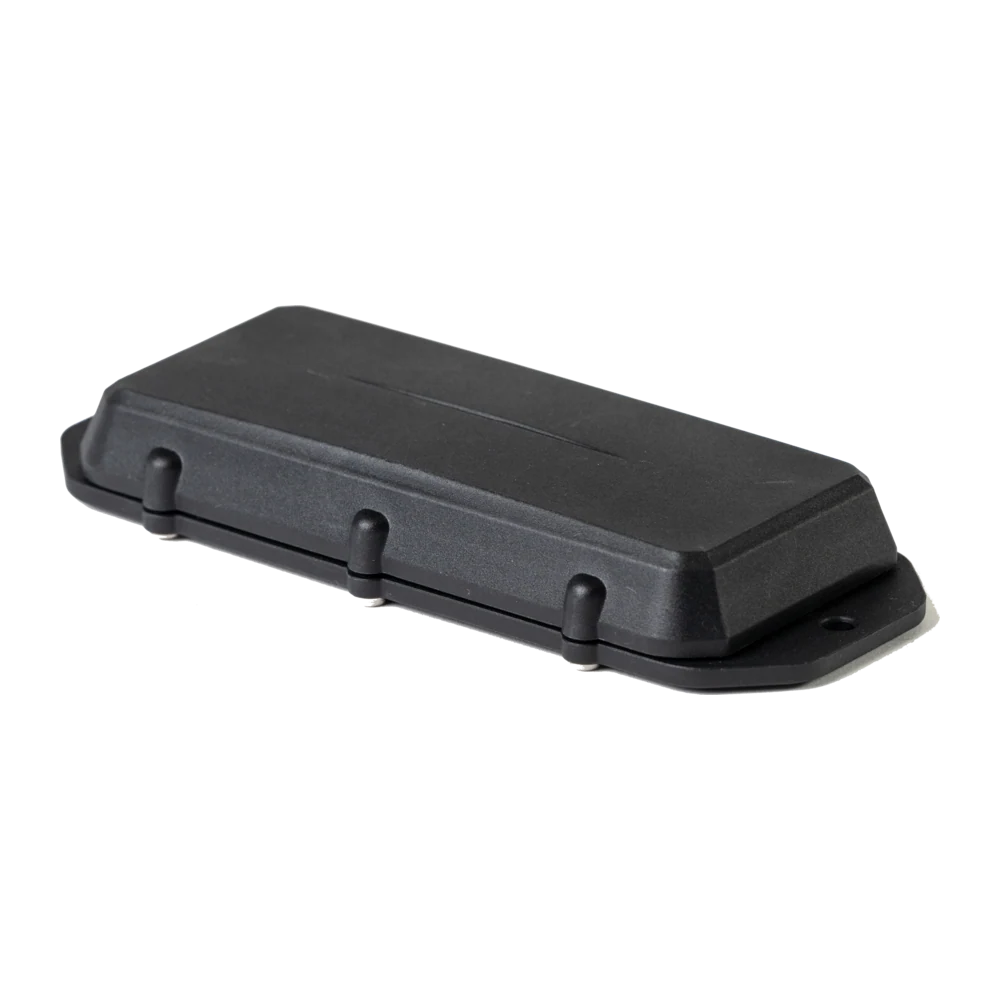
Object and Level Detection via Radar Bluetooth device in Barra form-factor (batteries not included)
IN STOCK · ZAR
HomeSolutionsWireless Asset TrackingWireless Trailer Tracking
Operating layer · Solution
Battery powered GPS tracking for utility, camping, flatbed and bike trailers in South Africa. Towing alerts, geofences and a control room recovery workflow.
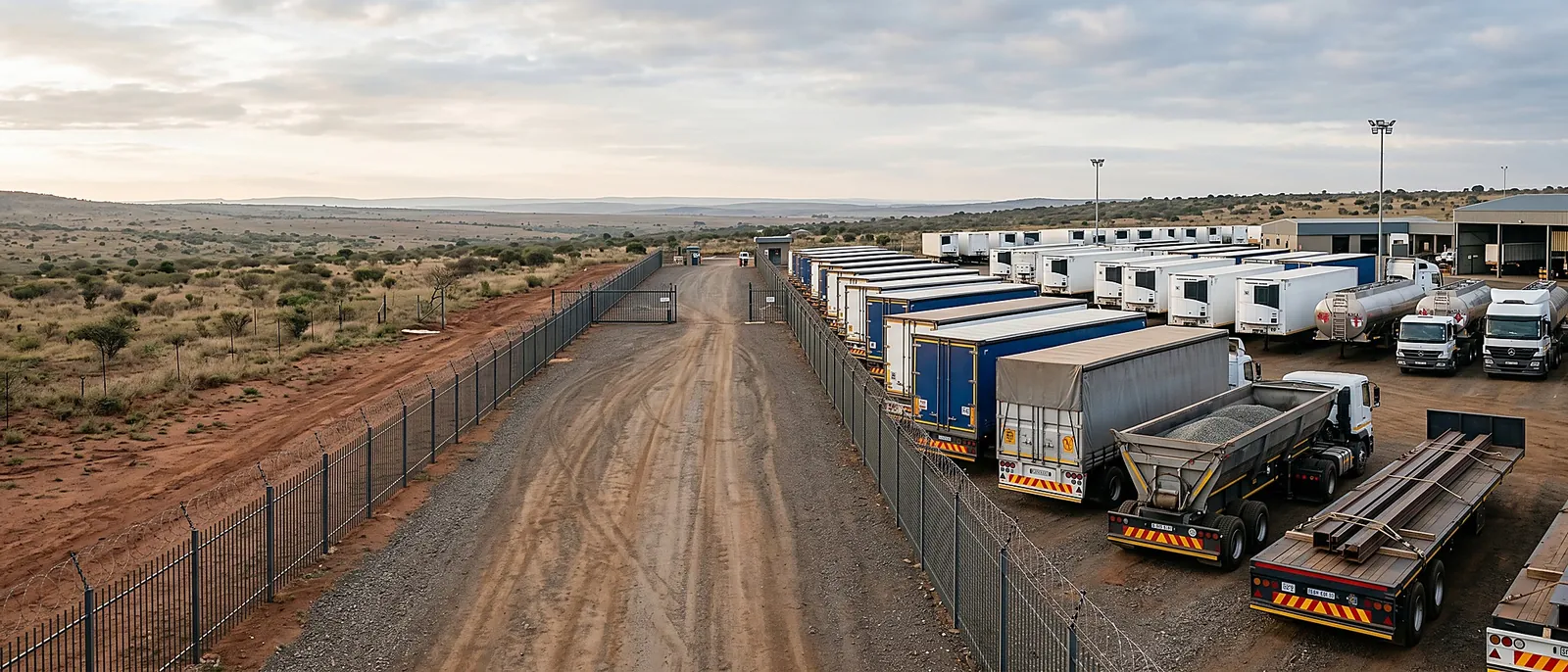
Every trailer in your fleet, or in the driveway at home, sits on one map with one alert feed. A battery powered GPS device fitted out of sight on the chassis reports motion, towing and geofence breach to TG Mobile and the control room at the same moment. Storage on a Tuesday afternoon, the Friday trip to the coast and the long-weekend driveway all run through the same record, with the device awake when it needs to be and asleep when it does not.
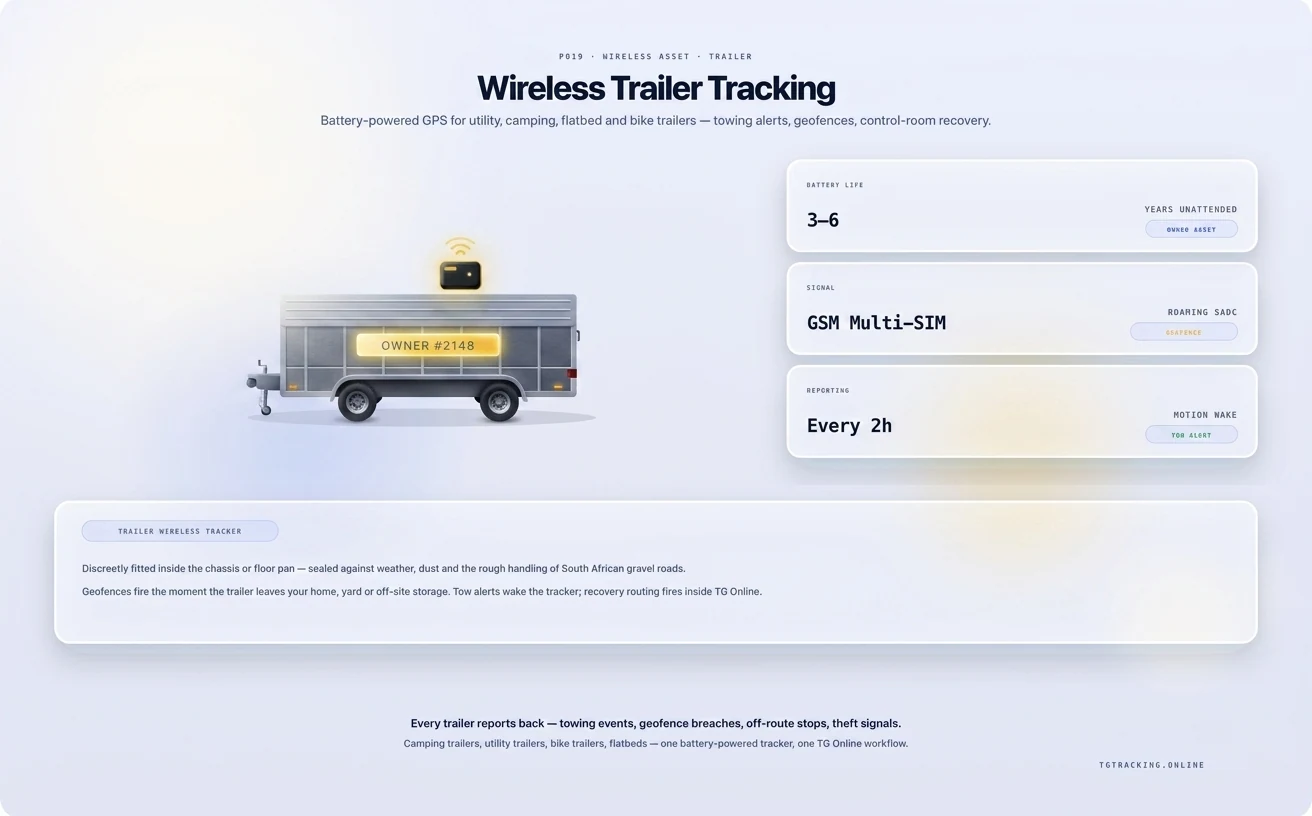
Wireless trailer tracking from TG Tracking puts a battery powered GPS device on utility, camping, off-road, flatbed, bike and recreational trailers. There is no wiring, no power draw on the tow vehicle, and no installation appointment. The device alerts on motion, towing and tampering, fires geofence breach notifications the moment the trailer leaves a defined safe zone, and feeds a control room recovery workflow. Sits on the same account as your Asset, Hobby and Trailer Tracking for personal use or Asset Tracking and Recovery for business use, both inside the broader wireless asset tracking product line.
A trailer recovery comes down to three timestamps in tight sequence: motion at the device, alert on the phone, recovery deployment on the ground. The wireless tracker is built to compress all three into the same few minutes. The device wakes from low-power sleep on unauthorised motion, fixes GPS, and reports over a multi-network SIM while the trailer is still inside the metro. The recovery network is route-aware and already lined up along the typical exit corridors.
Recovery time is what trailer owners are buying. Sustained motion outside the configured pattern triggers an alert immediately: the device wakes from low-power sleep, fixes GPS, sends the position over a multi-network cellular SIM and stays in high-frequency reporting mode until the trailer stops. The notification reaches the owner on the TG Mobile app and the control room dashboard simultaneously. If the owner cannot account for the motion, the control room is already on the line.
The recovery network in this country is route-aware. The control room knows which partner sits closest to the trailer's current heading and which national routes are the typical exit corridors out of each metro. Live position streams to the recovery team while they move; SAPS is engaged via the recovery partner where appropriate. The GPS dot is one input. The chain that turns it into a recovery is the deliverable.
The hardware family is one device. What changes is where it sits on the trailer and how the alerts are configured. Utility and box trailers are suburban driveway and yard staples; fitted inside a chassis member or under the floor pan, out of sight of a thirty-second look. Camping and off-road trailers including game trailers and 4x4 rigs spend weeks in storage and a few weekends a year on dirt; the device sleeps through the storage. Flatbed, side-tipper and bike trailers for construction, landscaping and weekend use benefit from multi-zone geofences with a separate alert per site. For full fleet trailer use cases see Commercial Trailer Tracking.
South African trailers live in residential driveways across Sandton, Bryanston, Constantia, Durban North and Pretoria East, and in self-storage units in light-industrial nodes around Wynberg, Roodepoort, Phoenix and Bellville South. Long weekends and the December and Easter periods spike the pattern, when owners travel and trailers stay home. The platform's storage profile is configured around exactly this duty cycle, so the device reports occasionally during quiet weeks and wakes immediately when something does move.
Exit corridors matter too. A stolen trailer in Joburg moves toward the N1 north, the N4 east or the N12 south west. A stolen trailer in Durban moves toward the N3 or the N2. A stolen trailer in Cape Town moves toward the N1 or the N7. Multi-network connectivity means the device keeps reporting through the gaps where one operator is weak.
Months to years depending on how often the trailer moves and how often the device reports. A weekend-use utility trailer reports more often than a long-stored game trailer, so the battery cycle is shorter. Replacement is a planned, not weekly, task.
Out of sight, somewhere with at least partial sky view for GPS. Common positions are inside a chassis box-section, under the floor pan, behind a mudguard liner or inside a sealed cable conduit. We recommend the right position based on the trailer build.
Most major South African insurers accept TG Tracking on trailers and recreational assets, and the platform issues the certificate. Confirm with your broker because every insurer has its own approved list.
Border-crossing alerts are a default option. The device continues reporting on roaming SIMs in neighbouring SADC countries where roaming is configured.
Tamper alerts fire on physical interference, vibration that suggests removal, or device casing breach. The alert hits the phone and the control room before the device goes silent.
Yes. Wireless trailer tracking is built for exactly this duty cycle: long static periods at a holiday property, occasional movement on a Friday afternoon, holiday access from elsewhere in the country.
A trailer earns its keep over weekends, builds and holidays. A monthly tracker subscription costs less than the diesel for a single weekend trip and keeps the trailer on your phone for every year the trailer is in the family.
Self-powered trackers with multi-year battery life for trailers, containers, equipment and high-value assets.
Object and Level Detection via Radar Bluetooth device in Barra form-factor (batteries not included)
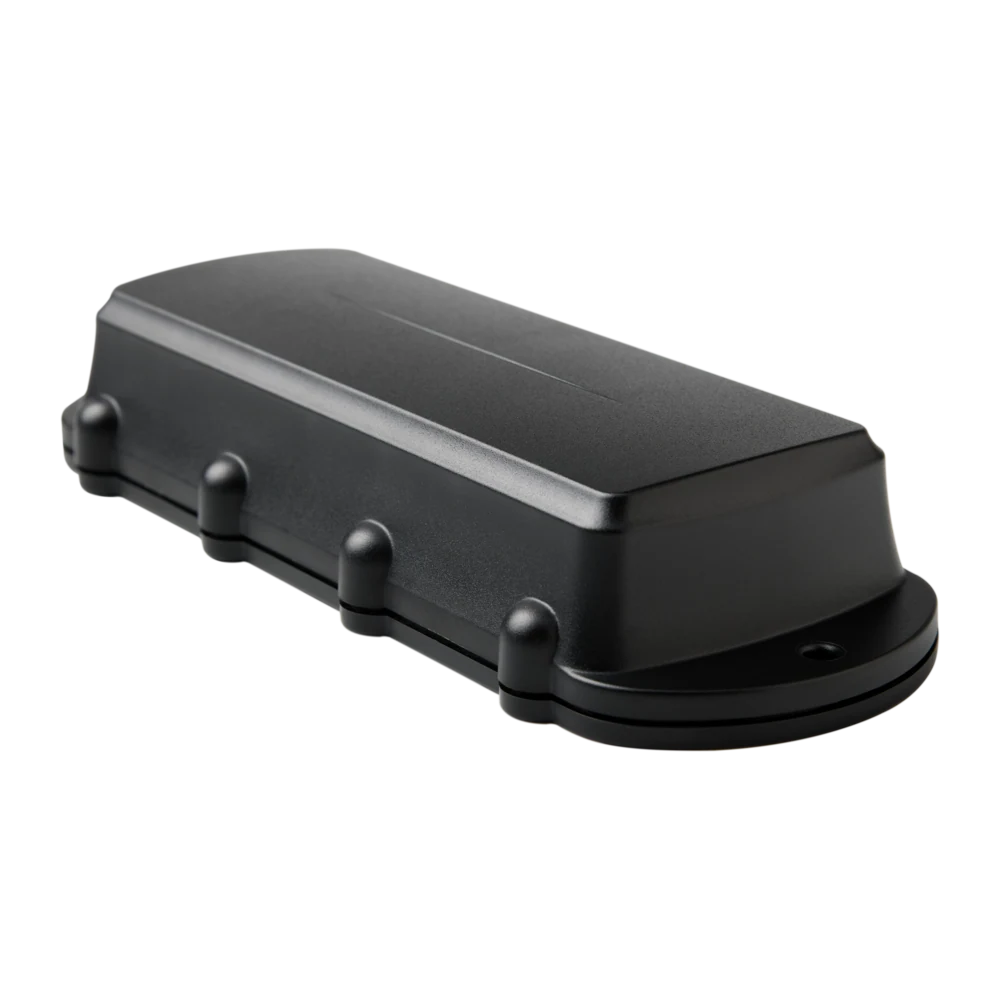
Remora3 Global GPS tracker on 4G Cat1bis with 2G fallback, Bluetooth 5.2 gateway
Remora3 GPS tracker on 4G LTE-M / NB-IoT with Bluetooth 5.2, massive battery life
Manta form-factor GPS-only tracker on 4G LTE-M / NB-IoT
Tell us what you run, where you run it and the risk profile. We'll match the hardware, platform and rollout plan to your operation.