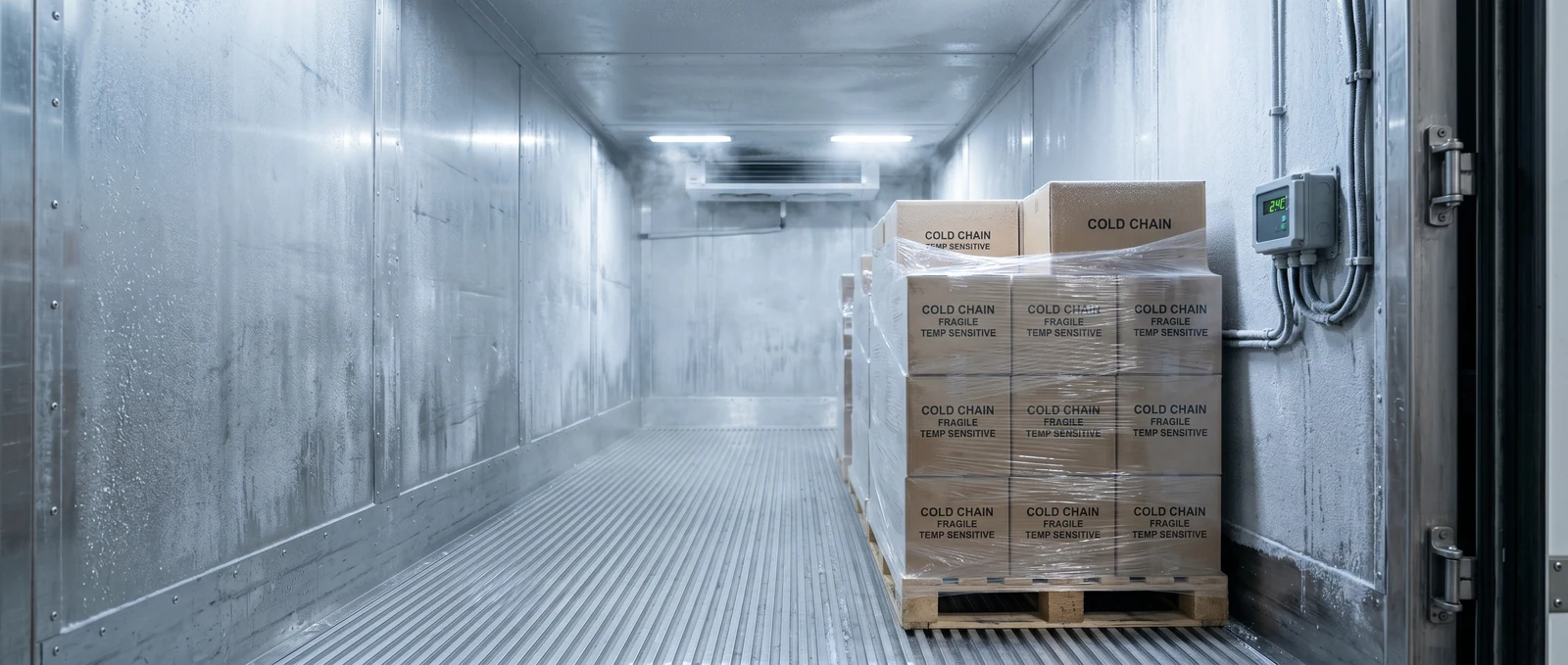
A reefer trailer leaves a Cape Town packhouse on Sunday afternoon with 22 pallets of citrus bound for the Durban port and a vessel sailing on Wednesday. At 03:14 on Monday morning, on the descent into Van Reenen's Pass, the compressor cycles off for nine minutes longer than the duty cycle says it should. Two pallets near the rear door warm by 1.4 degrees. The buyer in Rotterdam will reject any pallet outside spec at the other end. The difference between a delivered load and a rejected one is the alert that fires inside that nine-minute window, plus the temperature record proving the rest of the trip held spec.
Direct answer
TG Tracking Temperature and Cold Chain Monitoring covers refrigerated transport, cold storage, food production, server rooms and farming temperature applications on a single IoT sensor platform. Live multi-zone readings, threshold alerts, humidity and door sensing, compliance-ready logs and exportable reports run on the same platform as your Fleet Tracking and Management, Trailer Management and Business Intelligence Dashboards. For a deeper dive by application, see the sub-clusters below.
What cold-chain monitoring actually does
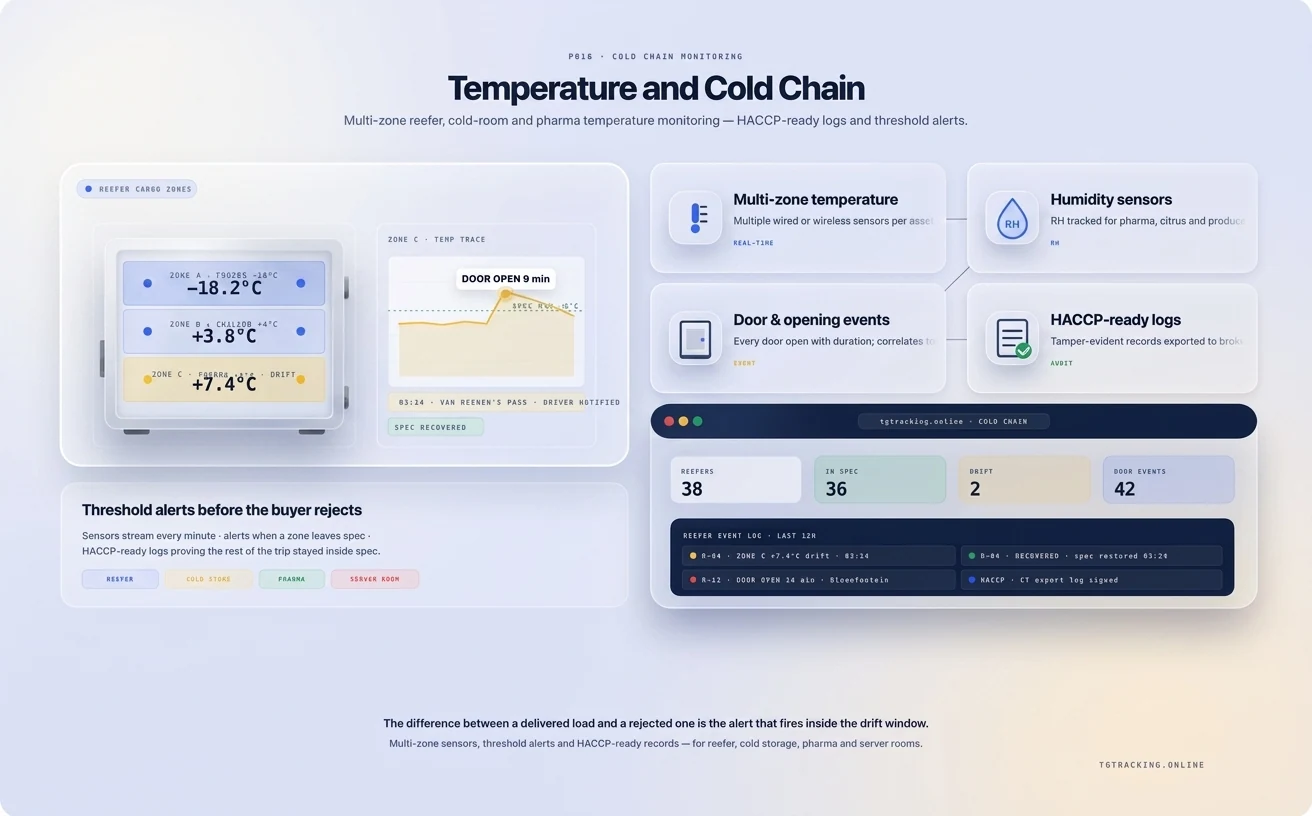
The platform watches temperature, humidity, door state and power state on every monitored zone, in real time, with audit-grade logs.
Live multi-zone readings
A reefer trailer typically runs front and rear zones, with pallet-level sensors where mixed loads make zone averages misleading. Cold rooms run zone sensors per chamber. Each sensor reports continuously; the platform stores every reading and surfaces graphs by zone, by trip, by date range and by load.
Threshold and deviation alerts
You set a safe range per zone and per cargo type. Breaches trigger SMS, email, app push notifications and API alerts to the people you designate, with an escalation tree if the first responder does not acknowledge. The alert carries the zone, the current reading, the trend and the location.
Door, humidity and power sensors
Door-open events in transit. Humidity drift outside the spec window for produce and pharma. Compressor power loss on a reefer or a generator-fed cold room during load shedding. Each one is a separate sensor input and a separate alert profile.
Compliance-ready logs and reports
Continuous time-stamped records, route-linked temperature history, automated compliance logs, PDF and Excel export and customer-facing delivery reports. The HACCP-style audit trail your QA team needs is a download rather than a project.
Cold-chain applications: where the platform is used
Cold-chain monitoring is one platform with five operating contexts. Each has its own sub-page with the configuration, sensor mix and reporting approach for that context.
Refrigerated transport
Reefer trailers, refrigerated trucks and refrigerated vans on long-haul, regional and last-mile routes. Citrus and stone-fruit exports, frozen and chilled retail distribution, ice-cream, dairy, meat and seafood. The full transport story is on Refrigerated transport, which sits under this pillar page.
Cold storage
Standalone cold rooms, multi-chamber storage facilities and distribution-centre cold zones. Multi-zone monitoring, door-open auditing and load-shedding power-loss detection. The storage story is on Cold storage.
Food production
Production-line chillers, blast freezers, pasteurisers and HACCP-controlled production environments. Continuous logs that match the audit trail your food safety officer is asked for at every external audit. See Food production.
Server rooms
IT data centres, server cabinets and edge sites where temperature and humidity drift outside spec is a hardware-failure precursor rather than a food-safety problem. The same sensor stack does the job. See Server rooms.
Farming
Greenhouse temperature and humidity, livestock-housing temperature, post-harvest cold storage on the farm, dairy bulk tanks and grain silos. The farming application is on Farming temperature monitoring.
Why TG Tracking for cold chain: the unbroken record
Cold-chain monitoring is not just about catching the breach. It is about being able to prove, in a way that survives audit, that the breach was caught and the rest of the load was inside spec.
A fragmented stack means a sensor vendor's portal, a reefer manufacturer's console, a fleet platform's GPS log and a QA team's spreadsheet, none of which line up at the time of a customer dispute or an audit. TG Tracking puts the temperature, humidity, door, power, GPS, trip and driver record in one timeline. When a load arrives at a customer in Rotterdam, Cape Town, Maputo or Durban with a query, the proof of an unbroken chain is one report rather than four. When a QA auditor asks for the last 90 days of cold-room readings on the seafood freezer at a Western Cape factory, the export is a click. When an insurer asks why a load was rejected, the temperature curve, the door event, the power loss and the GPS position are on the same page.
That single integrated record is what makes the platform a cold-chain system rather than a temperature gauge.
South African cold-chain context
South African cold chains operate under specific pressures: long inland distances from coastal ports to inland customers and the reverse for the export load, ambient temperatures from the Karoo summer to the Highveld winter, intermittent grid power that has put load-shedding-aware genset switching into almost every cold-storage facility, and a customer base that increasingly includes EU and UK importers with their own audit requirements.
The platform handles those realities. Multi-network connectivity covers the long inland routes between coastal packhouses and inland customers, including the citrus run between the Western Cape and the Durban port, the stone-fruit and grape exports from the Hex River valley, the meat distribution loops between the Highveld and the coast, and the seafood corridor between Saldanha and Cape Town markets. Power-loss alerts on cold storage during load shedding give the operator a chance to act before product is lost. Cross-border deliveries into SADC are supported on roaming-enabled hardware. Compliance exports are formatted to satisfy local food safety, pharmaceutical and customer-specific standards, with the regulatory updates baked into the templates.
Frequently asked questions
How many temperature zones can I monitor on one reefer?
A typical reefer runs two to four zones. The platform supports more, including pallet-level monitoring for mixed loads where a single zone average would hide a problem. The right sensor count is decided per cargo profile.
What is the difference between this and a reefer manufacturer's own sensor?
Reefer manufacturers' on-board systems typically log to the unit and to the manufacturer's portal. The TG Tracking system runs alongside or replaces those, with the data joined to the GPS track, the driver, the trip, the door and the power state. The integrated record is what wins disputes; a unit-only log does not.
Will the system catch a compressor failure?
A compressor failure shows up as a temperature drift relative to ambient and as a power-state event where the power sensor is fitted. Both fire alerts. The earlier the alert, the more chance the operator has to intervene before the load is lost.
Does it work for pharmaceuticals?
Yes. Vaccines, medicines, diagnostics, laboratory materials and sensitive medical supplies all sit in the platform's pharmaceutical configuration. Specific local pharmaceutical cold-chain compliance, including any current MCC or SAPRA reference, is reviewed during onboarding to make sure the report templates match what your auditor asks for.
What happens to data when the vehicle is out of cellular coverage?
The device caches readings locally and uploads when signal returns. The audit log does not have a gap; the readings are time-stamped at the moment they were taken, not at the moment they were uploaded.
Can I share cold-chain reports with my customer?
Yes. Customer-share links and per-load delivery reports are part of the platform. The level of detail and the duration of the share are configurable per customer.
Do you handle load-shedding power loss on cold rooms?
Yes. Power-loss detection on cold rooms and on genset-fed sites is a separate sensor input. The alert distinguishes between grid loss with genset cut-in and full power failure where the genset has not started. The control room is reachable on the high-severity alert.
Talk to our cold-chain team
If your cargo is temperature-sensitive and your customers, your auditors and your insurers all want proof of an unbroken chain, the system you choose is the system your evidence runs on. Book a cold-chain demo and we will walk you through reefer monitoring, cold-room monitoring and the compliance export with your specific cargo and route in mind.
Recommended hardware
The right tracking layer for temperature and cold chain monitoring.
Vehicle, asset, driver and reporting hardware tuned to the way real businesses run fleets.
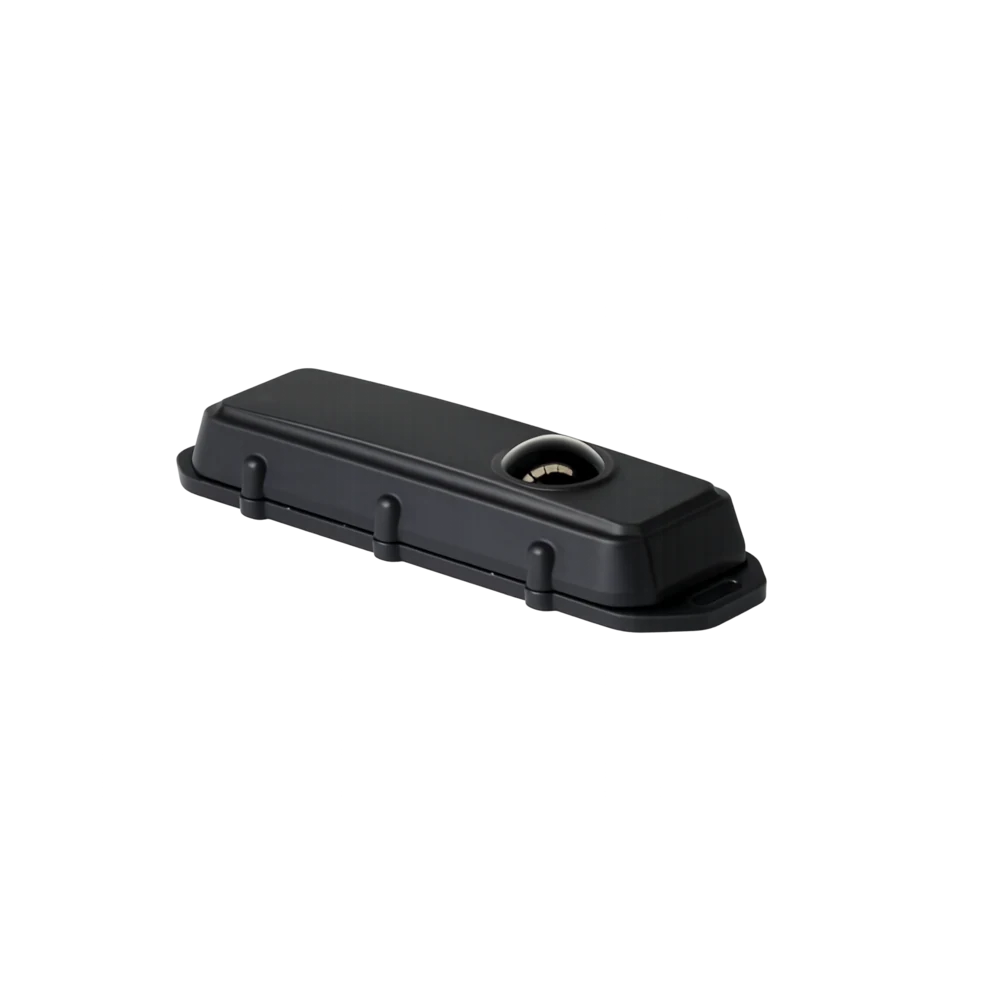
BARRA-RADAR-BLE · Wireless trackers
Barra Radar BLE
Object and Level Detection via Radar Bluetooth device in Barra form-factor (batteries not included)
IN STOCK · ZAR
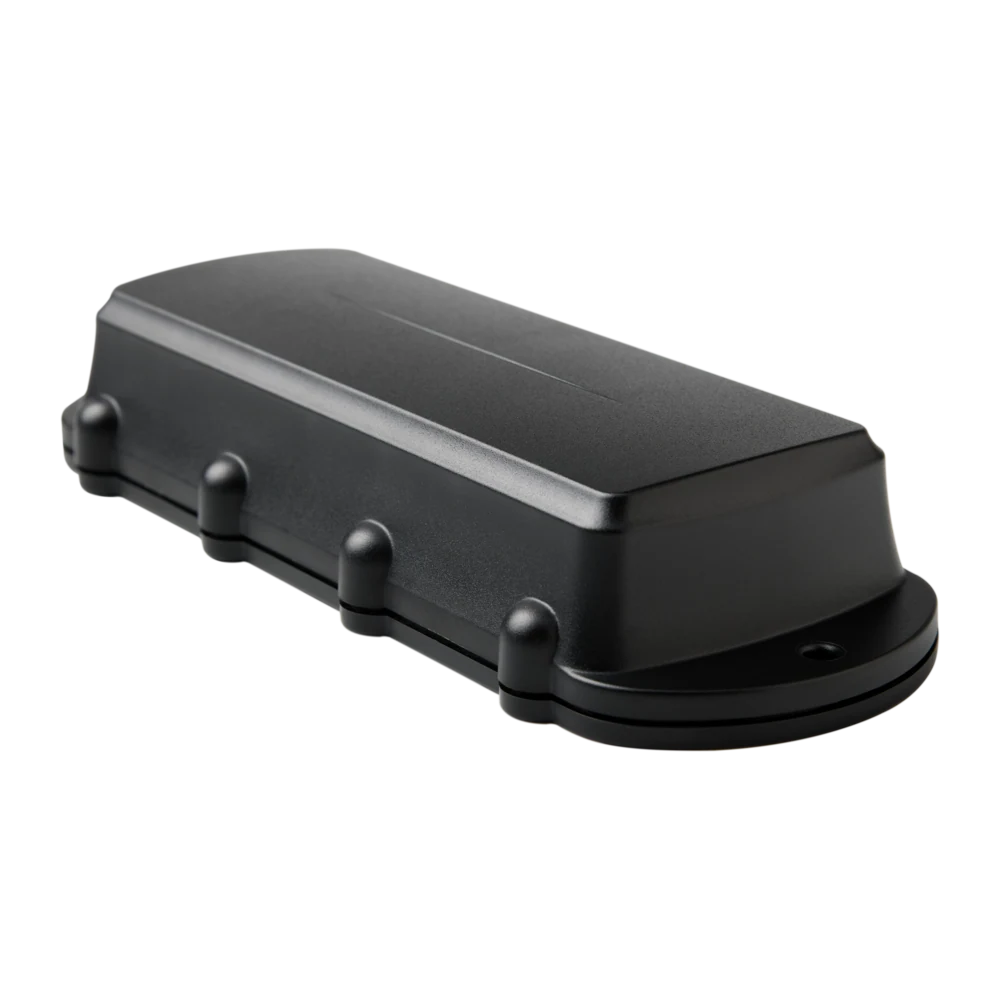
REMORA3-GLOBAL · Wireless trackers
Remora3 Global
Remora3 Global GPS tracker on 4G Cat1bis with 2G fallback, Bluetooth 5.2 gateway
IN STOCK · ZAR
More in Business
Business overview
Related business solutions.
Talk to TG Tracking
Add Temperature and Cold Chain Monitoring to your fleet operating layer.
Tell us what you run, where you run it and the risk profile. We'll match the hardware, platform and rollout plan to your operation.