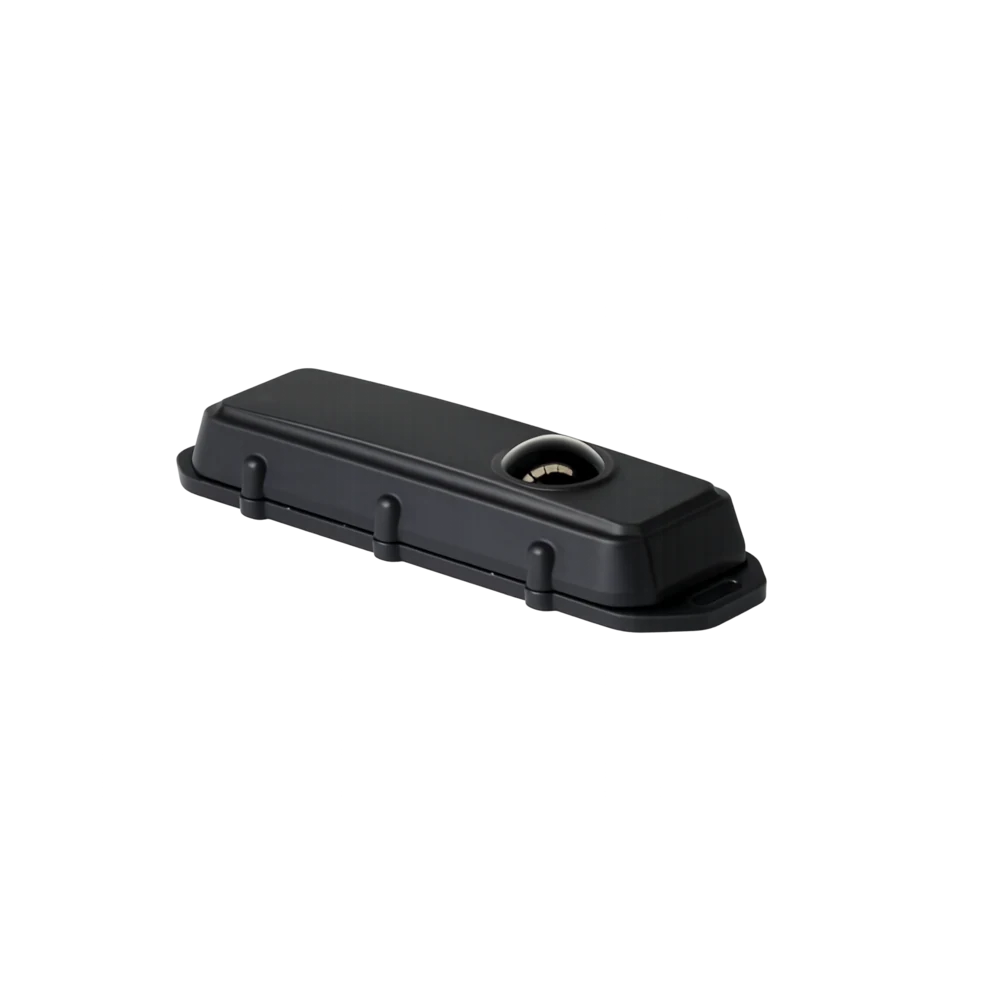
BARRA-RADAR-BLE · Wireless trackers
Barra Radar BLE
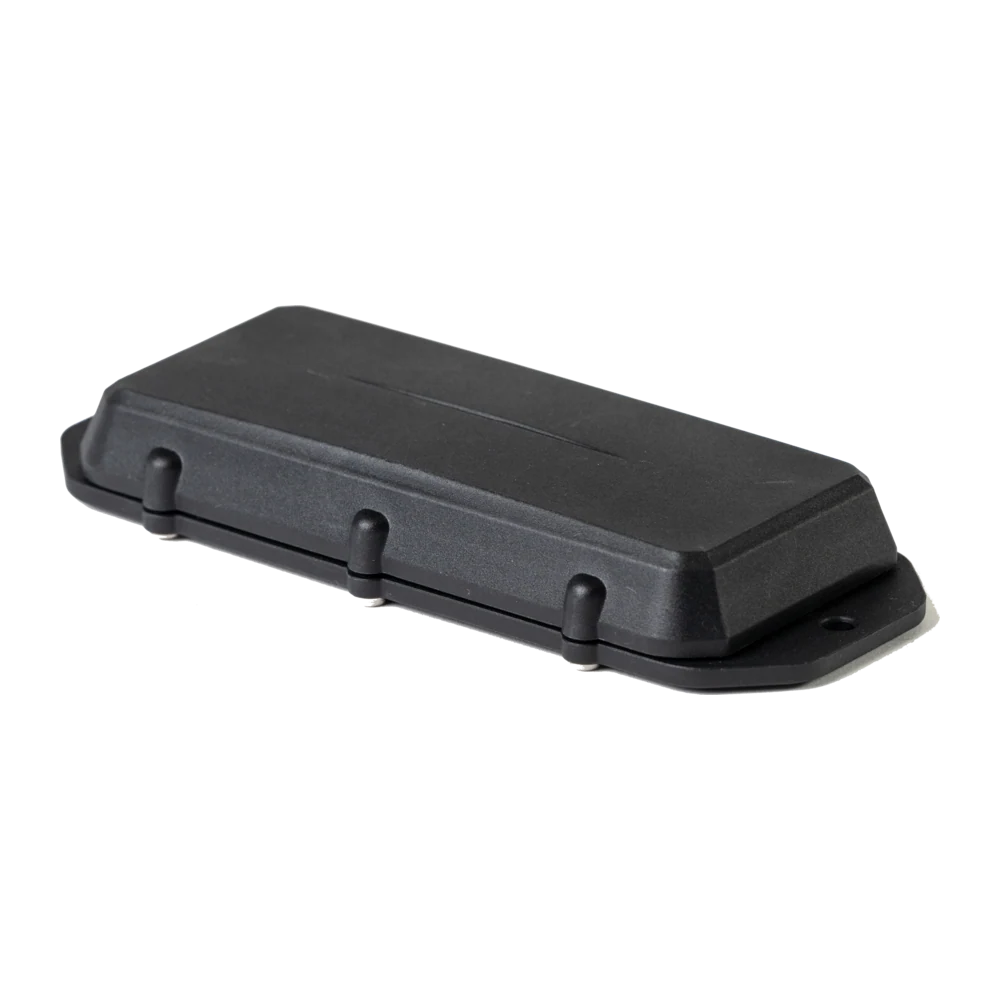
Object and Level Detection via Radar Bluetooth device in Barra form-factor (batteries not included)
IN STOCK · ZAR
HomeSolutionsWireless Asset TrackingWireless Golf Cart Tracking
Operating layer · Solution
Battery powered tracking for estate, resort and campus golf carts. After hours alerts, gate geofences, multi tenant access logs, fast recovery.
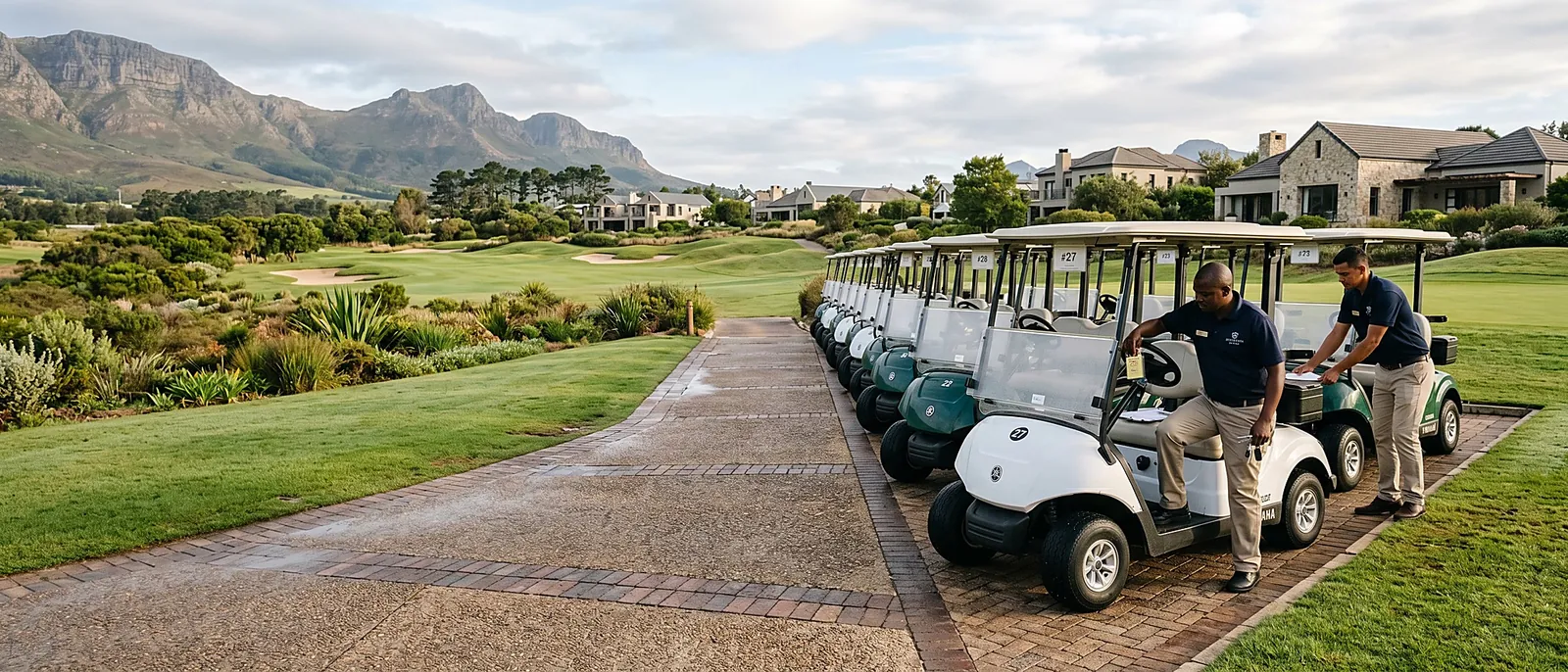
Estates, resorts and campuses keep every cart accounted for through every shift. A small battery powered locator inside each utility buggy or golf cart reports live location, zone moves and after-hours activity to a single dashboard. Estate management, the security supervisor and the body corporate share one view of which cart sits where, who used it last and when it crossed the gate. The weekend's full asset trace is ready on Monday morning before the meeting starts.
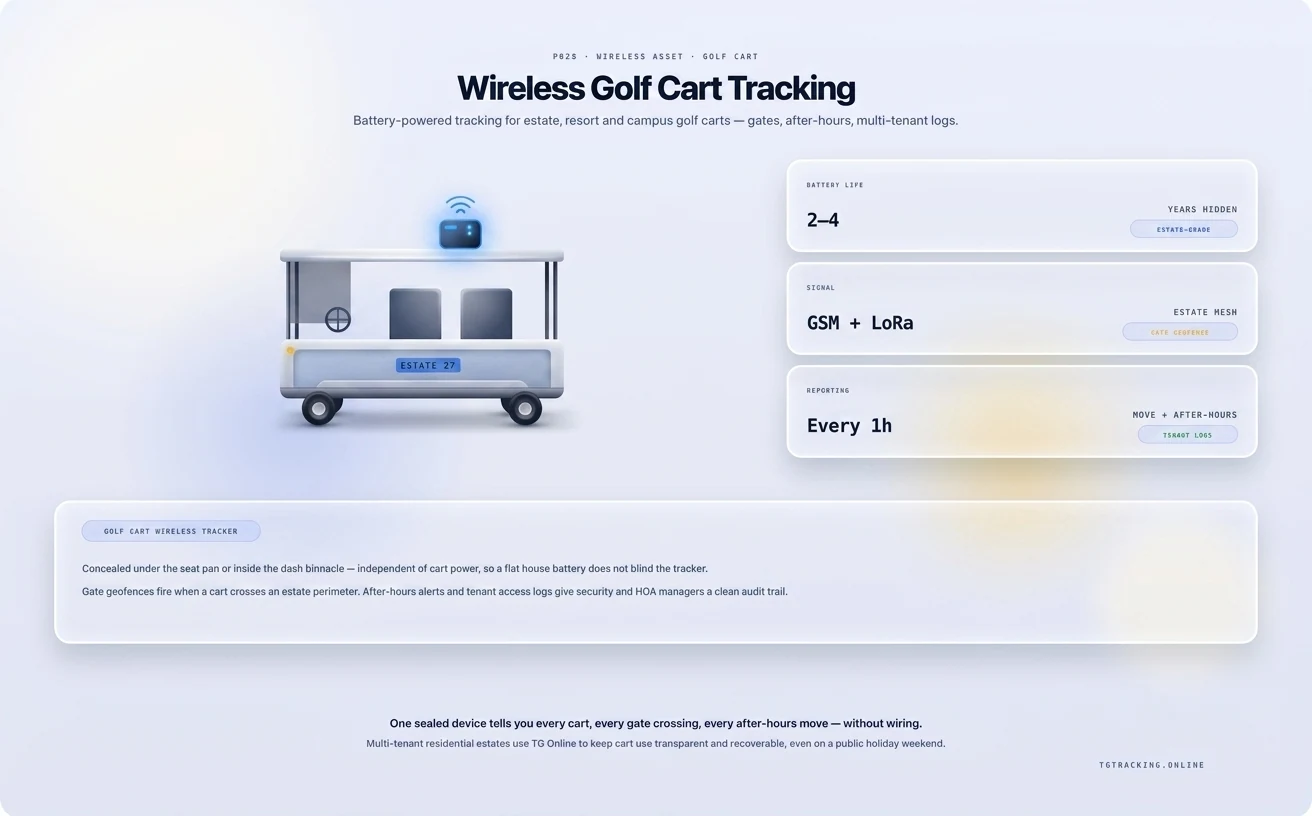
Wireless golf cart tracking from TG Tracking puts a battery powered locator inside an estate, resort, golf course or campus buggy so management can see live location, after-hours movement, gate-zone breaches and per-cart usage patterns across a multi-tenant property. It runs on the same platform as the broader Wireless asset tracking family and feeds the Asset Tracking and Recovery workflow when a unit crosses an estate boundary unauthorised.
A golf cart fleet on an estate, resort or large campus is shared between groups that do not work for the same manager. The greenkeeper team takes one for the morning circuit. The security team rotates a buggy on shift. Resident services lend one to a contractor for a half-day job. An event crew uses three for a Saturday wedding. The platform turns each handover into a logged event: which zone the cart entered, which one it left, and when. Estate management opens TG Online on Monday morning and sees the weekend's full asset trace, with zones for back-of-house, residential, golf course, spa, restaurant precinct, and the front gate.
The configured operating window and the estate perimeter geofence give every cart two named guardrails. Movement outside operating hours fires an after-hours alert to the on-duty manager. Movement across the perimeter fires a gate-geofence alert with the live position attached. Together, the two turn an end-of-weekend reconciliation into a real-time prompt while the response team can still act.
Most pages in this cluster describe a fleet operator buying tracking. Golf carts are different. The buyer is usually a body corporate, an estate manager, a resort general manager, a HOA chair or a campus operations director, not a fleet manager. The reporting layer needs a different shape: cart utilisation per zone, who used a cart at which time of day, residents-versus-contractors breakdown, after-hours exception list, and a single number for the next AGM about asset loss for the year. The platform's per-zone reporting and role-based access are configured for that buyer.
The platform routes a perimeter event to the on-duty guard's mobile, the estate manager's email and the response control room at the same moment, with the cart's live position attached. For estates already running vehicle access tracking, the cart layer adds this class of asset to the same security view rather than a second console, which keeps the duty supervisor on one screen.
South African estate management runs against a specific risk profile . Steyn City, Sun City, Pinnacle Point, Helderfontein, university campuses in Stellenbosch and Cape Town, wine estates in the Winelands, hotel groups in Mpumalanga, and golf estates around the Garden Route share the same operational pattern: shared cart fleets that move across multiple tenants and contractors. Multi-network connectivity matters because dead spots inside large estates often sit inside the property line itself. For wider asset categories on the same estate, see Wireless equipment tracking.
No. The tracker has its own battery and is not wired into the cart's electrical system, so the cart's main battery is unaffected.
Months to years depending on motion and reporting cadence. A cart parked overnight and used eight hours a day reports differently to one rotated through three shifts.
Inside the chassis rails, under a seat base, behind the dash panel, or inside a compartment. The right location depends on the cart make and model.
Yes. The geofence-breach alert fires the moment it crosses, the live track resumes immediately, and the recovery workflow is the same as any other wireless asset.
The platform shows where a cart was at a given time, which makes attribution against a sign-out roster straightforward. Driver identification per cart is a hardware option depending on the cart model.
Residential, contractor, back-of-house and event-crew zones are configured in onboarding. Alerts route to different recipients per zone, so the on-duty guard sees gate breaches and the estate manager sees the weekly utilisation report.
Yes. Multi-user, role-based access lets the estate manager, the chair and the security supervisor see different views of the same fleet. Specific cart models are confirmed in onboarding; the device fits any electric or petrol cart with enough chassis cavity to conceal it.
A tracked cart fleet keeps every unit visible to the estate manager, the body corporate and the security supervisor, on the same platform that already runs vehicle access and asset tracking. The Monday minutes start with "here is where every cart was over the weekend" instead of "where did the buggy go".
Self-powered trackers with multi-year battery life for trailers, containers, equipment and high-value assets.
Object and Level Detection via Radar Bluetooth device in Barra form-factor (batteries not included)
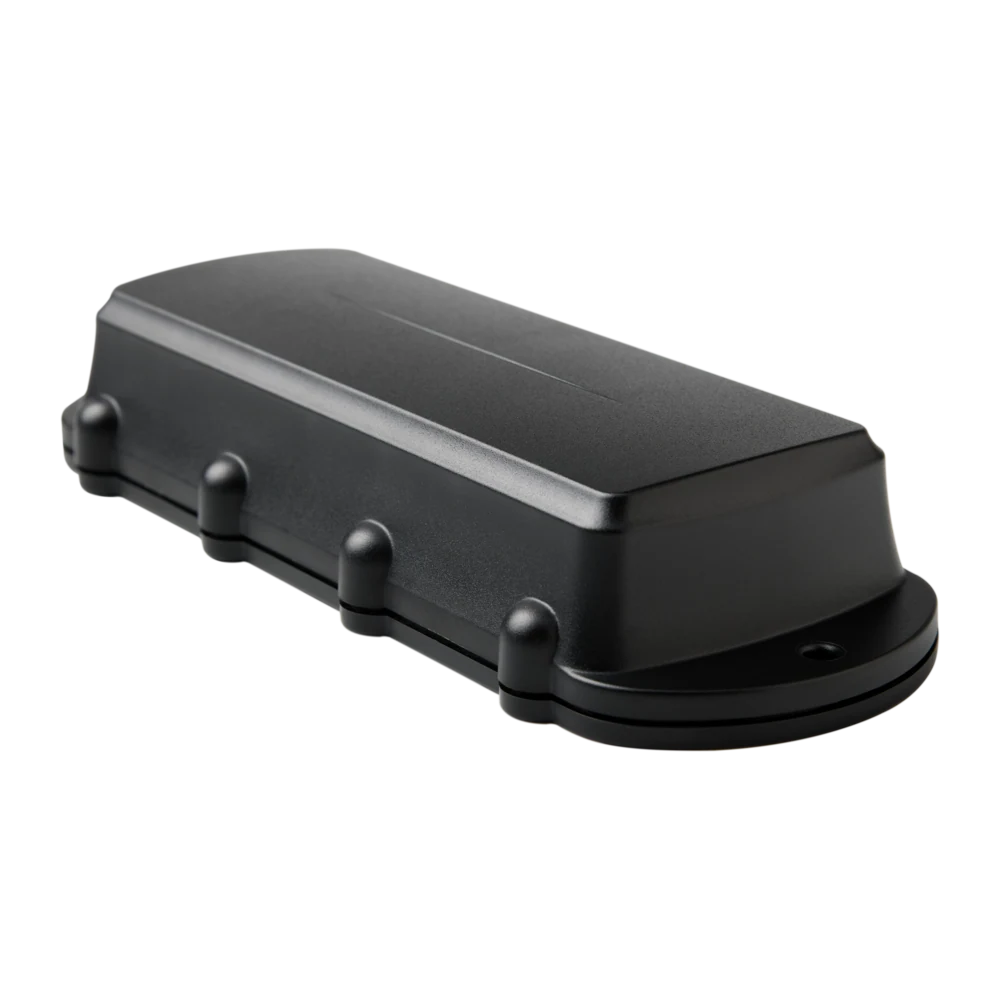
Remora3 Global GPS tracker on 4G Cat1bis with 2G fallback, Bluetooth 5.2 gateway
Remora3 GPS tracker on 4G LTE-M / NB-IoT with Bluetooth 5.2, massive battery life
Manta form-factor GPS-only tracker on 4G LTE-M / NB-IoT
Tell us what you run, where you run it and the risk profile. We'll match the hardware, platform and rollout plan to your operation.