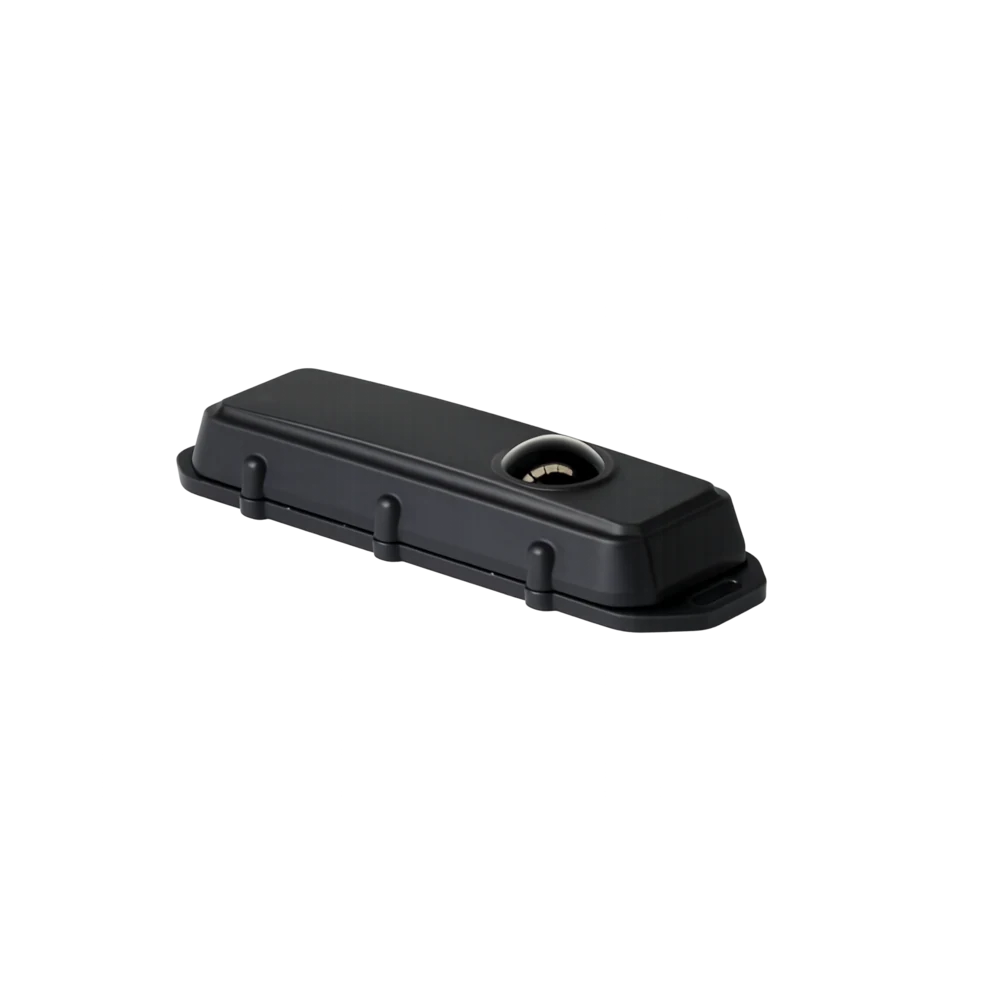
BARRA-RADAR-BLE · Wireless trackers
Barra Radar BLE
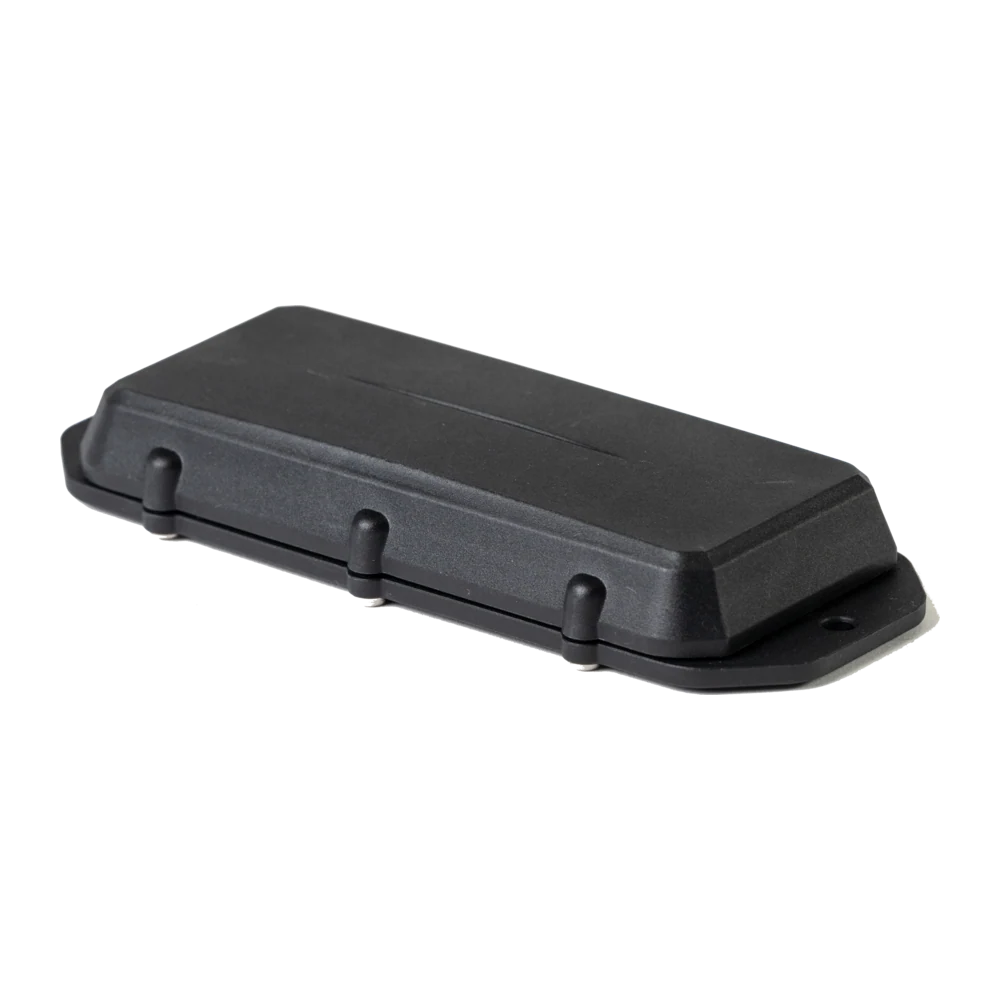
Object and Level Detection via Radar Bluetooth device in Barra form-factor (batteries not included)
IN STOCK · ZAR
HomeSolutionsWireless Asset TrackingWireless Bike Tracking
Operating layer · Solution
Battery powered GPS for motorbikes, superbikes, quad bikes and off-road bikes in South Africa. Concealed installation, tilt alerts, recovery network.
Friday afternoon, 17:45, a basement parking garage at an apartment block in Bryanston. The owner of a superbike rolls in from the M1, locks the disc, switches off, goes upstairs. By 22:30 the bike is in the back of a panel van and somewhere in Krugersdorp a workshop is starting to strip it for parts. Bikes are the asset class that converts to cash fastest in South Africa: a frame, an engine, a fairing set and a wheel set become four invoices on four different posts inside a week.
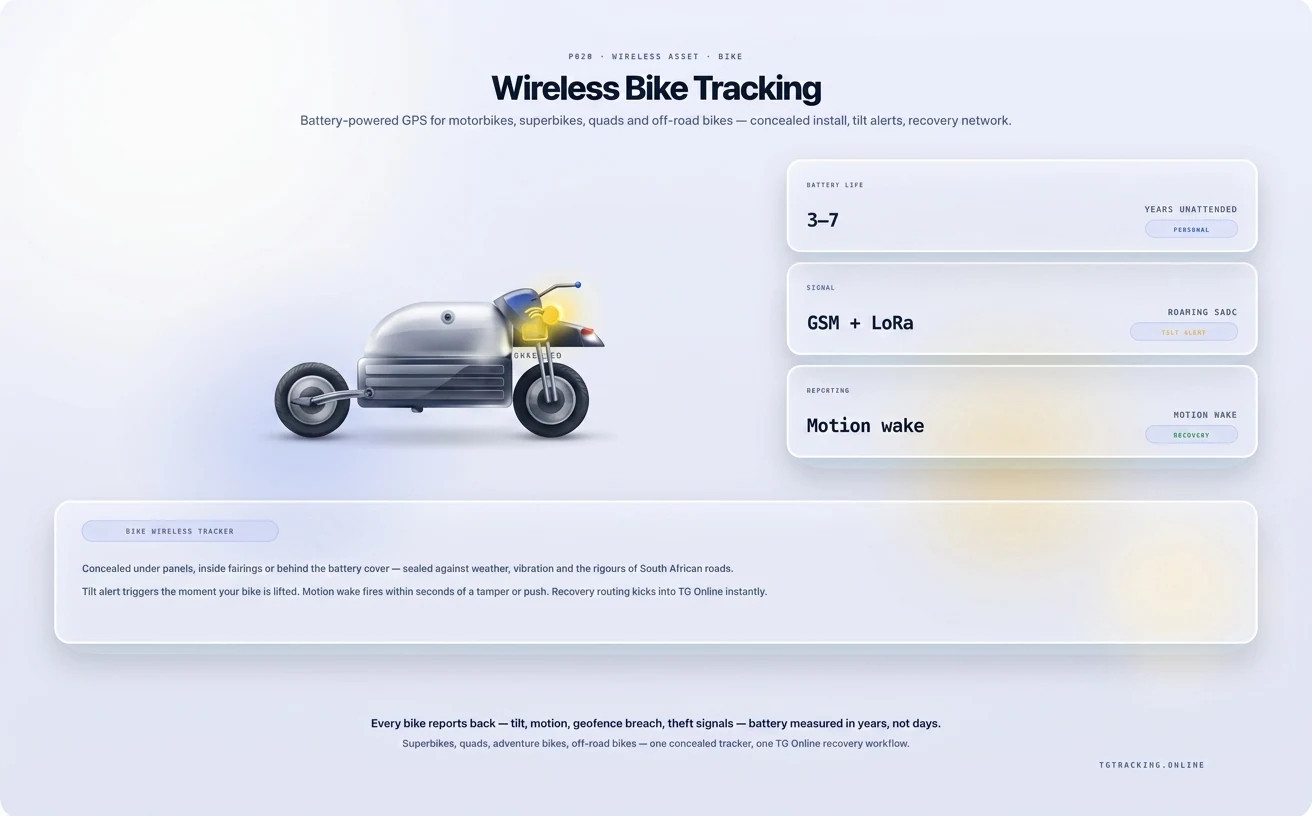
Wireless bike tracking from TG Tracking puts a small, sealed, battery powered GPS device on a motorbike, superbike, quad bike or off-road bike. It is concealed inside a fairing, under a seat or behind a panel, runs independently of the bike's electrical system, and alerts on motion, tilt and tampering. Sits in the same account as Asset, Hobby and Trailer Tracking and the broader wireless asset tracking product line. For the daily car alongside, see Car Tracking and Recovery.
The risk profile of a bike is different from a car or a trailer. A stolen car is often driven for hours. A stolen trailer is often towed for hundreds of kilometres. A stolen bike is loaded straight onto the back of a panel van or bakkie, taken to a yard inside ten kilometres, and stripped before sunrise. That changes what a tracker has to do: keep transmitting after the bike's own battery is removed, survive being inside a metal vehicle with a weakened GPS signal, send a tilt alert the moment the bike is lifted off its tyres, and stay concealed enough that a workshop dismantling the bike does not find it.
The motion sensor fires on tilt, lift and sustained vibration. The bike does not need to be ridden for the alert to trigger; a bike rolled off its stand or hoisted into a vehicle wakes the device. The tracker draws nothing from the bike: cutting the bike's battery or stripping the harness has no effect, and it keeps reporting until its own internal battery is exhausted, months to years from a single charge.
The device is hidden inside a fairing, behind a panel, under the seat foam, inside a frame member or inside the rear cowl. Concealment is the variable that decides whether the device survives long enough to recover the bike. A quad bike on a farm road or an off-road bike in a Magaliesburg trail park subjects the housing to far more vibration than a touring bike, and the mounting is rated for sustained off-road use.
Bike insurance is its own category. Most South African motorbike policies require approved tracking as a condition of cover above a value threshold, and the threshold for sport and adventure bikes is often lower than for cars. Some insurers require an immobiliser, a chain or anchor system or a specific alarm in addition to a tracker. The platform issues the certificate the broker requires.
Off-road, motocross and quad bike cover is structured differently. Specialist insurers require tracking on competition bikes transported on a trailer between events. The trailer needs separate cover; see Wireless Trailer Tracking.
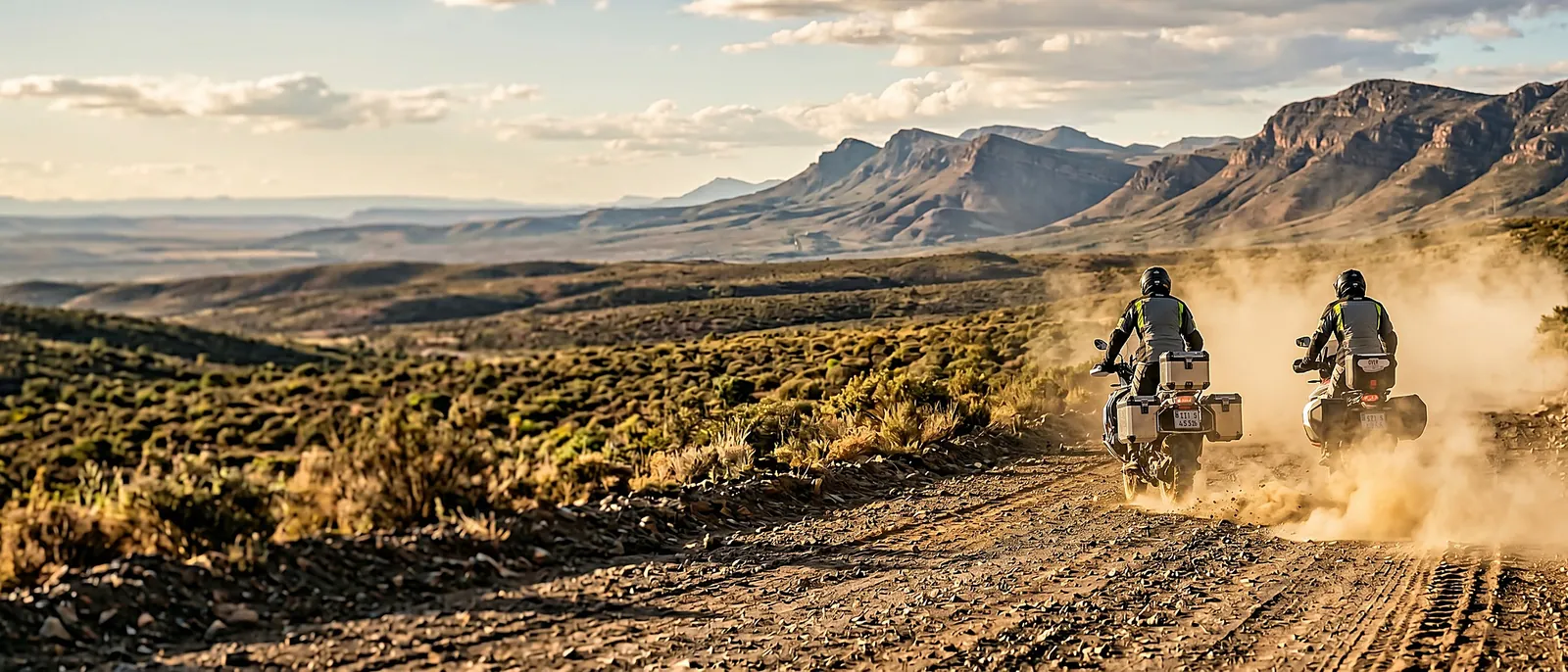
Superbikes and sports bikes in security estates around Sandton, Bryanston, Fourways and Umhlanga. Adventure and touring bikes covering the N1 to Beitbridge, the N7 to Springbok or the Garden Route benefit from multi-network roaming and trip history. Quad bikes and farm bikes on Karoo farms, Highveld plots and Lowveld game farms tolerate dust and vibration. Off-road and motocross bikes use a small hidden device that survives off-road impact.
Bike theft has three identifiable patterns. Lifted from secure parking under apartment blocks where building security cameras face the entrance and not the bays. Lifted from suburban garages by teams that case the property in advance. Lifted from outside coffee shops and biker meet-ups by opportunistic thieves with a panel van. The recovery window is often a single night. The control room is in this country, runs through the night, and works with recovery partners that know which industrial nodes are typical strip yards.
Months to years on a single charge depending on configuration. A daily-commute bike reports more often than a weekend tour bike. Replacement is typically aligned with annual service.
No. The tracker is independent of the bike's wiring, ignition, fuel system and engine management, so it does not affect the warranty.
Nothing. The tracker has its own internal battery and keeps reporting.
Most South African motorbike insurers accept TG Tracking, and the platform issues the certificate. Confirm with your broker because the approved list and the value threshold vary.
Yes. Quad bikes are a high-loss category in rural South Africa. The device is rated for off-road vibration and outdoor exposure.
GPS reception is reduced inside concrete structures, but the device still detects motion and tilt and queues the alert until it has a signal. The moment the bike emerges from the garage, the position and queued alerts go through.
Recovering a stolen bike is a 12-hour problem the day after. A tracker is the difference.
Self-powered trackers with multi-year battery life for trailers, containers, equipment and high-value assets.
Object and Level Detection via Radar Bluetooth device in Barra form-factor (batteries not included)
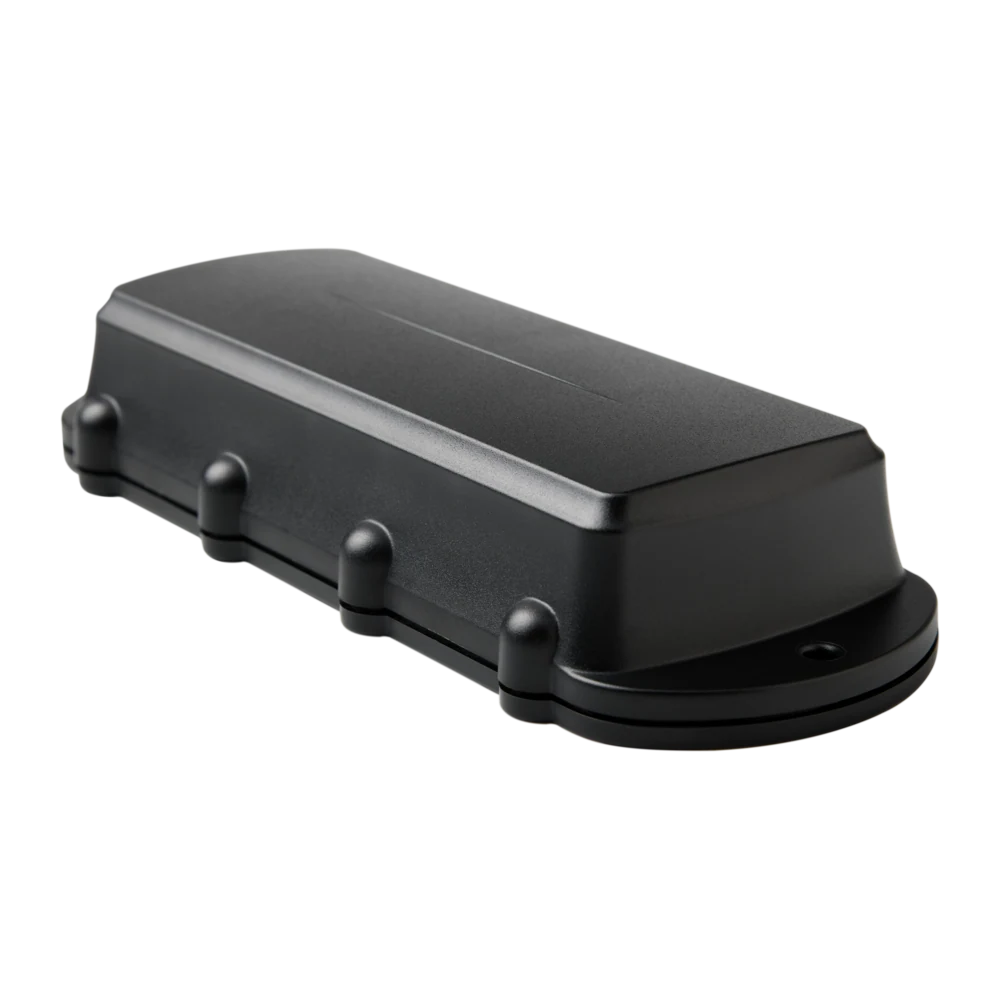
Remora3 Global GPS tracker on 4G Cat1bis with 2G fallback, Bluetooth 5.2 gateway
Remora3 GPS tracker on 4G LTE-M / NB-IoT with Bluetooth 5.2, massive battery life
Manta form-factor GPS-only tracker on 4G LTE-M / NB-IoT
Tell us what you run, where you run it and the risk profile. We'll match the hardware, platform and rollout plan to your operation.