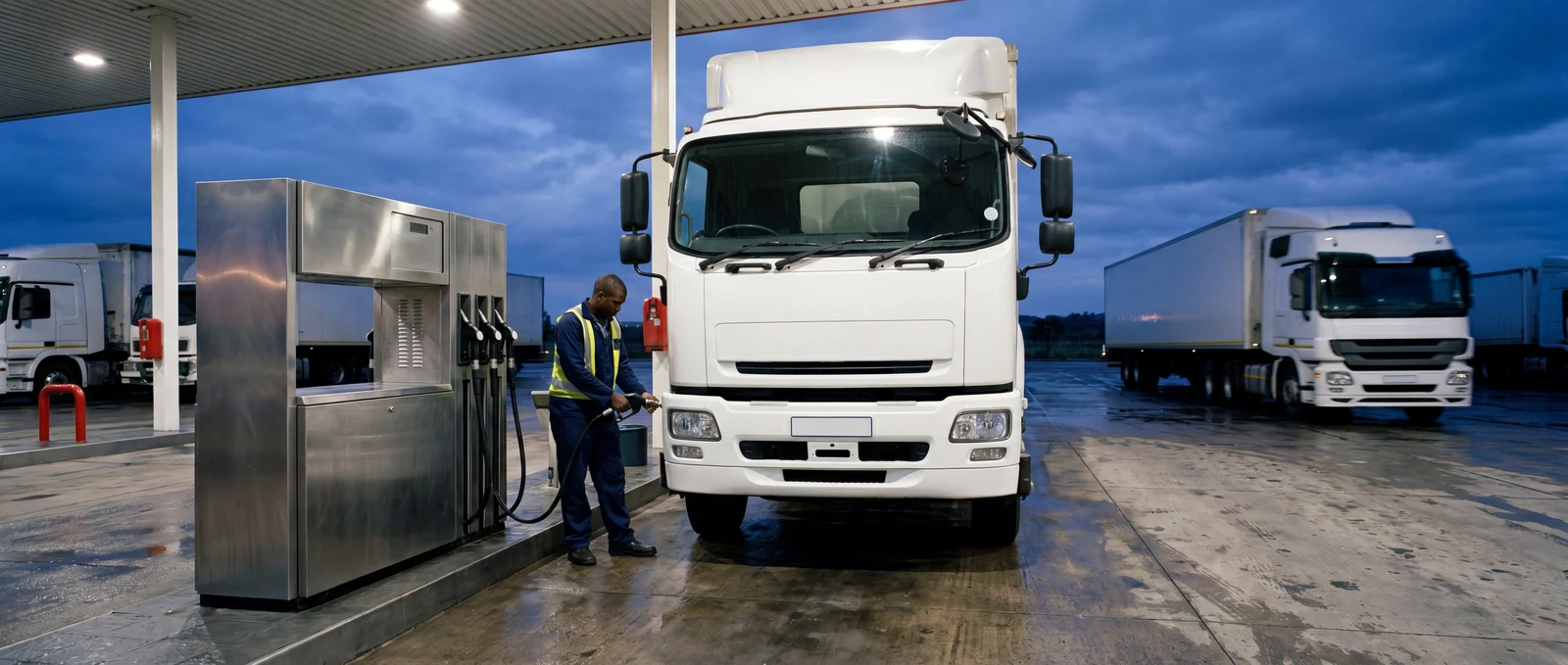
The bowser meter at a Centurion depot reads 8 412 litres dispensed for the week. The stick-dip on the bulk tank reads 1 173 litres difference between Monday and Friday. The two should reconcile. They do not, by 230 litres. Somewhere across one yard, four trucks, fourteen drivers and seven fills, a quarter of a drum of diesel went missing without a clear story. That is the gap fuel monitoring is built for: not the obvious overnight siphon, but the slow daily friction between what was poured, what was claimed, and what was actually burned.
Direct answer
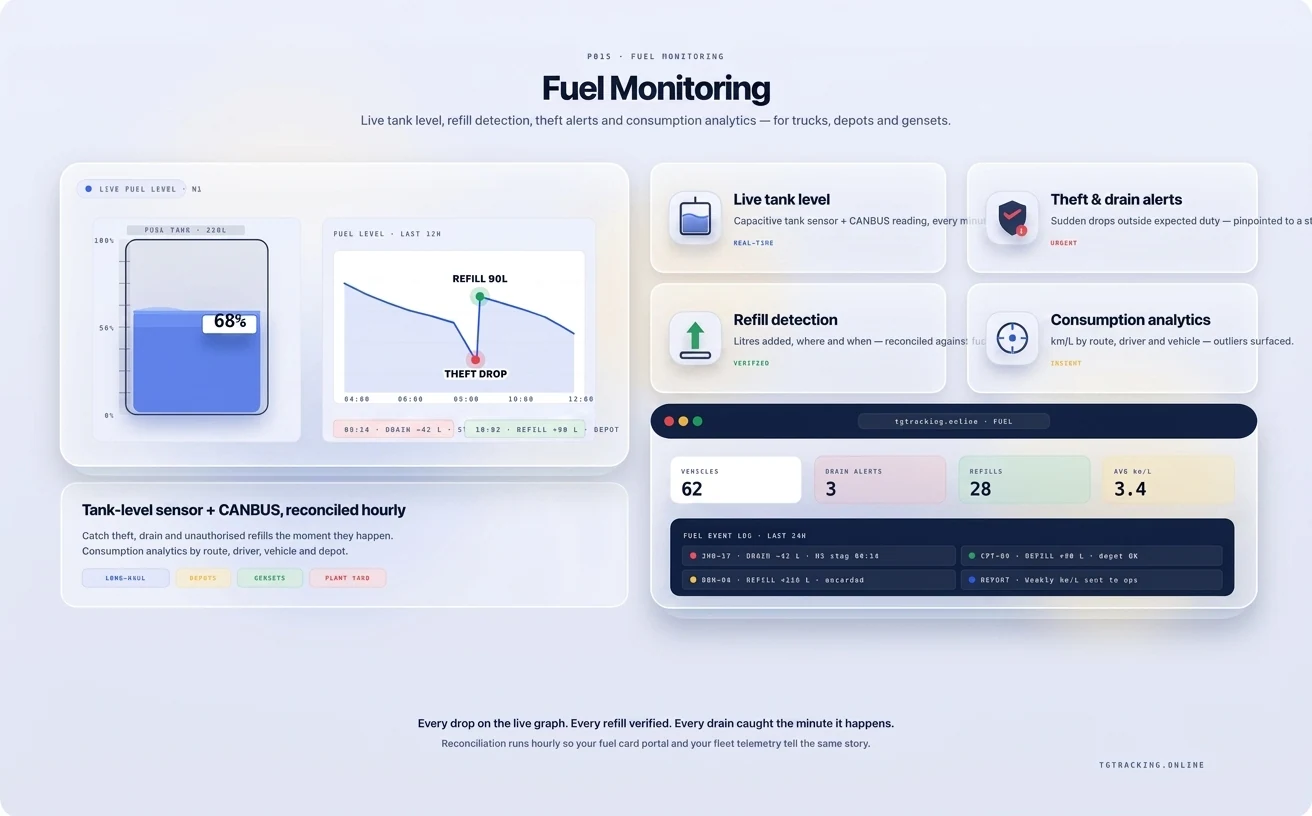
TG Tracking Fuel Monitoring covers live fuel level, refill detection, theft and drain alerts, consumption analytics and reconciliation against bowser deliveries and odometer readings. It runs on CANBUS, wired tank sensors or wireless sensors depending on your vehicle and asset mix, and feeds the same platform as your Fleet Tracking and Management, Trailer Management and Business Intelligence Dashboards. For depot tanks and remote gensets, the same data layer is shared with Remote sensor monitoring.
What fuel monitoring actually monitors
The platform measures the fuel inside the tank, the fuel that goes into the tank, the fuel that comes out of the tank, and the fuel that was burned to do work. Each of those is a different signal and the platform separates them.
Live fuel level readings
Continuous level data from a sensor in the tank or a CANBUS line on the vehicle, refreshed in near real time. The litre count is plotted against the trip, so the consumption story is visible alongside the GPS track. Fast drops, abnormal consumption, sudden refills, tank tampering and late-night drains all surface as named events.
Theft and drain alerts
Drains while the ignition is off, fast drops out of pattern with driving, irregular consumption while stationary, suspicious refill activity and tampering with the sensor or tank trigger immediate alerts. The control room is reachable when an event escalates beyond a logged alert.
Refill and reconciliation
Every refill is recorded as an event with a litre count, a location, a vehicle and a time. Refill events reconcile against bowser deliveries and against fuel-card transactions where the integration is wired up. The reconciliation report is the one that catches false fuel claims, staged refills and manipulated receipts, with system-generated evidence that does not depend on driver paperwork.
Consumption analytics and driver impact
Litres consumed per trip, km/l per vehicle, idle fuel burn, route fuel efficiency and cost-per-kilometre are computed by trip and by driver. The same trip that flags a harsh-event score in AI Camera Solutions shows its fuel-burn cost in the fuel report. Coaching and route changes get an evidence base.
Where fuel monitoring fits: vehicles, machinery, depots and gensets
Fuel monitoring is not just a vehicle product. It is a platform-wide capability for any tank that holds fuel and any engine that burns it.
Vehicles
Long-haul trucks, rigid trucks, vans, bakkies, refuse and utility vehicles, buses and minibus taxis, and the whole spectrum of LCV and HCV fleet. Modern trucks support CANBUS reads. Older or mixed fleets use wired tank-level sensors.
Heavy machinery
Earthmoving equipment, mining haulers, generators, pumps, water bowsers and stationary plant. These typically use wired tank sensors or wireless BLE sensors fitted into the tank.
Depot bulk tanks
The 5 000 litre, 10 000 litre or 23 000 litre bulk tanks at your depot, on a remote site or at a contractor base. Tank-level sensors with Remote sensor monitoring give the same view of bulk fuel that a vehicle sensor gives of vehicle fuel. The reconciliation closes the loop between bulk in and vehicle out.
Remote-site gensets
Generators on telecoms sites, agricultural pivot pumps, mining contractor camps and remote process sites. The genset's fuel level dropping during the night when the generator was supposedly off is exactly the kind of event the platform was built for.
Why TG Tracking for fuel monitoring: the bowser-to-burn story
Most fuel monitoring vendors monitor the vehicle. The hard problem is reconciling the vehicle reading with what came out of the bowser, what was paid for on the fuel card, what was stick-dipped at the start of the shift, and what work the vehicle actually did. That is a four-system problem if the four systems do not talk.
TG Tracking sits across all four signals. The vehicle reads its level. The depot tank reads its level. The bowser delivery is logged through the same platform's reporting layer. The trip and load that justified the fuel are in the same database. The reconciliation report is one click rather than four spreadsheets. Drivers, supervisors, fleet managers and finance see the same number when they ask the same question.
For long-haul operators on the N3 between Johannesburg and Durban, that closes the gap between how much fuel a trip should have consumed and how much it actually consumed by driver, by route and by load. For depot-based operations, it closes the gap between what was delivered by the fuel supplier and what ends up in vehicles. For mining contractors, fuel monitoring on machinery feeds straight into the production cost view in Business Intelligence Dashboards without leaving the platform.
South African context: diesel price, theft pressure and load shedding
Fuel monitoring matters more in South Africa than in markets with a flatter cost base and a thinner risk profile. The diesel price changes monthly and is a significant share of operating cost for any commercial fleet. Diesel theft is a chronic risk on long-haul corridors, at remote sites and at unattended depots. Load shedding has put generators back into permanent service across thousands of sites where they used to be standby only, and a generator that runs every weekday is a fuel-management problem in its own right.
The platform is built for those realities. CANBUS, wired and wireless sensors cover the full vehicle and asset spectrum. Multi-network connectivity keeps reporting alive across the Karoo, the Highveld and the Lowveld. Remote-site genset monitoring uses the same control-room workflow as the vehicle fleet, so a fuel drain on a Mpumalanga genset at 02:30 is escalated the same way a drain on a Durban truck would be.
Frequently asked questions
CANBUS, wired tank sensor, or wireless: which one for my fleet?
Modern trucks and bakkies typically support CANBUS reads, which is the easiest and lowest-disturbance install. Older vehicles, generators, machinery and depot bulk tanks usually need a wired or wireless tank-level sensor for accurate readings. Mixed fleets are normal. The right mix is decided during onboarding for each vehicle and asset class.
How accurate is the level reading?
Accuracy depends on the sensor type, the tank shape and the calibration. Tank-level sensors are calibrated against the actual tank geometry at install. CANBUS reads inherit the OEM accuracy of the vehicle's own gauge. We tell you upfront which combinations give the tightest accuracy for your specific fleet, rather than promising a single number that is not true everywhere.
Will fuel monitoring catch theft from a moving truck?
Yes, where the theft results in a measurable level drop. Mid-route siphons, unauthorised pump-outs, false refills and slow leaks all show up as out-of-pattern events. Some types of fuel fraud, particularly card and receipt manipulation rather than physical fuel movement, are caught through the reconciliation report rather than the level sensor.
Can I monitor a bulk tank that is not on a vehicle?
Yes. Depot bulk tanks, remote-site bulk tanks and generator day-tanks are monitored through Remote sensor monitoring on the same platform. The reconciliation between bulk and vehicle is one of the highest-impact use cases.
How does this work with my fuel card?
Fuel-card transactions are imported into the platform where the integration is supported. Card refill events are matched against vehicle level events at the same time and location. Mismatches surface as exceptions for review.
Does fuel monitoring need a separate device or does it use the existing tracker?
Often the existing tracker carries the fuel-monitoring inputs, particularly on CANBUS-fitted vehicles. Wired and wireless tank sensors connect through the tracker on most installs. The vehicle does not run two separate devices unless the use case specifically requires it.
How quickly does fuel monitoring pay back?
Payback depends on fleet size, fuel volume, current loss rate and how much of the operating story is currently invisible to you. Fleets carrying chronic diesel theft or chronic reconciliation gaps tend to pay back faster than fleets that are already tightly managed. Talk to us about your specific fleet and we will scope the realistic case rather than quote a marketing number.
Talk to our fuel team
If diesel is the largest variable line in your operating cost and the visibility you have today is monthly invoices and spot stick-dips, fuel monitoring closes the gap. Book a fuel demo and we will walk you through the live level view, the reconciliation report and the theft-alert workflow with your fleet and depot setup in mind.
Recommended hardware
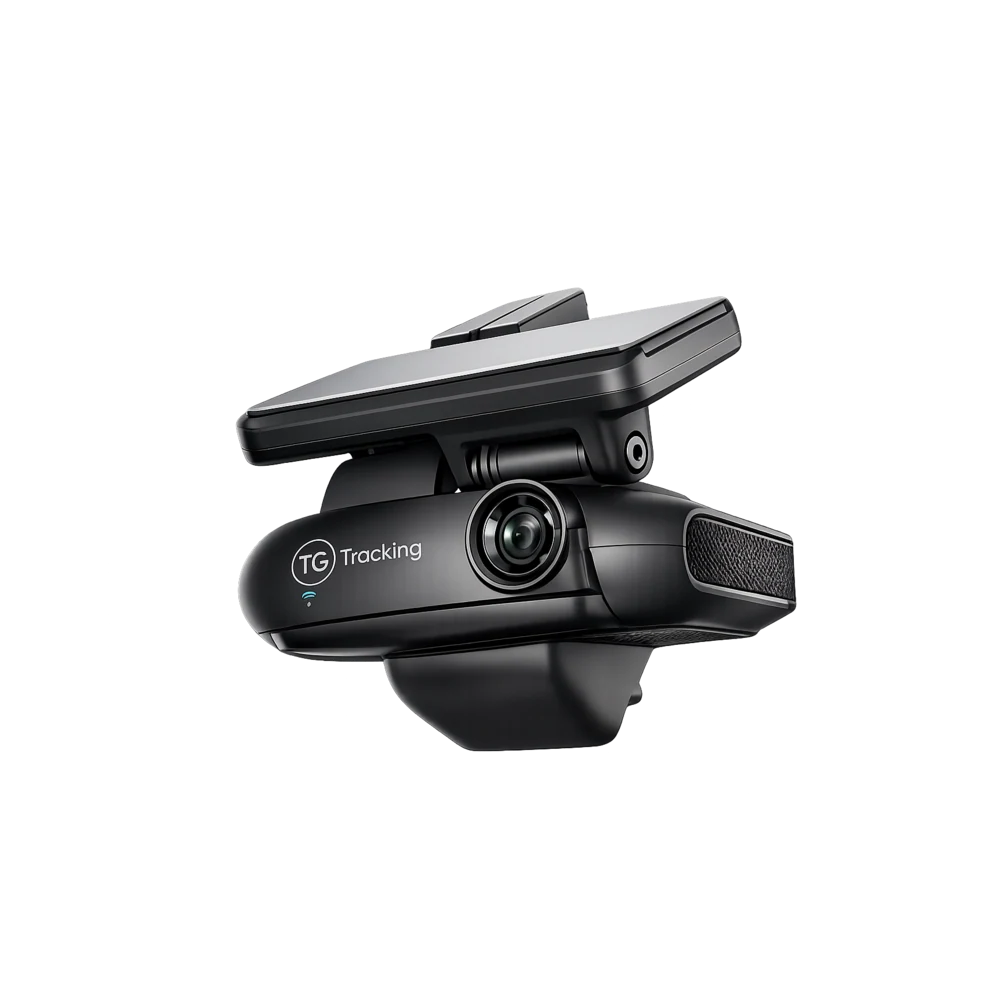
The right tracking layer for fuel monitoring.
Vehicle, asset, driver and reporting hardware tuned to the way real businesses run fleets.
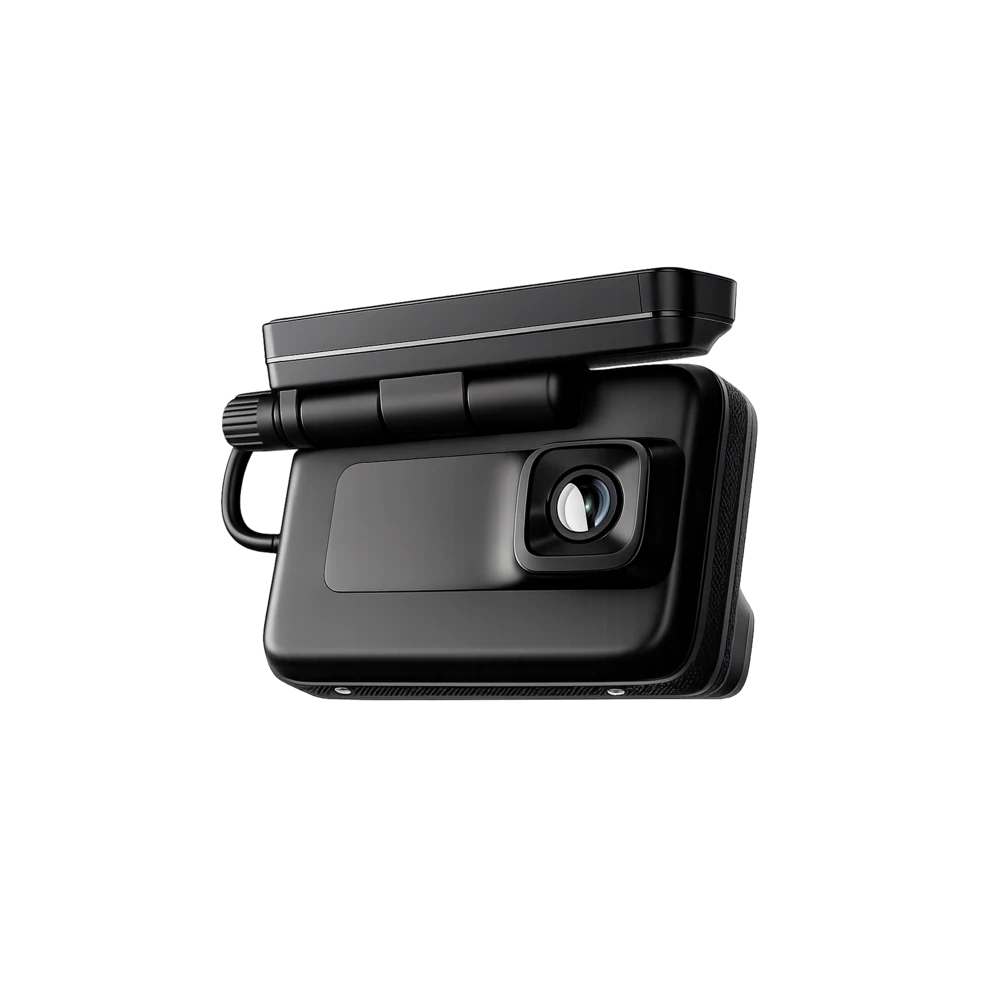
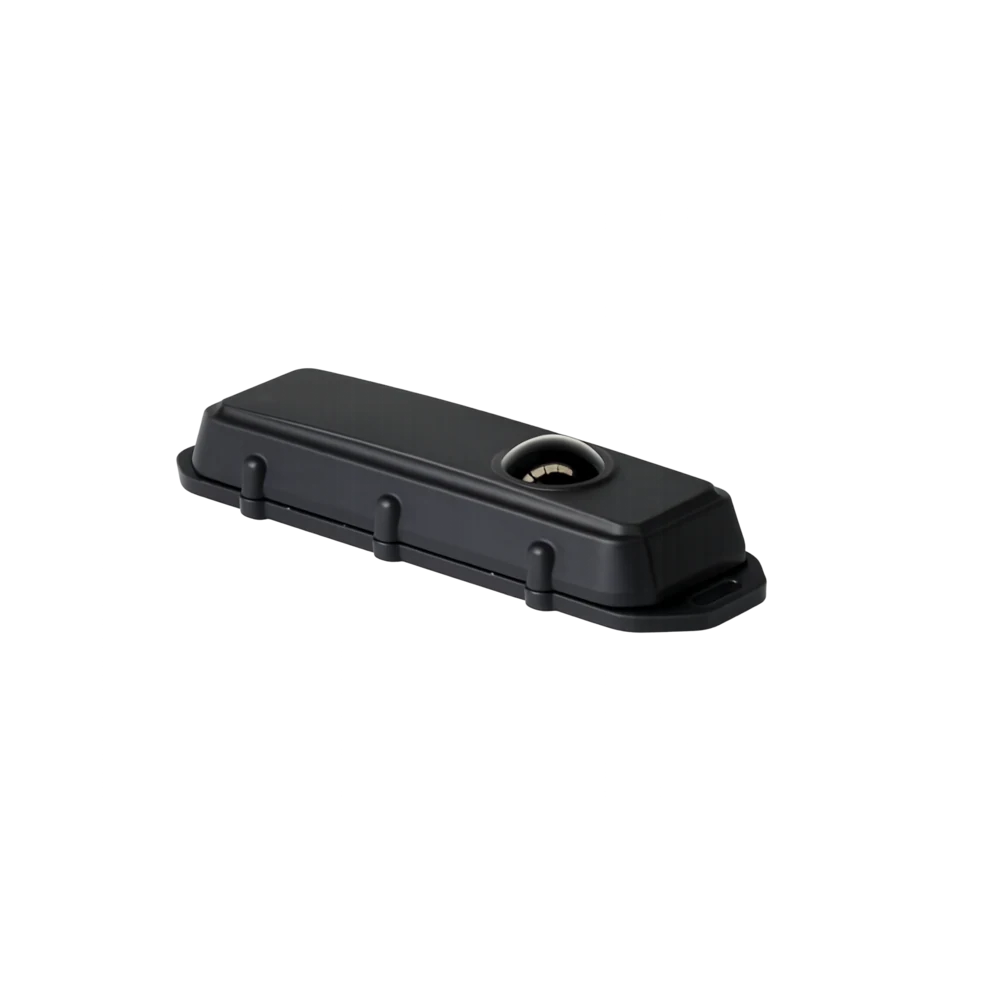
BARRA-RADAR-BLE · Wireless trackers
Barra Radar BLE
Object and Level Detection via Radar Bluetooth device in Barra form-factor (batteries not included)
IN STOCK · ZAR
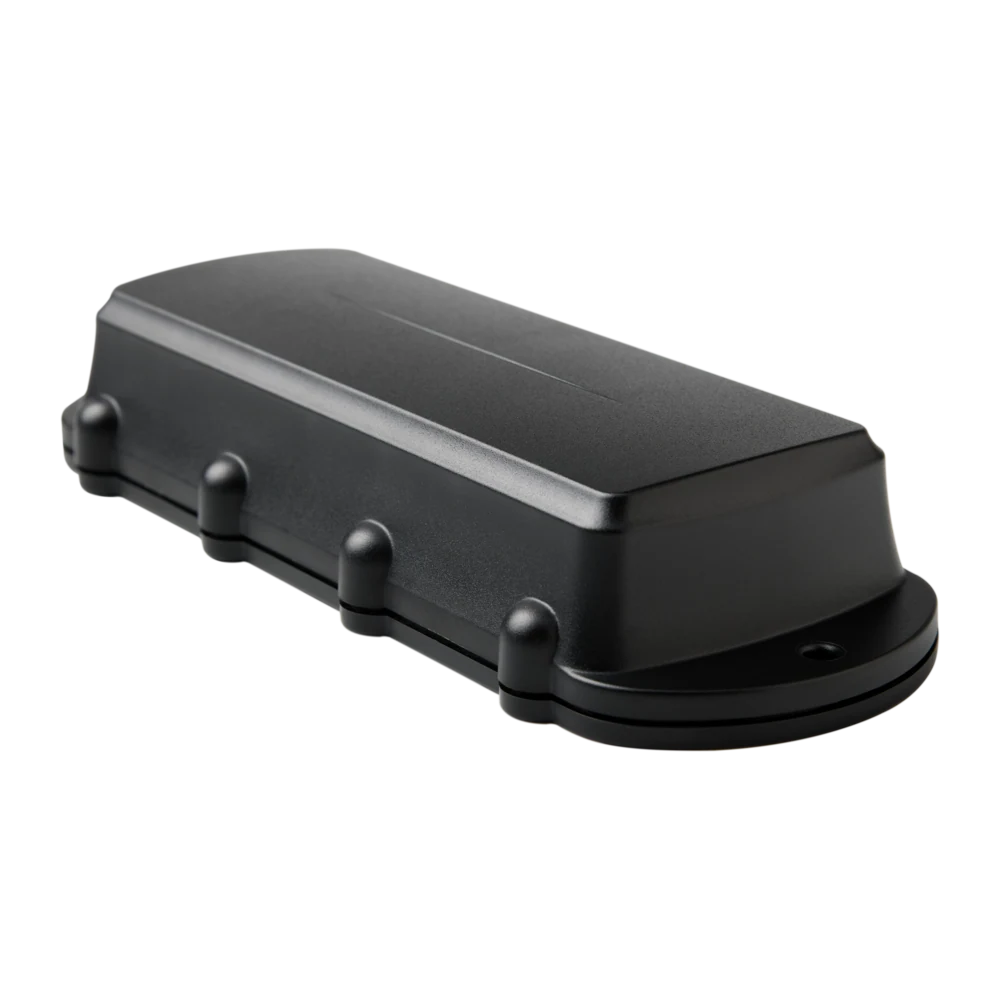
REMORA3-GLOBAL · Wireless trackers
Remora3 Global
Remora3 Global GPS tracker on 4G Cat1bis with 2G fallback, Bluetooth 5.2 gateway
IN STOCK · ZAR
More in Business
Business overview
Related business solutions.
Talk to TG Tracking
Add Fuel Monitoring to your fleet operating layer.
Tell us what you run, where you run it and the risk profile. We'll match the hardware, platform and rollout plan to your operation.