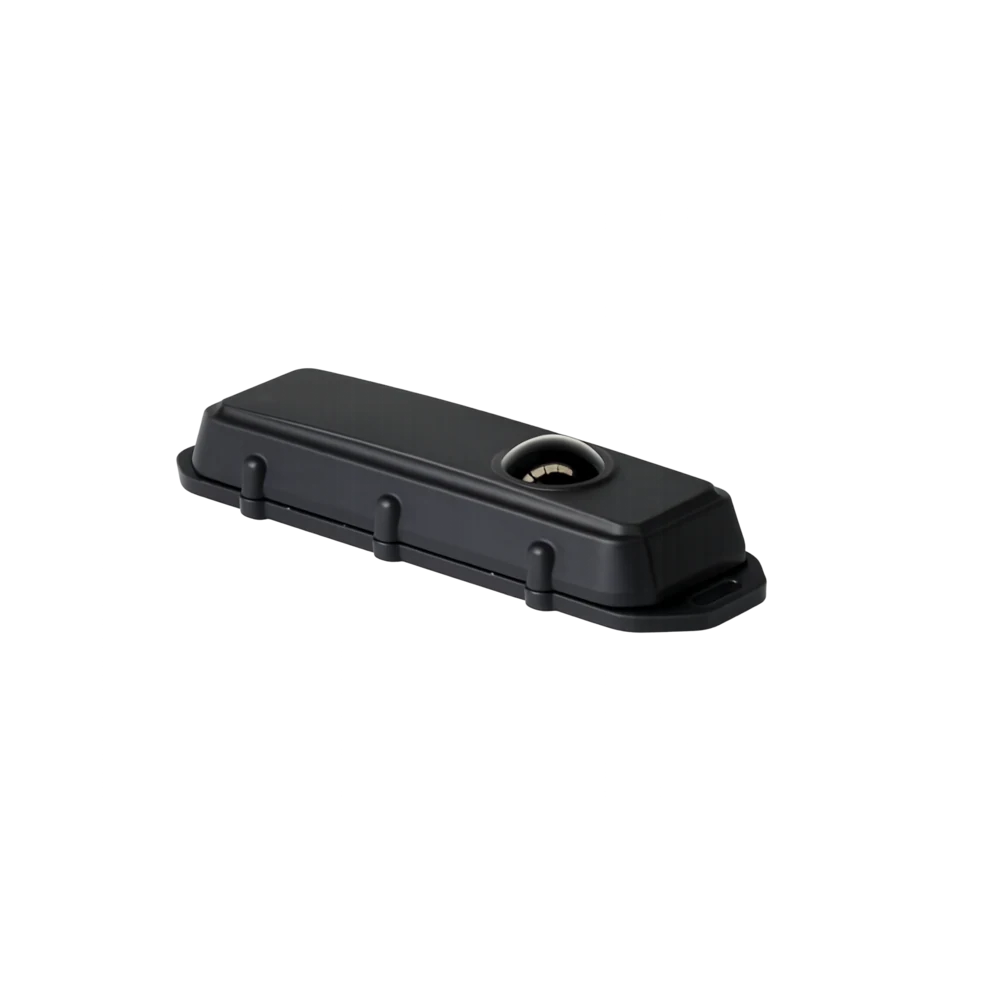
BARRA-RADAR-BLE · Wireless trackers
Barra Radar BLE
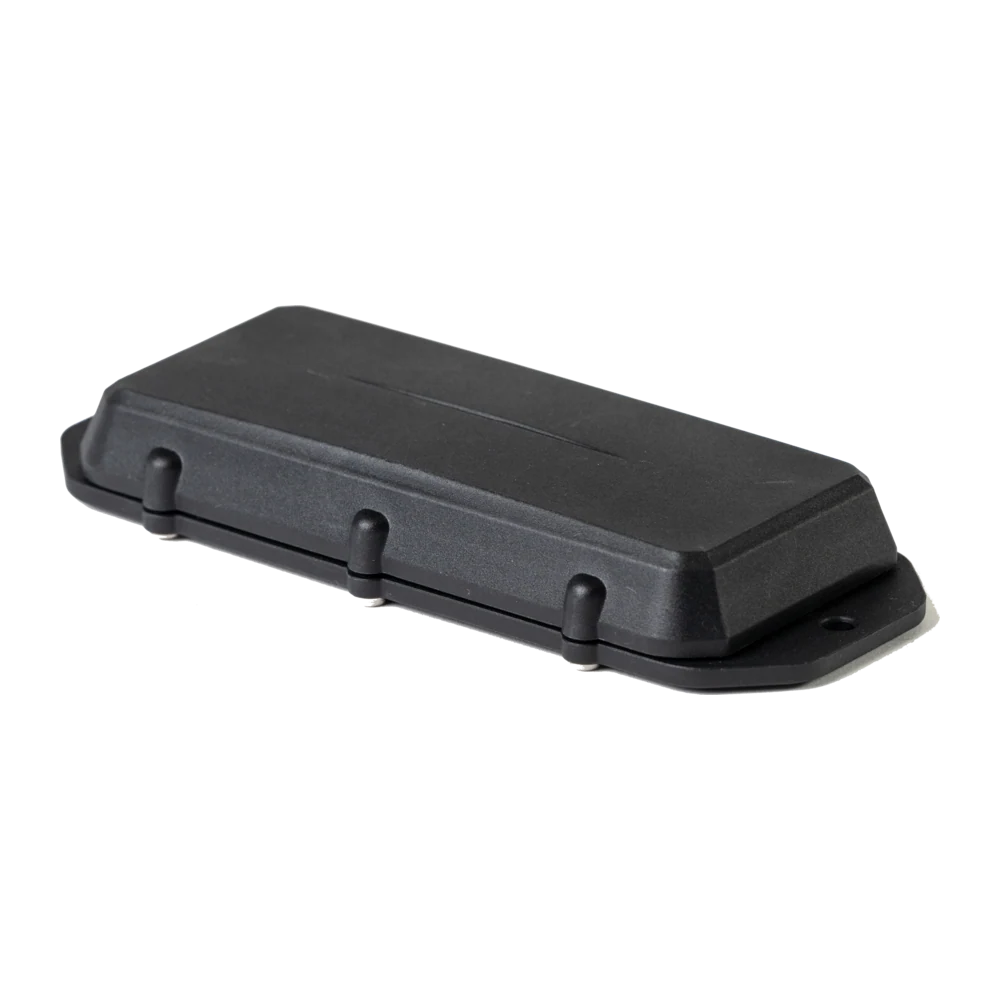
Object and Level Detection via Radar Bluetooth device in Barra form-factor (batteries not included)
IN STOCK · ZAR
HomeSolutionsWireless Asset TrackingWireless Fleet Trailer Tracking
Operating layer · Solution
Battery powered tracking for logistics trailer fleets on the route. Customer dwell, multi leg routing, off route flags, cross border, fast recovery.
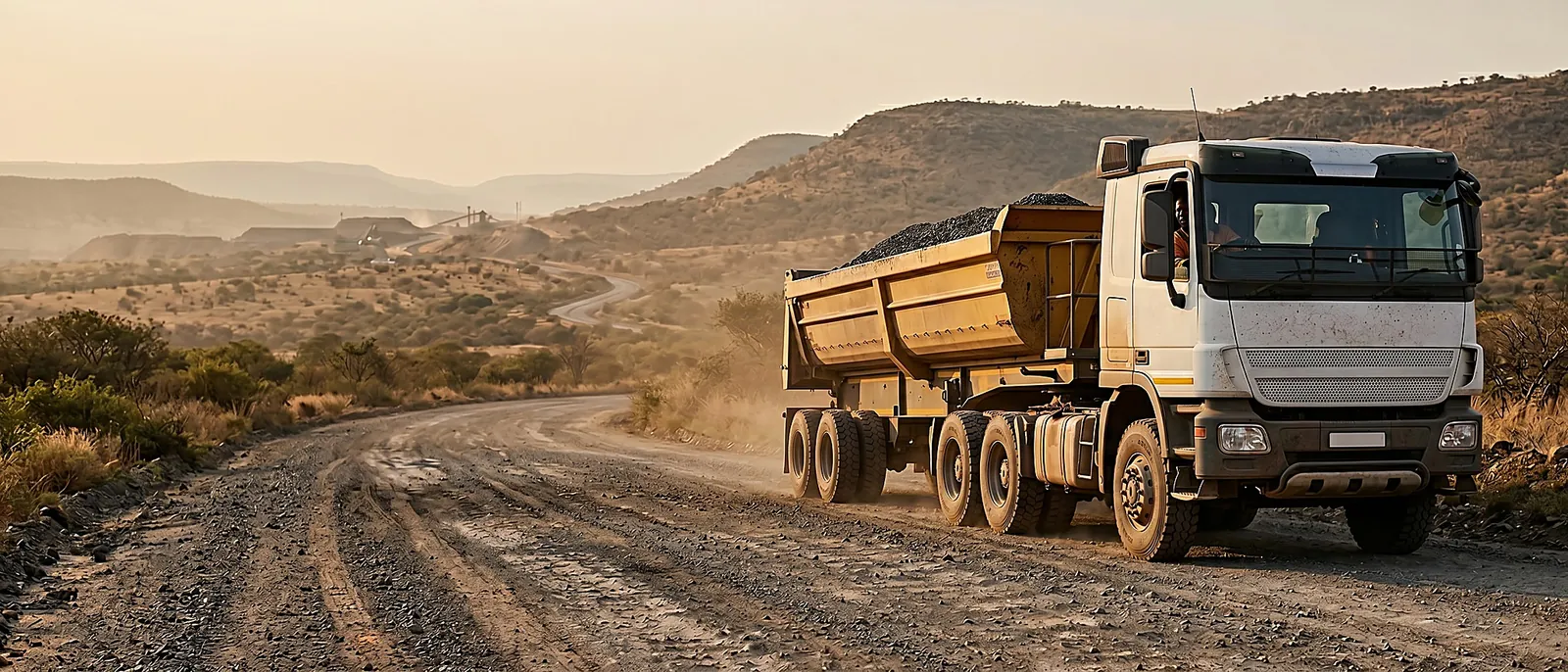
From depot gate to customer DC, every trailer earns its day on a single record. A battery powered GPS device on each tautliner, side tipper, flat deck or bulk tanker reports the on-route picture continuously: where the trailer is on the leg, which customer yard it is dwelling at, whether the planned route is being followed, when the next tractor swap happens. Dispatch, commercial and the CFO read the same productivity number from the same dataset, and the Tuesday morning planning report opens with the fleet's actual day, not the schedule written on Monday.
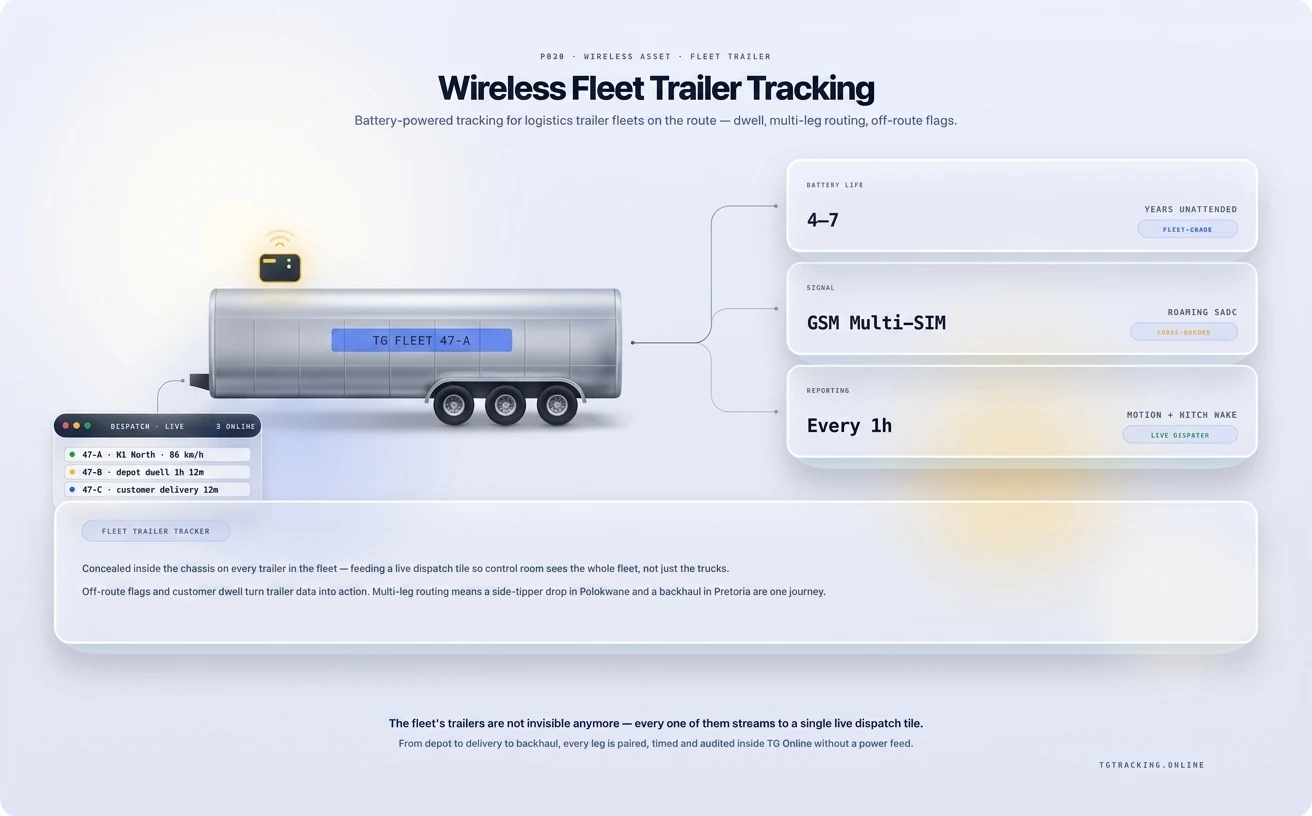
Wireless fleet trailer tracking from TG Tracking puts a battery powered GPS device on every trailer in a logistics, mining haulage or bulk transport fleet so the dispatch team sees the on-route picture: where the trailer is on the leg, how long it has been at a customer yard, whether it deviated from the planned route, and when it crossed a border or province line. It runs on the same platform as Trailer Management and the wider Wireless asset tracking family, with an on-route alert profile that complements the depot-side framing of Wireless commercial trailer tracking.
Most trailer-tracking pages stop at the depot fence. This one starts at the depot gate and stays with the trailer through the leg. The questions a logistics dispatcher asks are not "is it parked" but "how long since it left the load-out", "is it on the planned route", "what is the ETA at the receiving customer", and "when does the tractor swap happen". The platform's on-route view answers all four against the actual trail, not the schedule the planner wrote on Monday.
The platform measures dwell as a continuous number per trailer, per customer, per route, and rolls it up into a weekly view. A tautliner that arrives at a Durban DC at 14:00 and leaves at 09:00 the next morning carries a complete dwell record back to dispatch. The commercial conversation with the customer is grounded in data: "your average dwell against our trailers this quarter has been seven hours and twenty minutes, here is the per-day breakdown." Both teams work from the same number.
A trailer on a planned Johannesburg to Bloemfontein leg should not detour through Welkom. A side tipper en route from Witbank to Richards Bay should not be stationary for two hours at a private yard outside Vryheid. The deviation alert fires the moment the trailer leaves a configured corridor or stops outside the planned set of stop points. For multi-leg trips with a tractor swap, the platform tracks the swap as an event so the receiving tractor's time-from-handover is on the record.
A bulk haulage trailer crossing into Mozambique via Lebombo, Botswana via Skilpadshek, Zimbabwe via Beit Bridge or Namibia via Vioolsdrif spends part of its trip in a different cellular regime. The multi-network SIM keeps reporting where roaming is configured, the border-crossing event is logged for the customs file, and cross-border dwell becomes a measured number rather than an estimate. For bulk haulage that also runs into mining environments, integrate with Mining IVMS.
A fleet trailer page that ends at "every trailer on a map" is half a page. The other half is the productivity number the CFO wants: trailers per productive day per route, dwell hours unbilled per customer, off-route minutes per leg, fuel-burn-to-payload when paired with Fuel Monitoring, and a single utilisation percentage per trailer that survives a board meeting. Dispatch feeds the same data into TG Online for the operational view.
South African long-haul logistics runs against a small number of corridors with different profiles. The N3 between Durban port and the Highveld carries the heaviest trailer traffic. The N1 carries inland-to-Cape and inland-to-Limpopo. The Witbank coal corridor and Richards Bay carry bulk haulage side tippers. The N4 East and Maputo corridor carry the cross-border flow. Each corridor has its own dwell and theft profile. The alert profile is configured per corridor rather than as a single national rule. For trailer fleets that also include hire stock, see Wireless hire trailer tracking.
Depot-side framing answers "where is each trailer in our yard". On-route framing answers "where is the trailer on its leg, how long has it been at the customer, is it on plan". This page is the on-route view; depot framing lives at Wireless commercial trailer tracking.
Yes. When the trailer is coupled to a tractor on the same platform, the pair is tracked as one unit, and the platform records each swap at a change-over yard.
Per trailer, per customer, per leg, with a weekly roll-up. The view splits "your time" from "customer's time" so dispatch and the commercial team see the same number.
Yes. Hardware is rated for sustained road vibration, dust and weather. The SIM is multi-network and roams onto SADC carriers where roaming is configured.
Battery life depends on cadence and rotation . The API and webhooks push location, status and dwell events into common SA TMS and dispatch tools.
Yes. Customer-share links are configurable per customer with a defined expiry and detail level.
A logistics fleet's productivity sits on the line between trailer-moving time and customer-holding time. The platform puts that line on the Monday morning meeting, the commercial review and the CFO board pack from the same dataset.
Self-powered trackers with multi-year battery life for trailers, containers, equipment and high-value assets.
Object and Level Detection via Radar Bluetooth device in Barra form-factor (batteries not included)
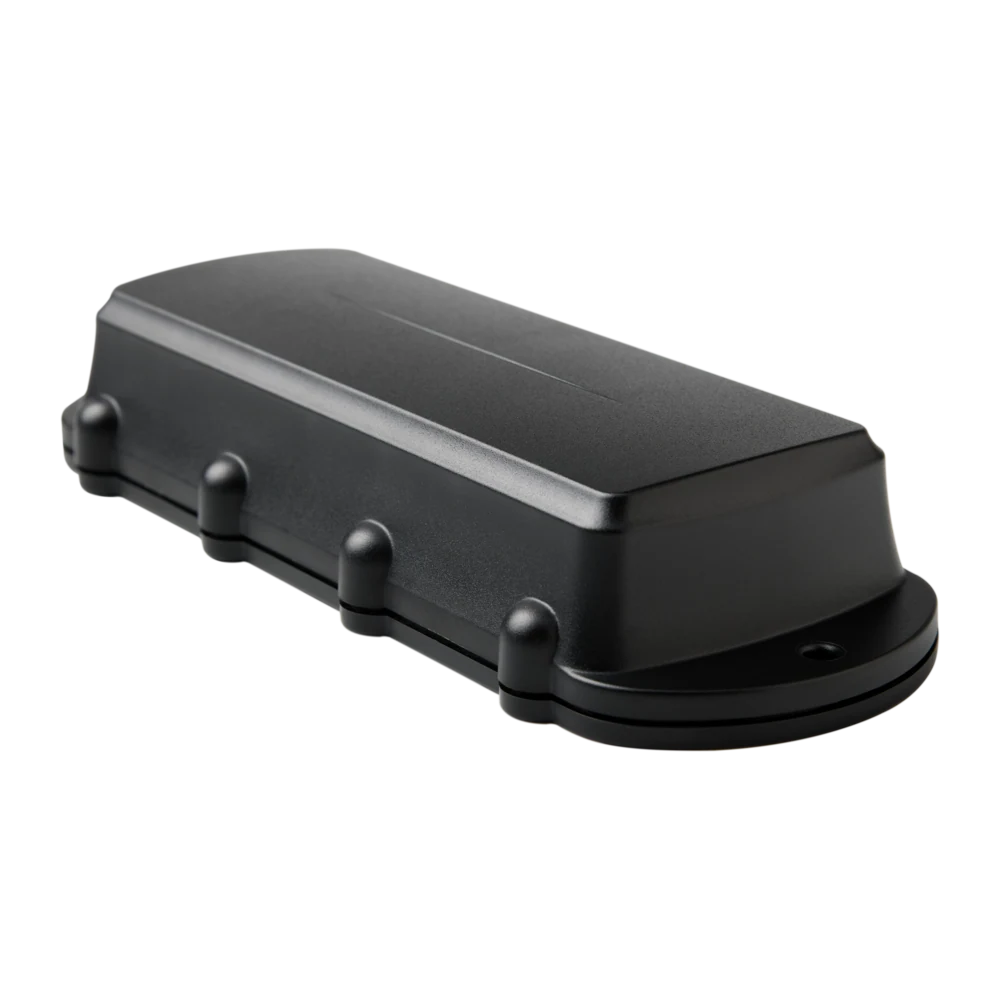
Remora3 Global GPS tracker on 4G Cat1bis with 2G fallback, Bluetooth 5.2 gateway
Remora3 GPS tracker on 4G LTE-M / NB-IoT with Bluetooth 5.2, massive battery life
Manta form-factor GPS-only tracker on 4G LTE-M / NB-IoT
Tell us what you run, where you run it and the risk profile. We'll match the hardware, platform and rollout plan to your operation.