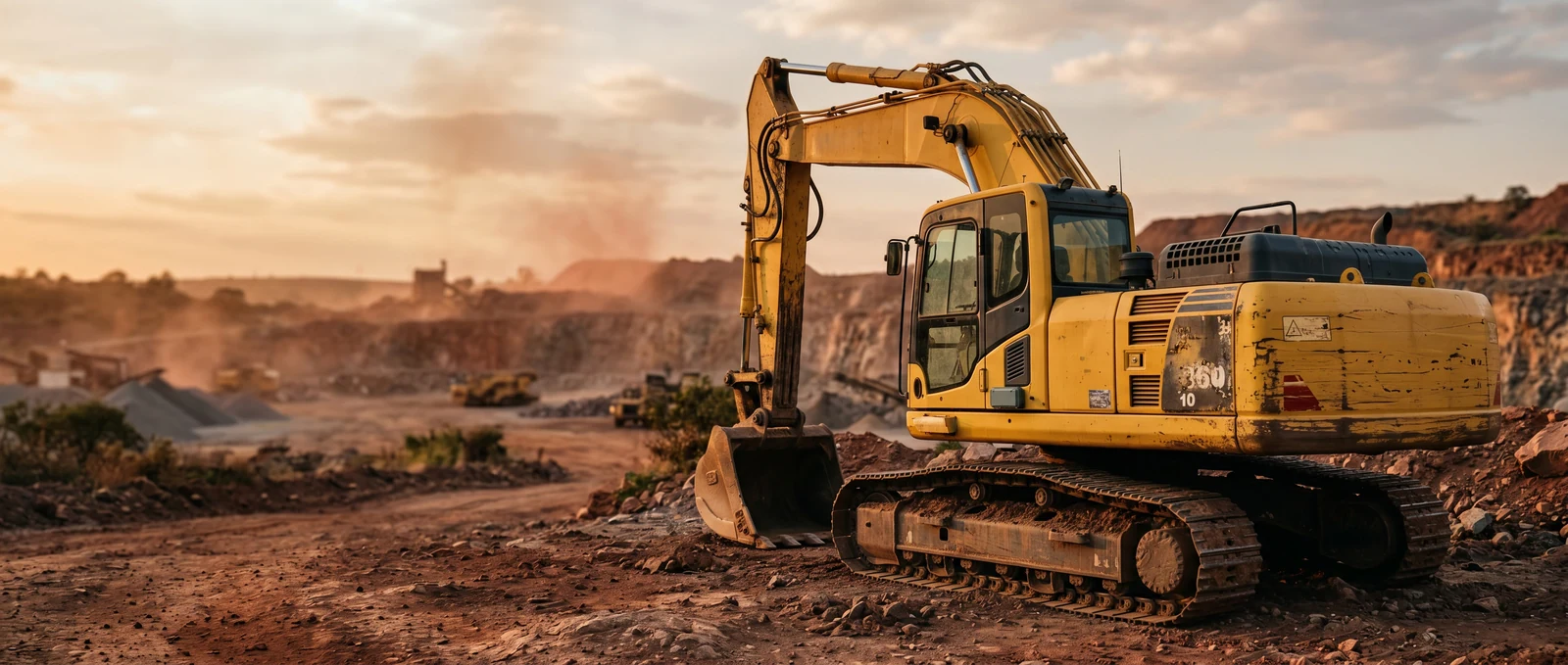
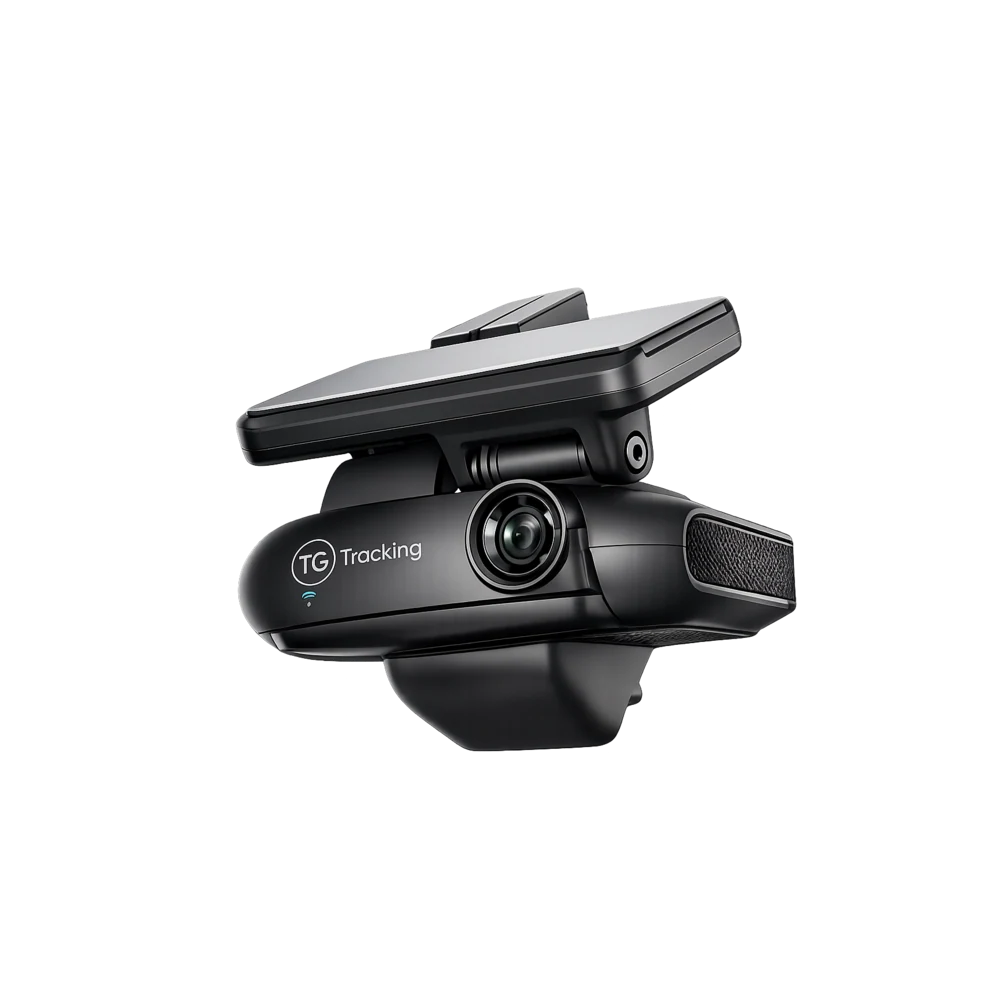
Your asset register comes alive on the platform. Every generator, compressor, trailer, tool kit and piece of plant equipment carries its own battery powered GPS device, and the live view on TG Online shows where each asset is, which site it has moved between, and how many hours it has been working. The same record stands behind the insurance certificate, the utilisation report, and the recovery workflow that runs from a control room in this country.
Direct answer
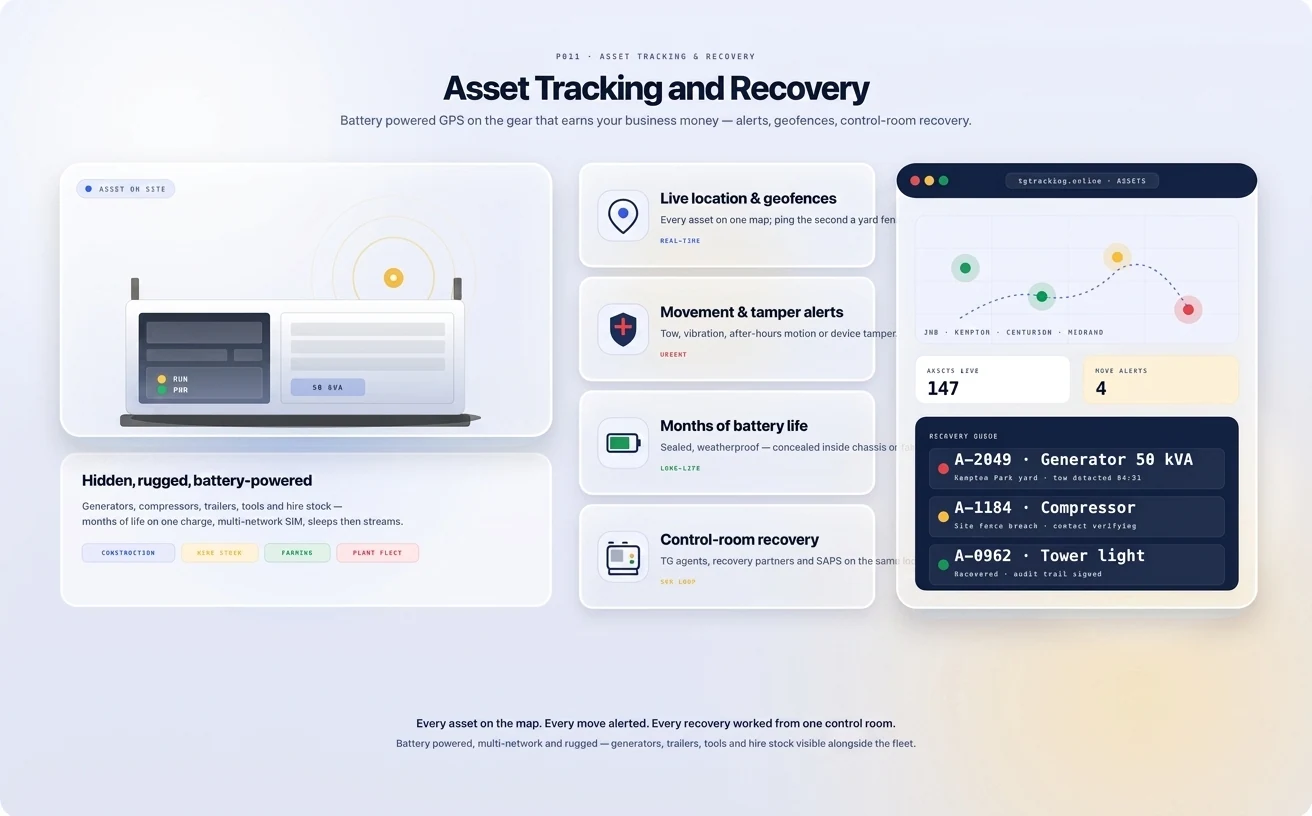
Asset tracking and recovery from TG Tracking puts a battery powered GPS device on the equipment that moves with your business but is not a vehicle you drive: generators, compressors, plant equipment, trailers, tools, hire stock, agricultural implements, mobile cold rooms. It runs for months to years on a single charge, alerts on movement, geofence breach and tampering, and triggers a control-room recovery workflow when a theft is confirmed. See Business solutions for the full range, Wireless asset tracking for the underlying product line, and Fleet Tracking and Management for the powered-vehicle side of the operation.
What asset tracking actually delivers
A wireless asset tracker is a sealed, ruggedised GPS unit fitted to the asset out of sight. It draws power from its own battery, not from the equipment, so it works on assets that have no electrical system at all. The device wakes on motion, fixes its position, reports over a multi-network cellular SIM, and goes back to sleep. Static assets check in on a low-frequency heartbeat. Moving assets stream until they stop again.
Live location, geofences and asset history
Open TG Online and every asset is on the same map as your fleet vehicles. Set a geofence around each yard, depot, site or storage location, and the platform pings the moment an asset crosses it. Pull up the history of any asset and see where it has been, when, and for how long. That answers two operational questions every fleet runs into: where is the equipment we hired out three weeks ago, and which sites is each generator actually moving between.
Movement, tow and tamper alerts
The device alerts on unauthorised motion outside operating hours, sustained towing, severe vibration that suggests the asset is being lifted onto a vehicle, and physical tampering with the unit. Battery low alerts fire well before the device goes silent.
Rugged, weatherproof, hidden
Asset trackers are designed for sites, not offices. Dust, vibration, moisture, heat. Small enough to conceal inside a generator chassis, behind a battery, inside a trailer body or under a fuel tank shroud. The unit a thief never finds is the unit that recovers the asset.
Control-room recovery workflow
When a confirmed theft event fires, the control room takes over. The agent on duty calls the site contact to verify, opens a recovery ticket, alerts our recovery partners in the area where the asset is moving, and stays on the line. The asset's location streams to the recovery team in real time. SAPS is engaged via the recovery partner where appropriate. The same workflow runs whether the missing asset is a R12 000 toolbox or a R450 000 piece of plant equipment.
What businesses actually track
The same product line covers a wide range of asset categories. The hardware is the same. What changes is the configuration, the alert rules and the geofence design.
Construction and plant
Generators, compressors, welders, tower lights, mixers, plate compactors, water tankers, plant trailers, jumping jacks, scaffold towers and the tools that disappear from a site overnight. Construction is the highest-loss category in the country and the one where tracking pays for itself fastest.
Logistics, transport and trailers
Trailers, container chassis, fuel bowsers, mobile cold rooms, dollies, ground support equipment at airports. For a deeper trailer-specific workflow including door sensors and reefer probes, see Trailer Management.
Service vans and tools of trade
Tradesman vans full of tools, fibre-install kits, electrical-test gear, HVAC equipment, copper stock. The bakkie has the Fleet Tracking and Management device on it. The tools inside it have wireless asset trackers on them. The two products run on the same account, so the dispatcher sees both layers in one view.
Agriculture and rural
Farm implements, irrigation pumps, generators on remote outposts, water tanker trailers, harvesters and ploughs that move between fields. Cellular coverage in rural South Africa is patchy, which is why multi-network connectivity is standard.
Hire and rental
Hire equipment is harder to track than owned equipment because it leaves the depot every day. Geofences fire on out-of-area use, contract overrun, and unauthorised movement to a different site. Utilisation reporting tells you which units earn their keep and which sit in the yard.
The day-to-day return on a live asset register
Utilisation, accountability and procurement decisions sit on the same platform that runs the recovery workflow. Day to day, the platform is the operational dashboard for the asset base. When something does need recovering, the same dataset is already in place.
Utilisation and rebalancing
A generator that sits in a yard for three weeks is a generator the company is paying for and not earning from. Utilisation reporting shows which assets work, which sit, and where to rebalance. The conversation is no longer about how many generators we own, it is about how many are deployed and earning.
Duplicate-purchase prevention
Most fleets and most construction companies buy duplicates of equipment they already own and cannot find. Asset tracking puts every unit on a map. The procurement question changes from "do we have one" to "where is the one we have".
Site-to-site accountability
When a piece of equipment moves between sites, the platform logs it. The arriving site signs for what arrives. The leaving site signs for what leaves. The audit trail is automatic, which removes the most common dispute on multi-site projects.
Insurance and claims
Most insurers underwriting business asset cover give better terms when assets are tracked. The platform issues the certificate the broker needs and provides the recovery evidence after a claim.
South African context, why this matters here
Construction-site theft, fuel-bowser hijacking, generator removal from light-industrial yards, copper stripping, agricultural-implement theft from rural farms and tool theft from service-van canopies are documented loss patterns across the country. Stolen hardware often crosses borders inside 48 hours, which is why border-crossing alerts are a default. Multi-network coverage matters because rural South Africa, mining sites and the kilometres of farmland between provinces have no single operator dominant everywhere. The control room is in this country, in this time zone, with recovery partners that already know the routes a stolen generator typically takes.
For sites that also need IoT sensors on tanks, equipment runtime and weather conditions, see Remote sensor monitoring.
Frequently asked questions
How long does the battery last?
Months to years on a single charge, depending on how often the asset moves and how often the device reports. Static assets in long-term storage last longer than constantly mobile equipment. Replacement is rare, not routine.
Can I track equipment that has no electrical system at all?
Yes. That is the entire point of a battery powered wireless tracker. Generators that are off, trailers that are unhitched, tools that have no power, plant that is parked, all carry their own power source in the device.
What is the difference between this and Fleet Tracking and Management?
Fleet Tracking and Management uses a hardwired device on a powered vehicle, drawing power from the engine. Asset tracking uses a battery powered device on equipment that has no engine to draw from. Most businesses run both products on the same account.
How quickly is a stolen asset recovered?
The control room treats every confirmed theft as priority and works with national recovery partners. Recovery time depends on alert speed, location accuracy and how close a recovery team is at the moment.
Will the device survive a construction site?
Yes. The hardware is rated for dust, vibration, impact and moisture, and is designed to survive the conditions that destroy consumer-grade trackers. Specific IP ratings are on the datasheet.
Can I track high-value tools as well as plant?
Yes. The same product line scales down to bakkie-canopy tool kits, fibre install boxes, copper stock and other portable equipment. The unit is small enough to conceal inside a toolbox, behind a panel or inside an enclosure. Concealment matters because the value of the device is in the recovery, not the alert.
Do I need to manage each tracker separately, or are they on the same platform as my vehicles?
The same platform, same login. Powered vehicles and battery powered assets sit side by side in TG Online. Geofences, alerts, reports and recovery workflows are unified across both. The fleet manager sees one view, not two.
Put the asset register on the platform that runs it
A live asset register pays for itself in utilisation gains, duplicate-purchase decisions avoided, insurance terms negotiated on the basis of evidence, and the recovery workflow ready in the background. Tracking costs less than one week of project delay and far less than one duplicate purchase.
Recommended hardware
The right tracking layer for asset tracking and recovery.
Vehicle, asset, driver and reporting hardware tuned to the way real businesses run fleets.
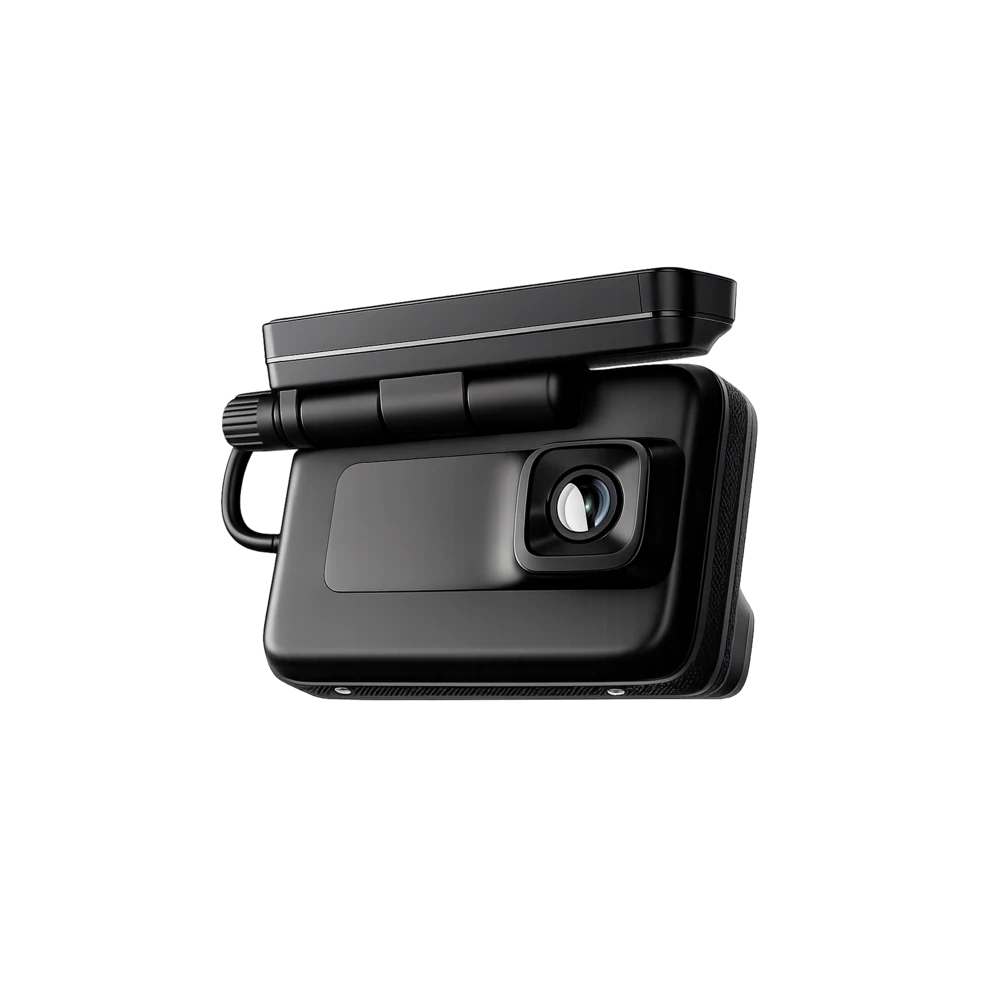
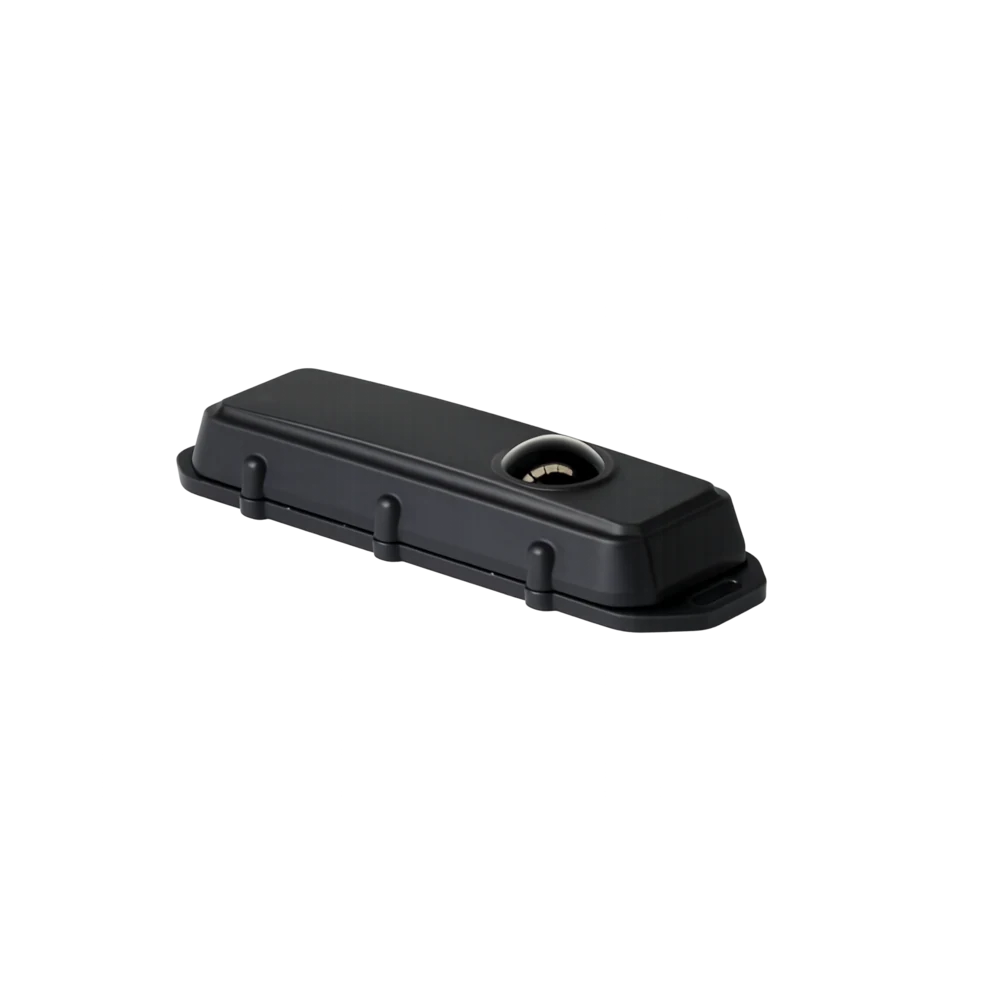
BARRA-RADAR-BLE · Wireless trackers
Barra Radar BLE
Object and Level Detection via Radar Bluetooth device in Barra form-factor (batteries not included)
IN STOCK · ZAR
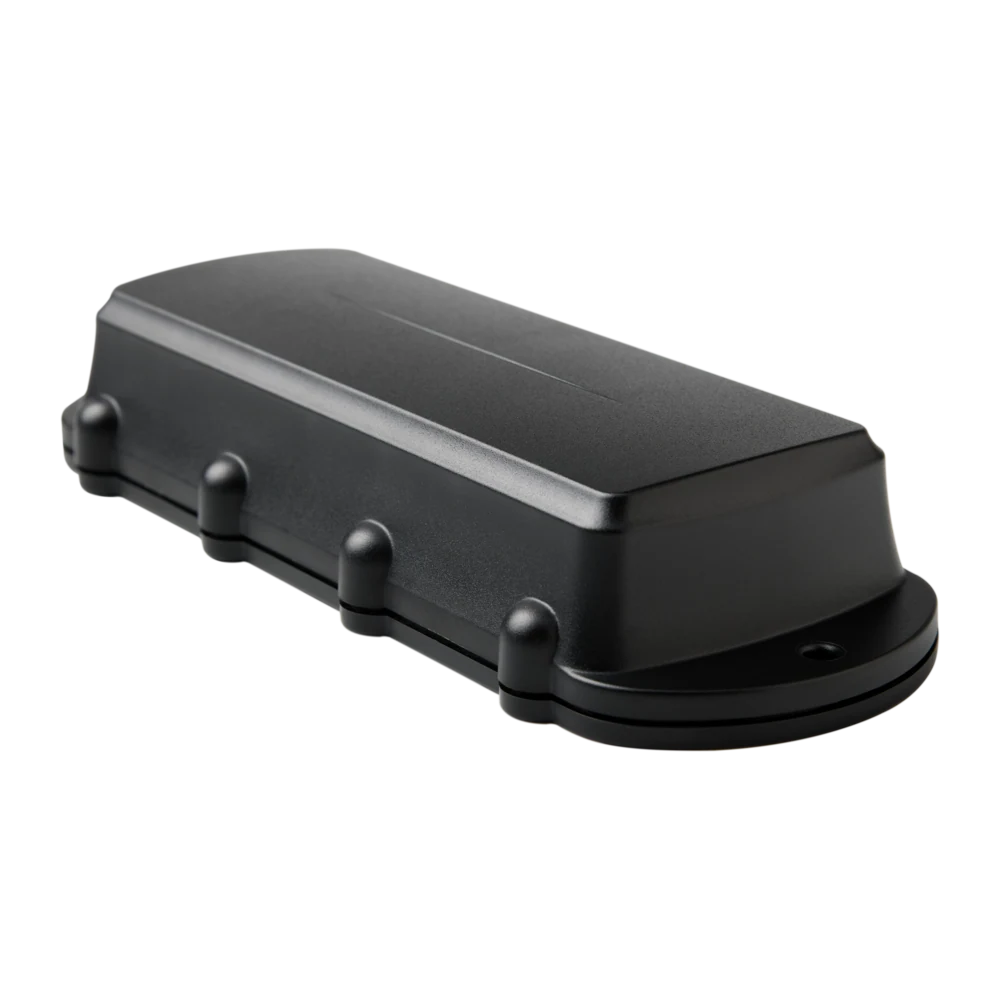
REMORA3-GLOBAL · Wireless trackers
Remora3 Global
Remora3 Global GPS tracker on 4G Cat1bis with 2G fallback, Bluetooth 5.2 gateway
IN STOCK · ZAR
More in Business
Business overview
Related business solutions.
Talk to TG Tracking
Add Asset Tracking and Recovery to your fleet operating layer.
Tell us what you run, where you run it and the risk profile. We'll match the hardware, platform and rollout plan to your operation.