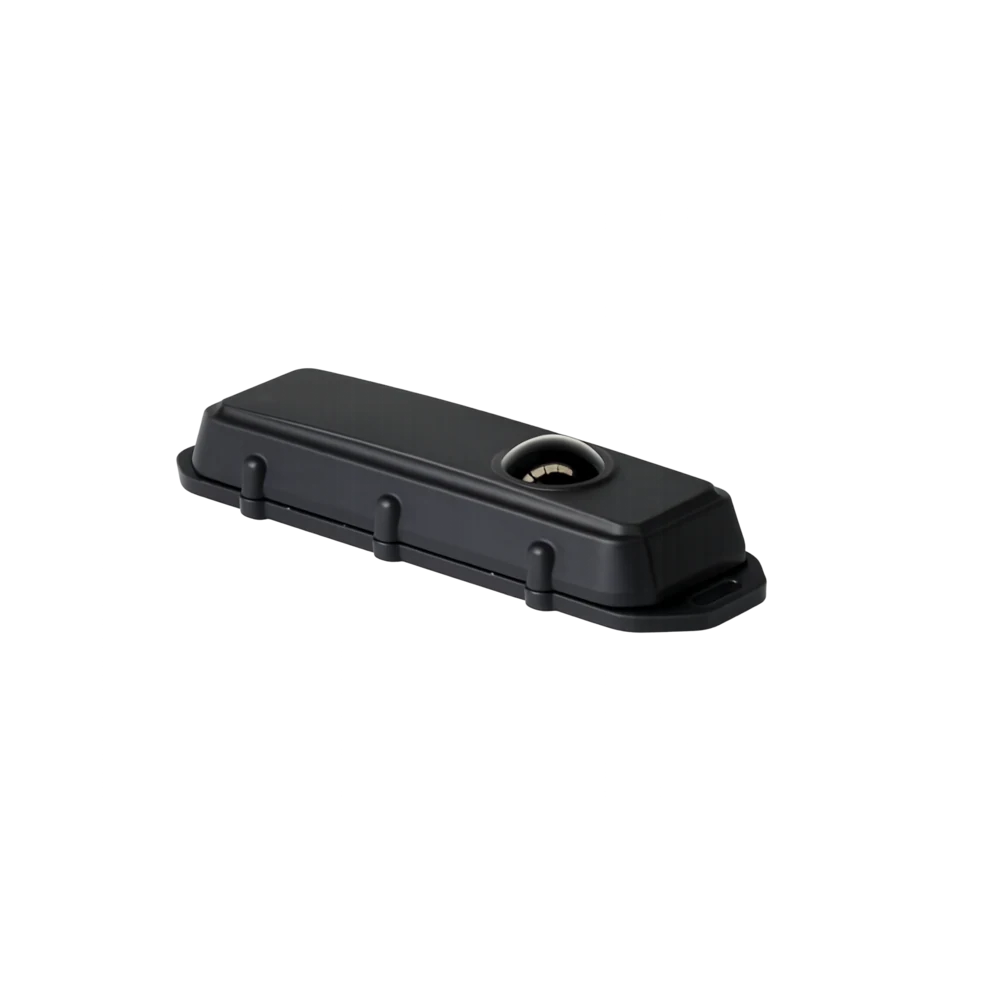
BARRA-RADAR-BLE · Wireless trackers
Barra Radar BLE
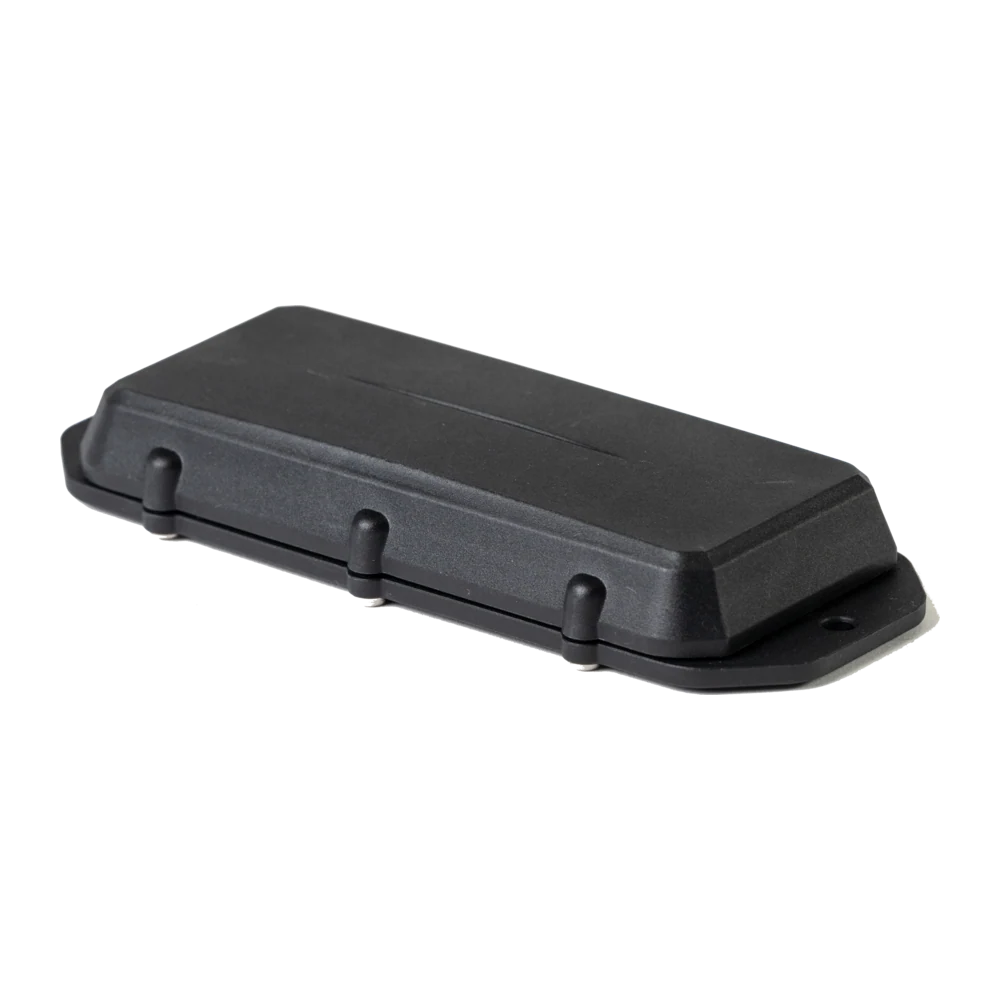
Object and Level Detection via Radar Bluetooth device in Barra form-factor (batteries not included)
IN STOCK · ZAR
HomeSolutionsWireless Asset TrackingWireless Airport Dolly and ULD Tracking
Operating layer · Solution
Battery powered tracking for airport dollies, ULDs and ground equipment. Apron geofence per stand, turn time savings, ULD chain of custody, shift handover.
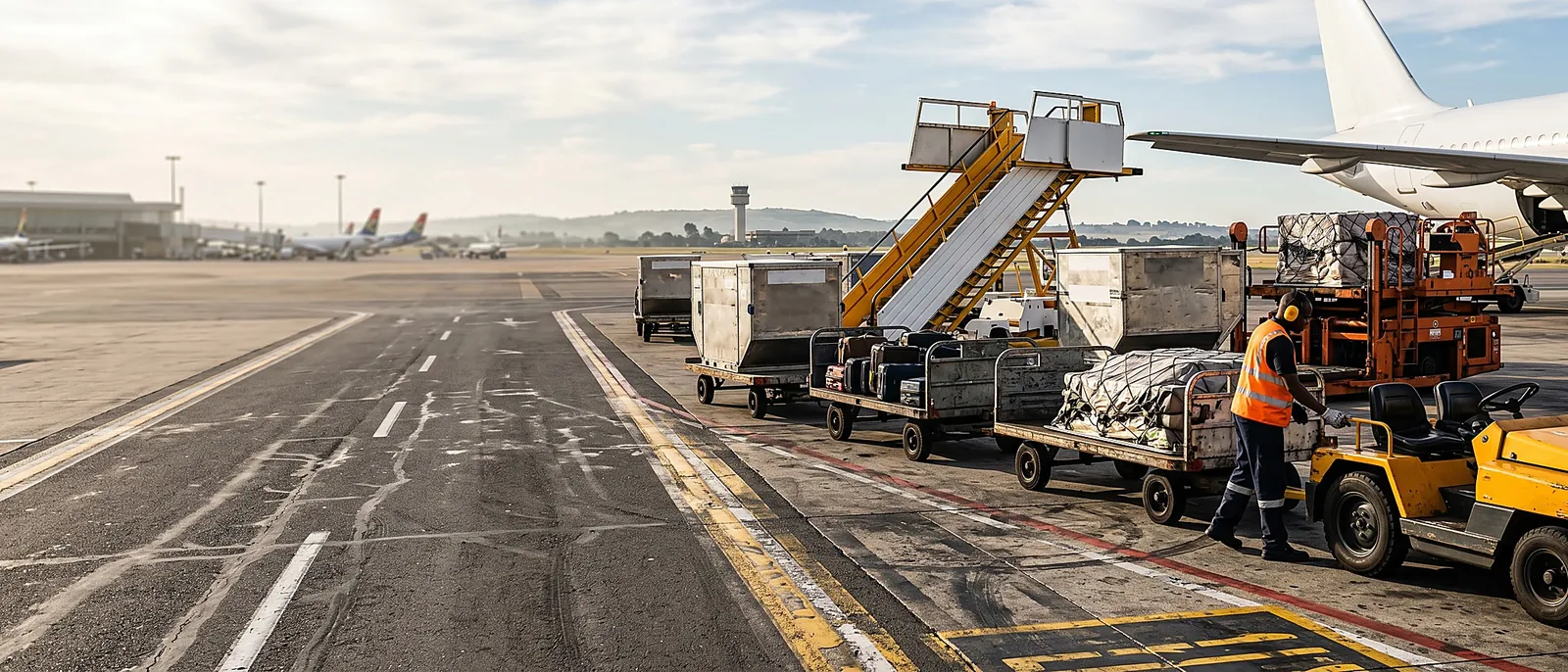
OR Tambo, the night cargo bank, minus-fifteen on the turn clock and the inbound has been on stand for nine minutes already. The handler's lead supervisor is on the radio: the two roller-bed dollies the load plan needs are not on stand 78. They were last seen at the maintenance bay at the south apron before shift handover and have not moved since. The turn budget is gone. Nobody steals an airport dolly. Dollies are misplaced, mishandled at shift change, parked on the wrong stand, or pulled by the previous airline's crew and not returned. The cost is not the dolly, it is the aircraft delay. That is what this page is about.
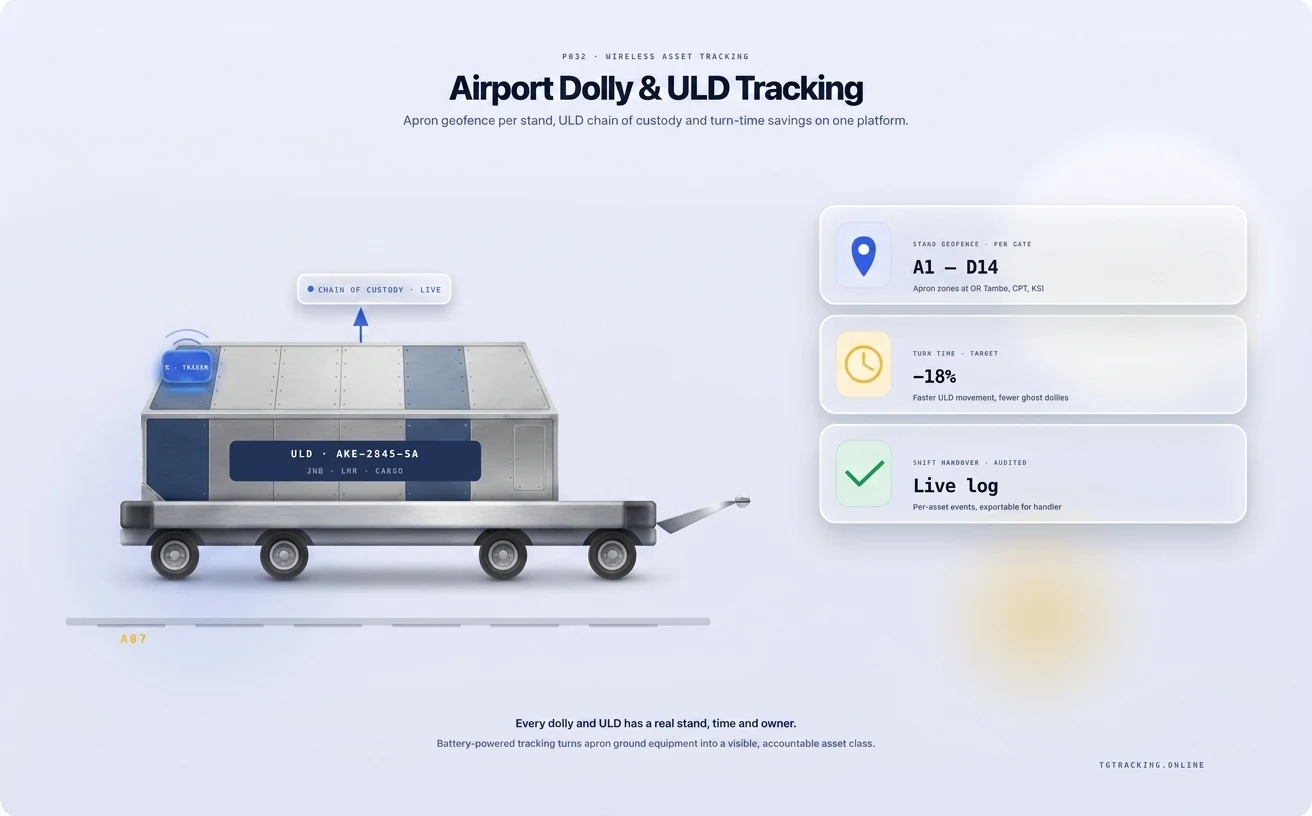
Wireless airport dolly and ULD tracking from TG Tracking puts a battery powered GPS device on cargo dollies, baggage carts, ULD trailers, pallet dollies and other airside ground support equipment so handlers and airlines see live position per stand, time-on-stand, idle dwell, shift handover events and ULD chain of custody. It runs on the same platform as the broader Wireless asset tracking family with an airside-specific alert profile.
Every other page in this cluster is about theft, recovery or revenue protection. This one is not. Aviation ground handling lives or dies on turn time. A dolly that arrives on stand at minus-eight instead of minus-fifteen costs the handler aircraft-on-ground minutes that translate to airline penalties, delayed sectors and missed slots. Tracking does not stop the dolly from being misplaced. Tracking shortens the time it takes to find one and removes the searching from the turn clock. The handler's apron coordinator opens TG Online, filters to roller-beds and pulls the nearest available unit on the screen rather than radioing three teams .
A standard asset tracking page draws a single geofence around an entire site. An apron does not work like that. Every stand is its own zone, the cargo bay is its own zone, the maintenance area is its own zone, the ULD store is its own zone, the security perimeter is its own zone, and remote stands are their own zones. The platform is configured with stand-level zones so a dolly that crosses from stand 32 to stand 78 is logged as a stand event, not a generic move. Turn-time reporting per stand becomes possible because the data has the stand on it.
ULDs change hands. An airline owns or leases the ULD, the handler signs for it on arrival, the cargo sub-handler signs for the breakdown, the freight forwarder signs for the onward move, and the ULD is supposed to come back to the airline's pool. Half of ULD loss is not theft, it is custody. The platform records every zone transition with a timestamp so the chain is auditable: airline, handler, breakdown, forwarder, pool. The question is rarely "where is it" but "who had it last and when did it leave them" .
Most apron asset disorder happens at shift handover. The departing crew does not log a dolly back to its home stand. The arriving crew does not know it was on a remote stand. The dolly waits on the wrong side of the apron through a turn cycle. The platform records each handover as an event window: every asset's position is logged at handover start and end, the diff is the audit. The supervisor sees on Monday morning which assets crossed shifts in the right state. The conversation is procedural, not punitive.
South African aviation runs through three major hubs and busy regional airports. OR Tambo carries the country's heaviest cargo and passenger turnover, with multi-handler GSE and high-value ULD flow. Cape Town International runs seasonal peaks tied to tourism and the Atlantic seafood and produce export flows. King Shaka in Durban carries cargo into the KwaZulu-Natal industrial belt. Lanseria and regional airports run charter and small commercial GSE. Multi-network connectivity matters because apron cellular coverage varies between handlers' radio areas. For container chain of custody on the ground side, see Wireless container tracking; for fuel bowsers servicing aircraft pads, see Wireless fuel bowser tracking; for the broader trailer-class equipment that supports cargo flow, see Wireless commercial trailer tracking and Asset Tracking and Recovery.
The tracker is battery powered, sealed, and not wired into any aircraft system. Mounting is on the dolly or ULD chassis, never inside the avionics envelope.
Hardware is rated for the sustained vibration and thermal envelope of an apron position.
Yes. Each asset class is a category in the platform. ULDs, cargo dollies, baggage carts and roller-bed trailers are filtered separately, with separate alert profiles per class.
The platform supports role-based, per-handler views so each operator sees its own assets and a shared subset of pooled equipment. ULD chain of custody is recorded across the boundary, not only inside one handler.
The security perimeter and customs zones are configured zones. An asset that crosses triggers an alert routed to the handler's security desk and the airport control room.
Yes. Customer-share links are configurable so the airline operations team sees its ULDs' live positions at a defined detail level without seeing the handler's whole fleet.
Aircraft delays at minus-fifteen are not solved on the radio. They are solved by knowing where the dolly is before the radio call. The platform puts the answer in the apron coordinator's hand in seconds.
Self-powered trackers with multi-year battery life for trailers, containers, equipment and high-value assets.
Object and Level Detection via Radar Bluetooth device in Barra form-factor (batteries not included)
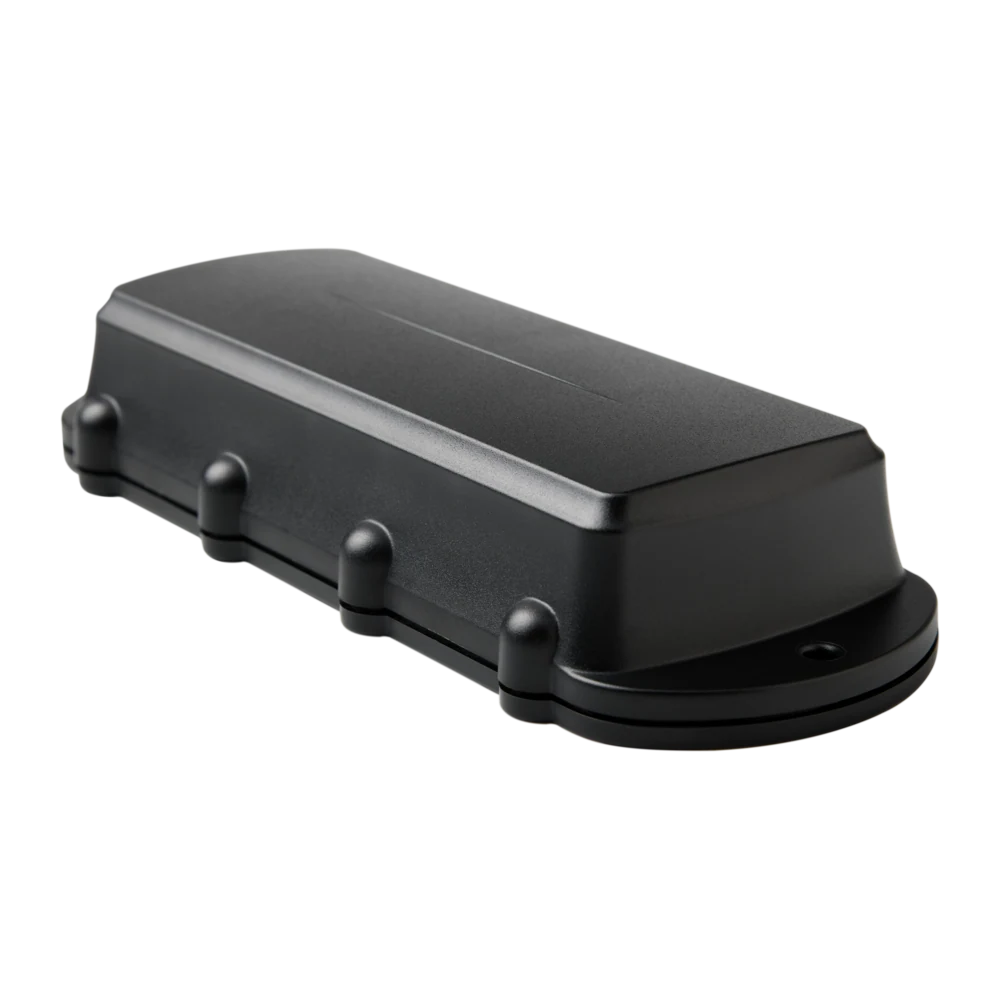
Remora3 Global GPS tracker on 4G Cat1bis with 2G fallback, Bluetooth 5.2 gateway
Remora3 GPS tracker on 4G LTE-M / NB-IoT with Bluetooth 5.2, massive battery life
Manta form-factor GPS-only tracker on 4G LTE-M / NB-IoT
Tell us what you run, where you run it and the risk profile. We'll match the hardware, platform and rollout plan to your operation.