HomeSolutionsBy OutcomeDriver Safety, Coaching and Evidence
Operating layer · Solution
Driver Safety, Coaching and Evidence
Reduce driver incidents, prove what happened on the road, keep HR insurers and SAPS aligned. AI dashcams, DMS, ADAS and a coaching loop on TG Tracking.
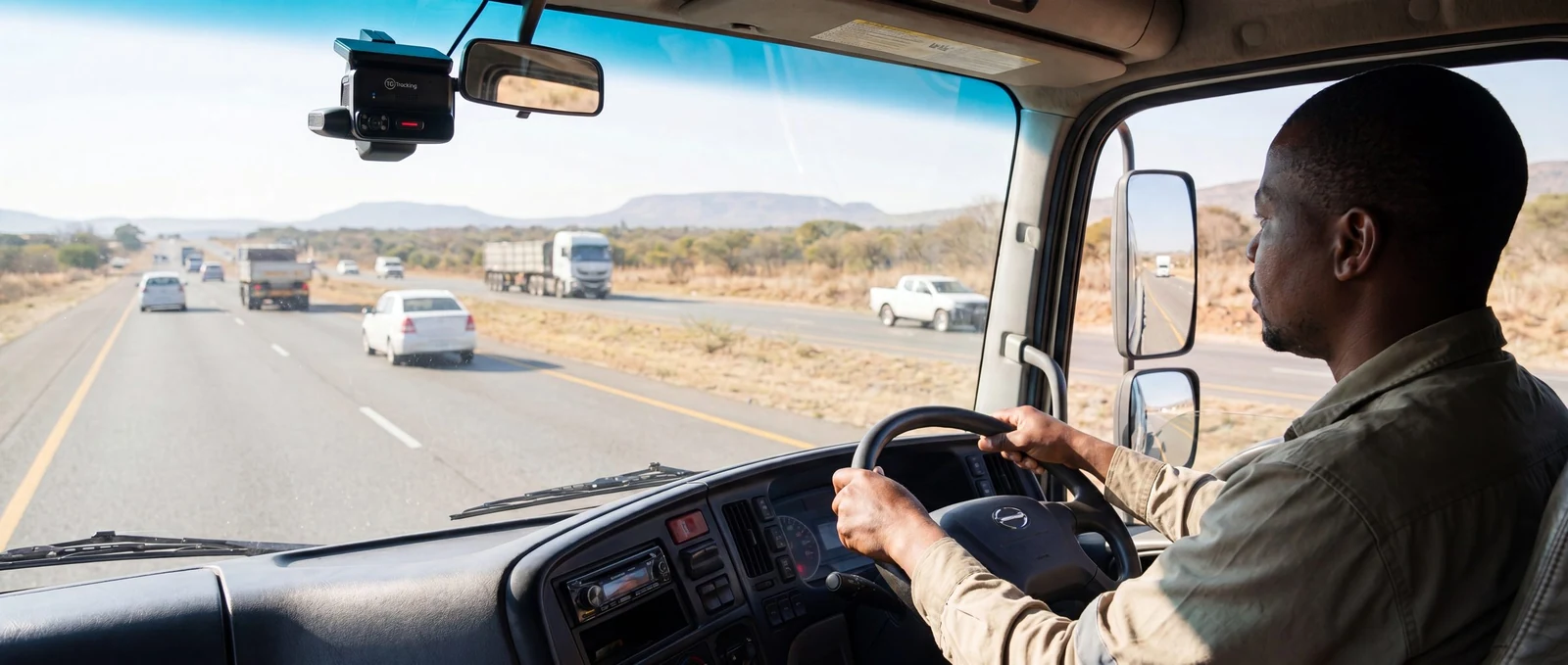
A 03:40 night-haul leg between Bloemfontein and Colesberg on the N1. The driver has been on shift for six hours, the cab is warm, the road is straight. Over a two-minute window, the eye-closure pattern moves from baseline to sustained drowsy state, the head pose tilts forward, two yawns inside ninety seconds. Yesterday this is the moment the truck drifts onto the verge. Tonight the in-cab DMS reads the pattern, fires a cab voice prompt, the driver pulls in at the next safe stop, and the event lands on tomorrow's coaching list. The HR director reviews it on Thursday morning with the driver in the room and the footage on the screen. The conversation is short. The next month's score moves down.
Direct answer
TG Tracking gives the safety officer, the HR director and the fleet manager an evidence layer on every driver event. AI dashcams record. DMS flags fatigue, distraction, phone use and seatbelt status. ADAS flags following distance and lane drift. Driver coaching turns the events into a 30-day score that moves. Insurers see the record. SAPS investigators see the record. Drivers see their own footage on TG Mobile and the conversation gets shorter every month.
Who this is for
For safety officers and HR directors managing driver behaviour across a fleet. For fleet managers carrying insurance for the assets and the people on them. For insurance brokers and underwriters who want evidence-led premium adjustments. For owner-operators worried about a single risky driver. For passenger transport and emergency services where the cab IS the operation.
What TG Tracking helps you see, prevent, prove and improve
- See driver behaviour patterns across a shift, a month and a year on one record
- Prevent fatigue and distraction incidents with in-cab voice prompts before the verge
- Prove what happened on the road with GPS-tagged, time-stamped video evidence
- Improve a 30-day coaching score with named events the driver agrees to
- Audit driver hours, breaks, seatbelt status and phone-use patterns against fleet policy
- Settle disputes with footage rather than recollection on insurance, HR and SAPS records
Best-fit tracking systems
A driver safety programme is the cab. The right system depends on the route, the risk profile and the policy posture of the operator.
- AI dash cameras (forward-facing and cabin) for the primary evidence record. HD video, GPS-tagged event clips, accident-triggered clip lock, Personal Dashcams for owner-driver and household use, Business Fleet Video Cameras for commercial fleets.
- DMS (Driver Monitoring System) in-cab for fatigue, distraction, phone use, seatbelt status. Cab voice prompt in real time. Event lands on the coaching list. DMS detail.
- ADAS (Advanced Driver Assistance Systems) forward-facing for following distance, lane drift, sudden braking. Pairs with DMS for the full in-cab picture. ADAS detail.
- Driver Coaching and Behaviour Insights as the loop that turns events into a 30-day score. Driver sees their own footage. HR sees the named events. The next month's score moves. Driver Coaching detail.
Use cases
Long-haul night route, N1 corridor. A six-hour shift between Bloemfontein and Colesberg. DMS flags sustained drowsy state at 03:40. Cab voice prompt fires. Driver pulls in. Event on the coaching list. The next month, the same driver runs the same route with no fatigue flags. Insurance broker sees the score move and applies a risk credit.
Sales rep fleet across Gauteng, 24 vehicles. Twelve drivers, twelve different driving styles. AI dashcam + DMS rollout. After 60 days, the median harsh-braking event count drops. Two outlier drivers receive one-to-one coaching. The HR director cites the named events and the footage. The conversation is short.
Insurance claim on a side-impact, M2 Johannesburg. Disputed liability. The TG Tracking footage shows the impact angle, the speed and the lane position. The insurer accepts the evidence and pays within the standard window. The HR director closes the file with the named record.
Public transport operator, KZN minibus fleet. Driver fatigue and phone use are the operational risk. DMS rolls out across the cab. The provincial transport authority sees the audit trail. The operator carries the evidence in tender submissions.
Owner-operator household, Western Cape. A new licence holder driving to university in Stellenbosch. Personal dashcam, family TG Tracking account, one mobile app. A near-miss on the R44 records eight seconds either side. The parent sees the footage. The conversation that night is calm.
Operational outcomes
| Outcome | What it means on the ground |
|---|---|
| Lower incident frequency | The coaching loop pulls the 30-day score down month over month |
| Insurer-ready evidence | Time-stamped footage on every event, accepted at face value |
| HR resolution speed | Named events with footage end driver disputes in one meeting |
| Driver retention | Drivers see their own record, know the platform watches fairly |
| Premium adjustments | Brokers and insurers price risk on evidence, not estimate |
| POPIA compliance | Lawful basis, role-based access, configured retention, audit logs |
Related devices and integrations
- Dashcam Tracking is the household entry point
- AI Camera Solutions is the business anchor
- Fleet Safety, Compliance and Risk covers the full safety cluster
- ADAS and DMS are the in-cab AI layer
- Driving Performance Monitoring ties safety to operational performance
- For the visibility picture, see Fleet Visibility and Control
- For private-driver insurance use cases, see Private Vehicle Tracking for Insured Drivers
- For public passenger transport, see Passenger and Public Transport
Proof, demo, pricing
Book a Demo. A TG specialist walks through one cab event, one coaching loop, one insurance scenario, with your fleet profile in the brief. Forty minutes. No commitment.
Frequently asked questions
Are AI dashcams and DMS accepted by South African insurers?
Yes. TG Tracking partners with brokers and underwriters across SA who treat verified AI dashcam and DMS deployment as a risk-rating input. Specific premium adjustments depend on the underwriter and the fleet profile. Specifics confirmed via SAIA and broker channels on request.
Does in-cab monitoring comply with POPIA?
Yes. TG Tracking processes in-cab biometric data on a lawful basis with consent capture, configured retention, role-based access on TG Online and audit logs on every record view. The Information Officer attestation is available on request. Specifics confirmed by the TG Tracking compliance team.
Will my drivers accept being monitored?
The platform is designed for transparency. Drivers see their own footage on TG Mobile. The coaching loop names events the driver agrees to. The score moves in the driver's favour with named effort, not against them by default. Operators who frame the platform as a coaching tool, not a surveillance tool, see acceptance over a 30 to 60 day window.
What is the difference between ADAS and DMS?
ADAS looks forward through a cabin-mounted camera for road events: following distance, lane drift, harsh braking, forward collision warning. DMS looks at the driver for biometric events: fatigue, distraction, phone use, seatbelt status. Most fleets deploy both for the full in-cab picture.
What does a driver safety rollout cost on a 30-vehicle fleet?
Pricing depends on camera shape, cabin variant and platform tier. The carries the device-level numbers. Book a demo for a written quote against your actual fleet profile and risk posture.
Can the footage be used in court?
TG Tracking footage is time-stamped, GPS-tagged and stored on tamper-evident infrastructure. South African courts and SAPS investigators have accepted similar footage in fleet incident records. Specific admissibility depends on the case and the court. Operators carrying high evidentiary risk should confirm with legal counsel.
Protect the driver, prove the record
If your last incident took two weeks to settle, the platform pays for itself on the next one. Book a demo and we will walk you through one cab event from detection to coaching to evidence pack.
Related by outcome solutions.
Add Driver Safety, Coaching and Evidence to your fleet operating layer.
Tell us what you run, where you run it and the risk profile. We'll match the hardware, platform and rollout plan to your operation.