HomeSolutionsSafety, Compliance & RiskADAS
Operating layer · Solution
ADAS
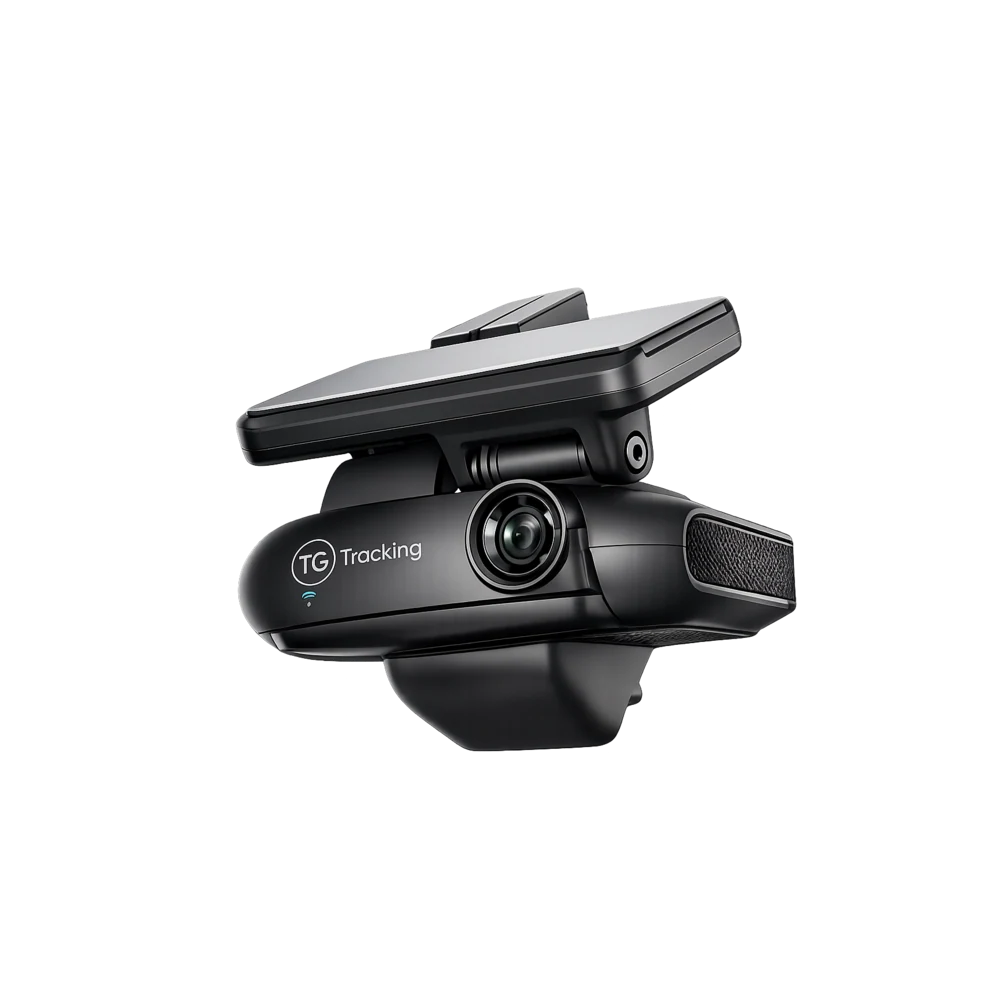
Advanced Driver Assistance Systems for South African fleets. Forward-collision warning, lane departure, tailgating and pedestrian alerts on the TG Tracking platform.
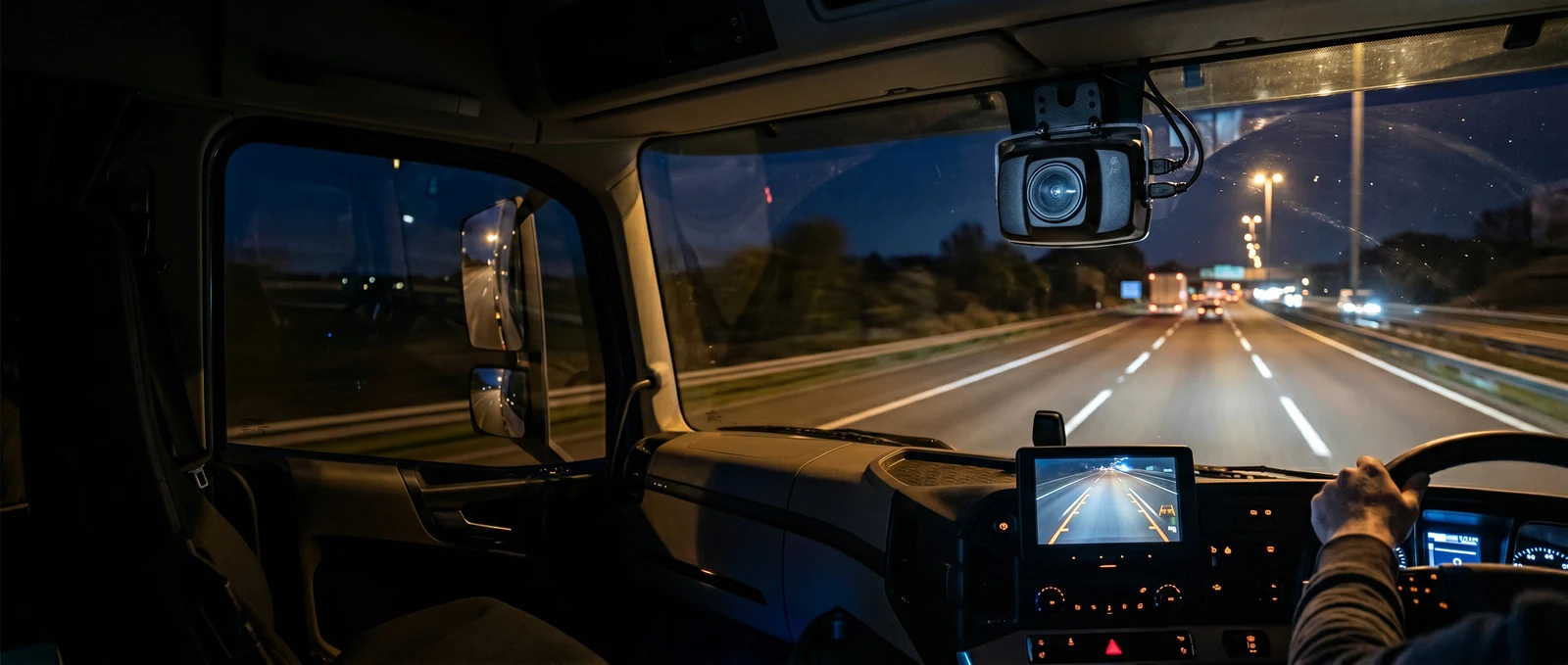
A long-haul leg on the N3, just past Heidelberg, the visibility falling at dusk on a Sunday. The driver is closing on a stationary truck on the inside lane that has not yet put its hazards on. The tail-light contrast is poor. Reaction time is shrinking with every metre. ADAS reads the closing rate, the relative speed and the distance, fires a forward-collision audible warning at a 1.5-second time-to-collision threshold, and the driver brakes a fraction of a second earlier than he would have unaided. That fraction is the difference between a soft stop and a rear-ender that ends both vehicles. ADAS is the road-ahead system that gives the driver the warning before reaction time runs out.
Direct answer
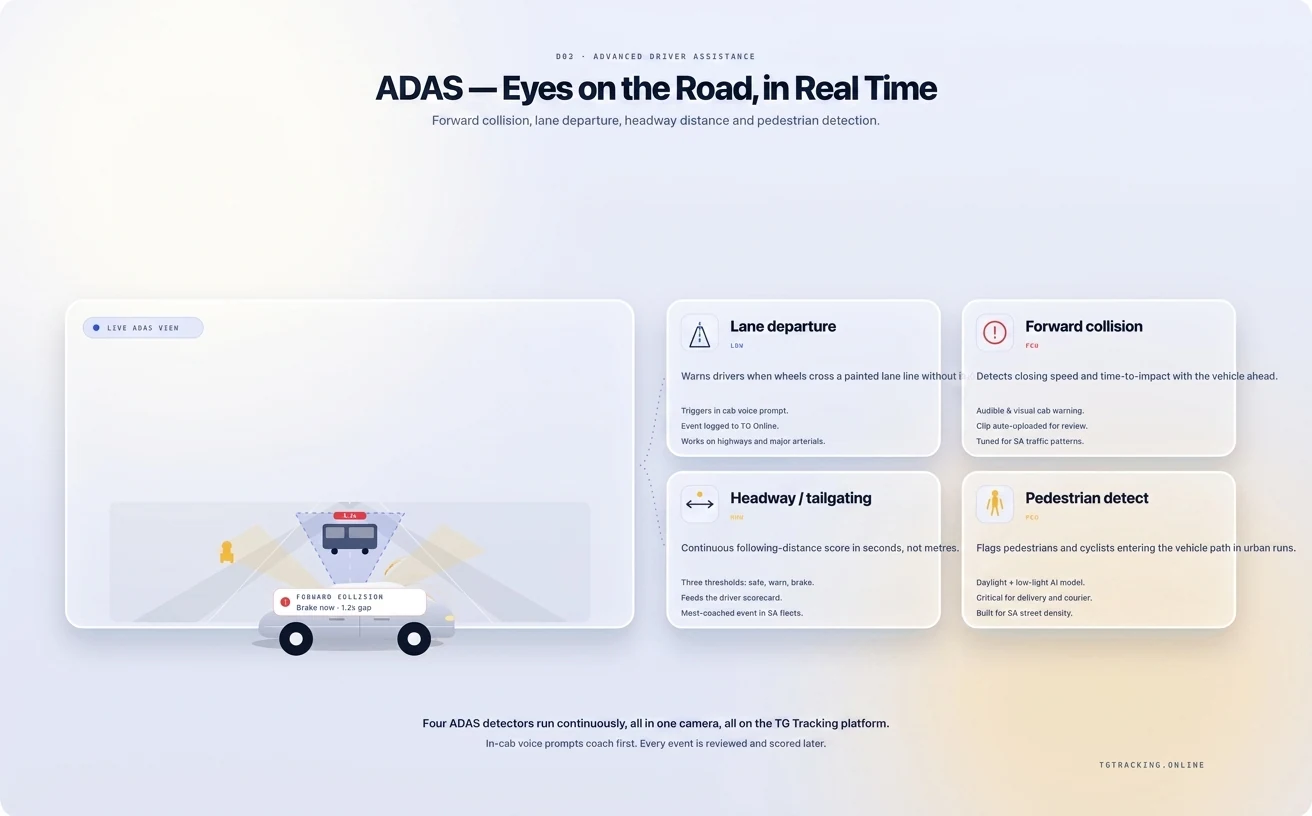
TG Tracking ADAS is the road-facing AI inside the Fleet Safety, Compliance and Risk cluster. Forward-collision warning, lane departure, tailgating, pedestrian and cyclist detection, and unsafe-following-distance alerts at configurable thresholds, with a cab voice prompt and an event clip uploaded to TG Online. It pairs with DMS for the in-cab driver-monitoring side and AI Fleet Dash Cameras for the road-facing event camera. Same data flows into Driver Coaching and Behaviour Insights and Fleet Tracking and Management.
What ADAS reads on the road ahead
ADAS is a road-facing AI that watches the lane, the vehicles in it, and the vehicles around it.
Forward-collision warning
A live calculation of closing rate, relative speed and time-to-collision against the vehicle directly ahead. When the time-to-collision drops below the configured threshold, the cab speaker fires an audible warning. The driver typically reacts in under a second, which is the working margin ADAS is designed to create.
Lane departure warning
If the vehicle drifts out of its lane without the indicator on, the system alerts the driver. The classic use case is a fatigue or distraction drift between Mooi River and Pietermaritzburg at 03:00, where the indicator is the difference between a corrective alert and a single-vehicle accident.
Tailgating and unsafe following distance
The platform calculates safe following distance based on speed and reads the actual gap. When the gap closes inside the unsafe band, the system fires a cab prompt.
Pedestrian and cyclist detection
In urban environments, the AI flags pedestrians and cyclists in the vehicle's projected path. Particularly relevant for last-mile delivery in dense CBD traffic in Joburg, Cape Town and Durban.
Sudden braking ahead and risky-condition flags
The system flags the vehicle ahead braking suddenly and surfaces wet-road and low-visibility conditions where they affect the warning thresholds.
Optional traffic sign recognition
Reads detected speed limits and warns when the vehicle is significantly over the posted rule. Recognition accuracy on South African signage depends on signage condition.
How ADAS pairs with DMS in the cab
ADAS warns about the road. DMS warns about the driver. Together they cover the two sides of the fatal-event chain: the road ahead and the driver inside the cab. A drowsy driver gets a DMS alert; the same driver drifting into the next lane gets an ADAS lane-departure warning. The cluster reads both and decides which is leading the cause.
South African road realities ADAS is built for
The N3 between Heidelberg and Mooi River, the Van Reenen's Pass descent, the N1 between De Doorns and Touws River, the N2 fog belt, the Bloemfontein-to-Colesberg leg at night, the M1 in Sandton at peak hour, the Cape Town airport approach at dusk: every one of those has well-known visibility, tailgating or speed-pattern issues that ADAS specifically addresses. The cab voice prompt is the first coaching beat. The event clip, GPS, speed and trip context flow into the coaching workflow.
Frequently asked questions
Does ADAS replace factory-fitted ADAS on a new truck?
No. Factory-fitted ADAS is at the truck level. TG Tracking ADAS adds the cloud event clip, the integration into Driver Coaching and Behaviour Insights, the Mining IVMS compatibility and the cross-fleet view that factory ADAS does not provide. The two work alongside each other.
How accurate is the AI on South African roads?
ADAS detection accuracy depends on visibility, lane markings, signage condition and vehicle following pattern. The platform is tuned for South African road conditions; specific accuracy figures are operational and not published as marketing claims.
Will my insurer reduce my premium with ADAS installed?
Insurer recognition of ADAS as premium-rating evidence is rising, and ADAS event logs plus dashcam clips are usually the strongest pack. Confirm with your broker.
Will the ADAS alerts annoy my drivers?
ADAS alert volume depends on threshold configuration. Default thresholds are conservative; tuning happens during onboarding once a baseline pattern is read from your routes. Most drivers settle in inside the first month when the alerts are framed as protective rather than punitive.
Can I roll out ADAS to part of the fleet first?
Yes. Many fleets start with their longest-haul or highest-claim-frequency vehicles, prove the workflow, and expand. The platform handles cohort comparison.
Does ADAS work in the dark, in fog, in heavy rain?
Performance degrades with visibility, as with any vision-based system. Low-light and infrared variants are available where night operations dominate.
How is ADAS different from AI Fleet Dash Cameras?
AI Fleet Dash Cameras is the in-cab event camera with both road and cab AI. ADAS focuses specifically on road-ahead AI with the forward-collision, lane-departure, tailgating and pedestrian event types. They run on the same hardware family.
See an ADAS event in real time
If your last preventable rear-ender happened with no warning to the driver, the next one should not. Book a session and we will play you a real ADAS event from cab voice prompt to cloud clip.
Recommended hardware
The right tracking layer for adas.
AI-camera, ADAS and DMS technology with vehicle telemetry that surfaces driver behaviour and incident events.
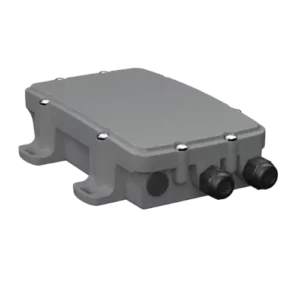
G150-GLOBAL · Wired trackers
G150 Global
G150 Global GPS tracker on Cat1bis and 2G, rugged IP68, Bluetooth 5.2 gateway, 1 harness
IN STOCK · ZAR
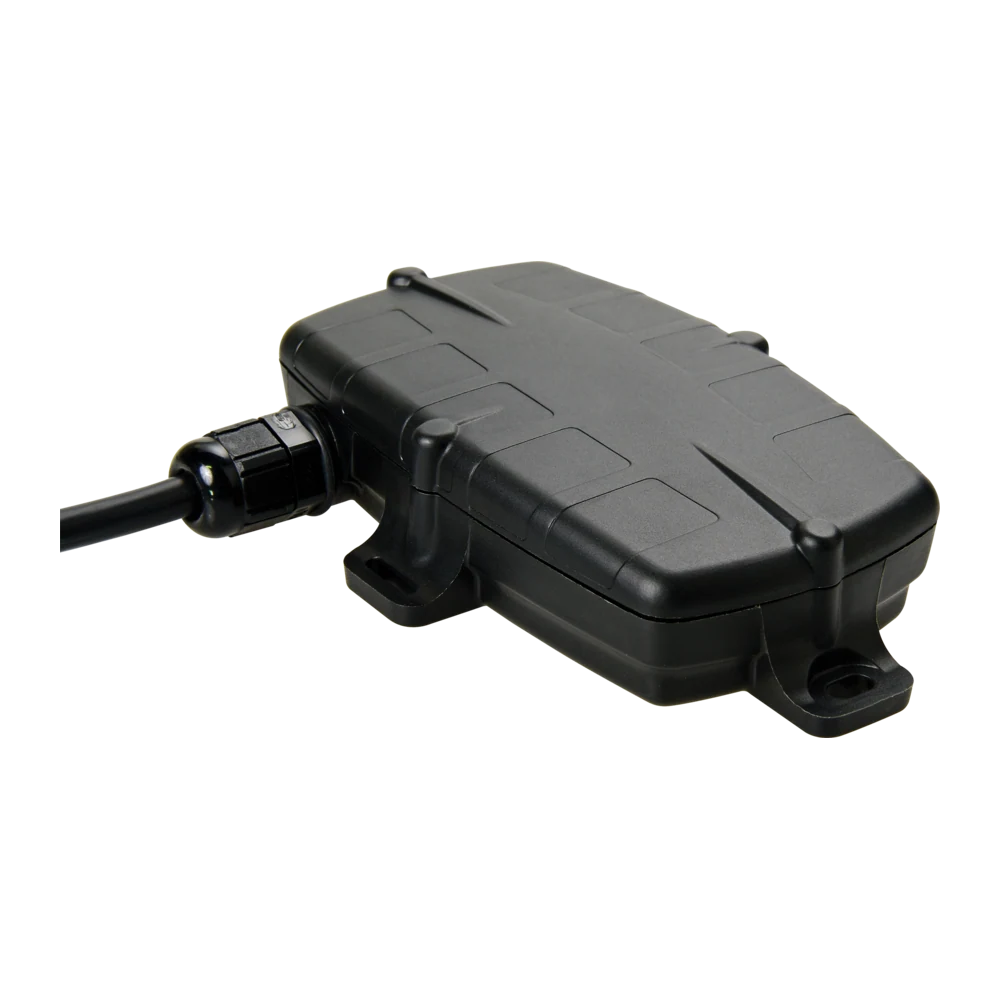
G70-4G-BLE · Wired trackers
G70 4G BLE
G70 GPS tracker with Bluetooth, 4G LTE-M / NB-IoT, rugged IP68, multiple IO’s
IN STOCK · ZAR
More in Safety, Compliance & Risk
Safety, Compliance & Risk overview
Related safety, compliance & risk solutions.
Talk to TG Tracking
Add ADAS to your fleet operating layer.
Tell us what you run, where you run it and the risk profile. We'll match the hardware, platform and rollout plan to your operation.