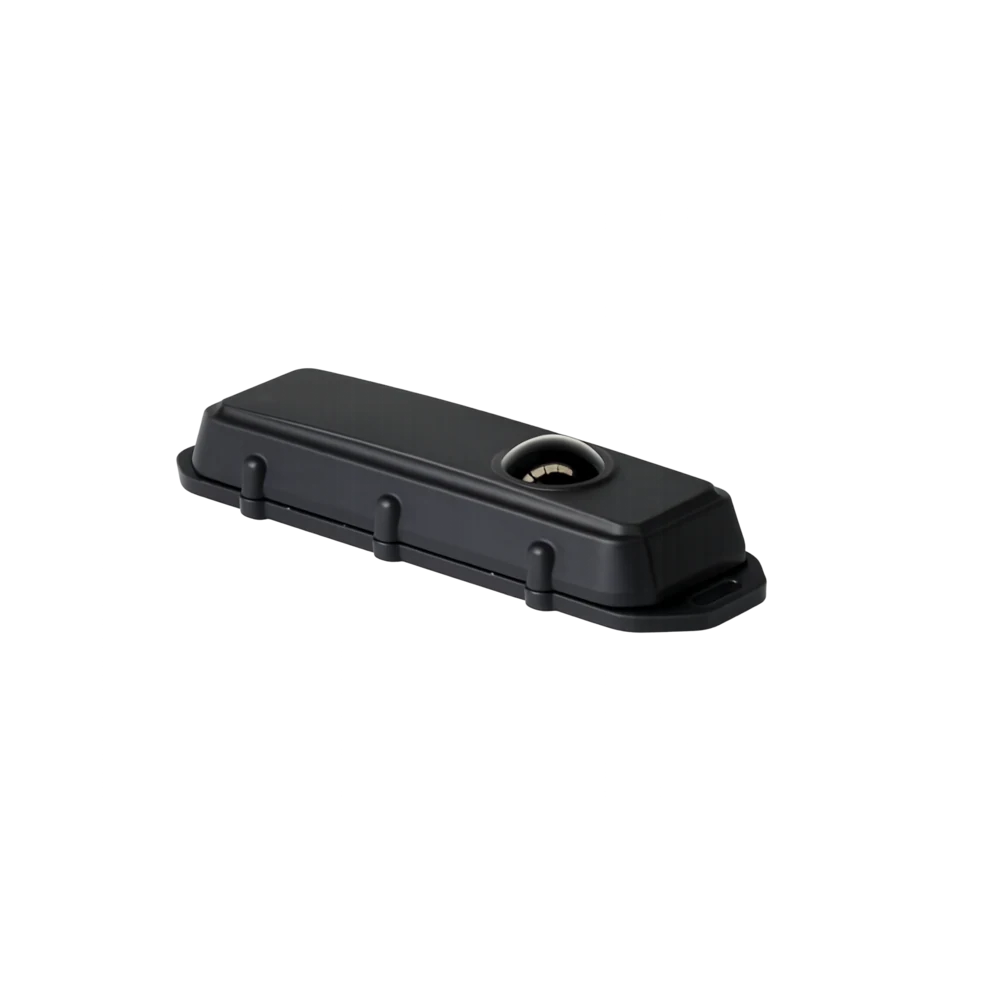
BARRA-RADAR-BLE · Wireless trackers
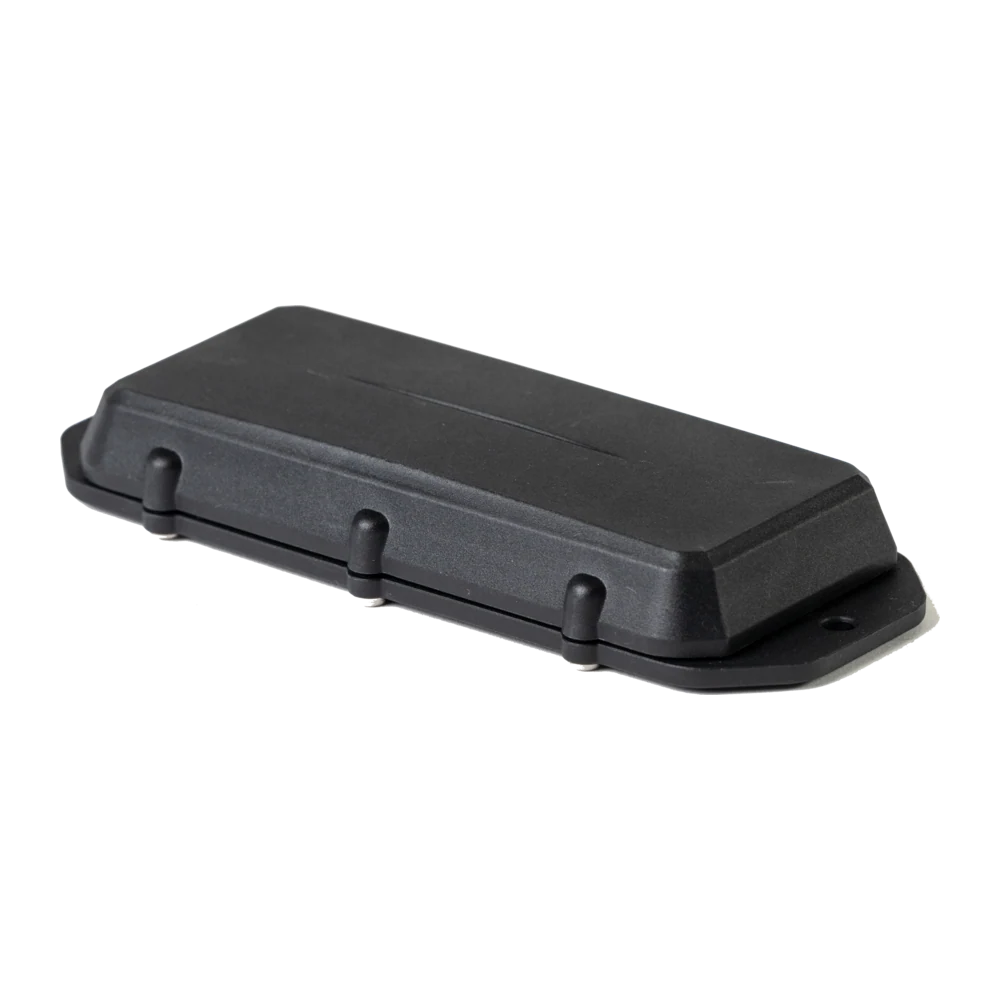
Barra Radar BLE
Object and Level Detection via Radar Bluetooth device in Barra form-factor (batteries not included)
IN STOCK · ZAR
HomeSolutionsOperations, Workflow & ProductivityVehicle Inspection App
Operating layer · Solution
Daily walkaround on a phone, defects to the workshop in minutes, GPS-stamped audit trail. The vehicle inspection app for South African fleets.
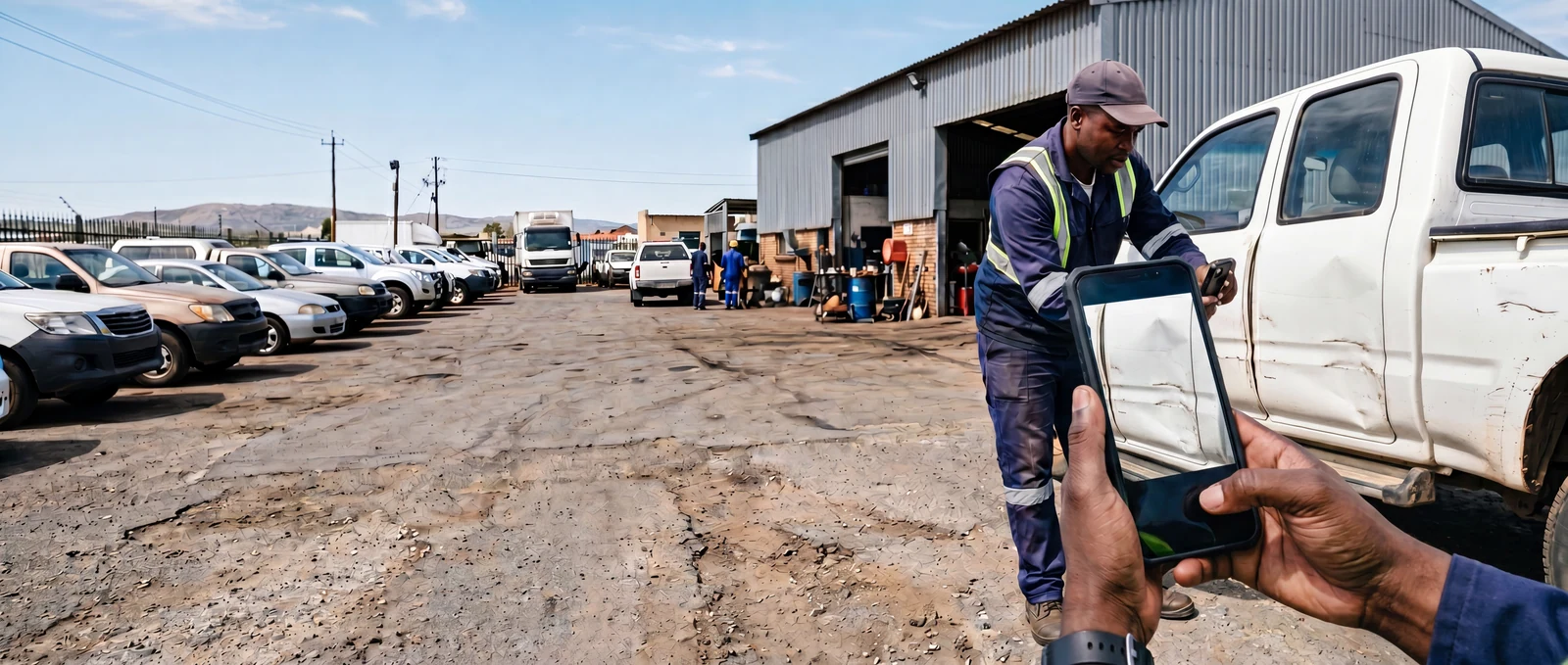
Tuesday, 05:47, the gate of a Pretoria distribution yard. Twenty-two trucks lined up, drivers walking around their vehicles with phones out. Tyre tread, lights, indicators, fluid leaks, load straps, fire extinguisher, licence disc. Tap, photo, signature. By 06:02 the dispatcher has 19 clean inspections, one truck flagging tyre-tread on a steer axle, one reporting an air-leak from the trailer brake system, one with a damaged side indicator. The 3 exceptions land on the workshop queue with photo evidence and severity before the trucks leave. The day starts with three known issues rather than three unknown failures.
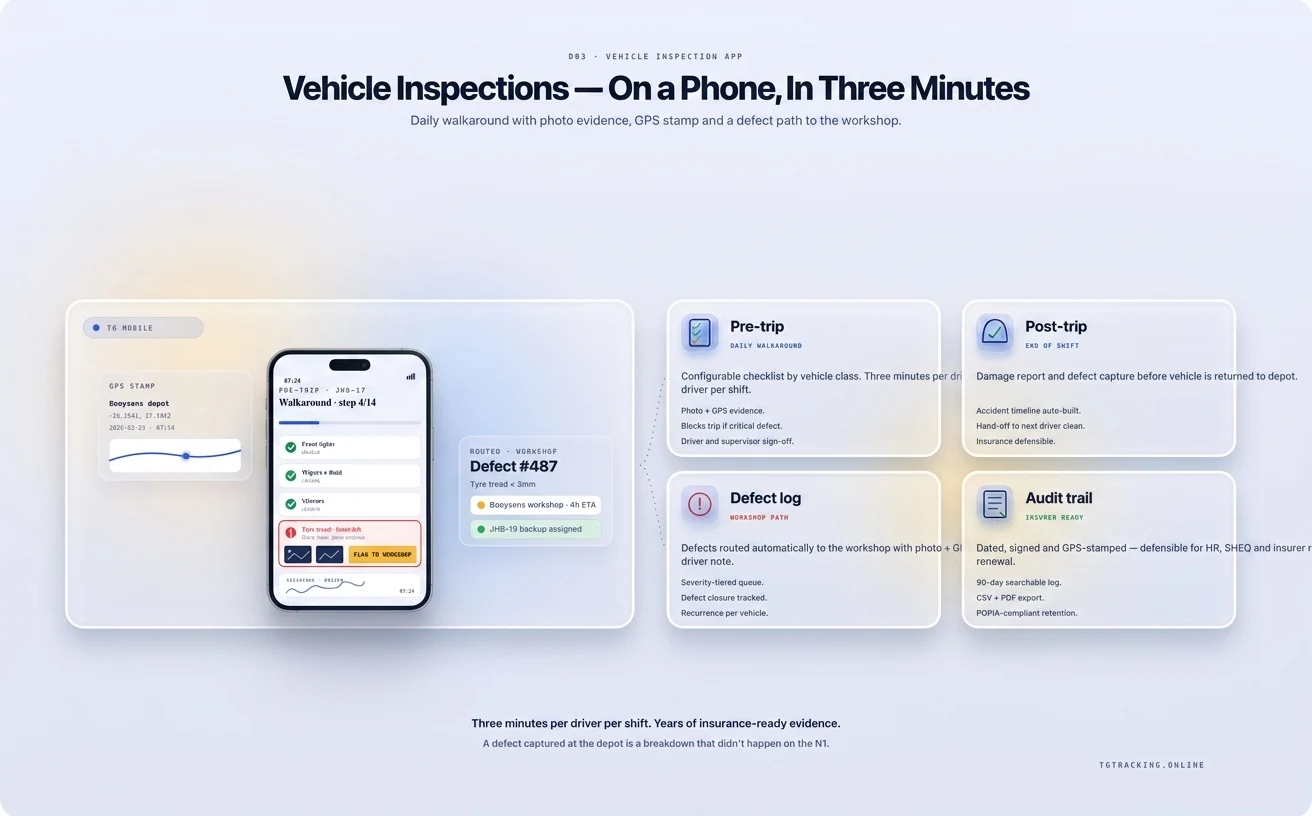
The Vehicle Inspection App from TG Tracking turns the daily walkaround into a 4-minute phone exercise with photo evidence, GPS stamp, driver signature and an audit trail that lands in the workshop, Maintenance Scheduling and the compliance log on submit. It covers pre-trip, post-trip, weekly and ad-hoc inspections for cars, bakkies, trucks, trailers, plant and specialised equipment. Cluster overview at Operations and Workflow. It is a merge of what most fleets used to call "operational inspection" and "safety inspection" into one canonical workflow.
Daily walkaround for the dispatcher. The driver confirms the truck is fit to leave. The dispatcher releases the truck. If a critical item fails, the truck does not roll. The exercise runs in 4 to 6 minutes per vehicle.
Compliance walkaround for the safety officer. Mining IVMS contractors, hazmat operators, cold-chain fleets and public-transport operators carry a stricter inspection load. The same form engine carries the additional sections, mandatory fields and photo proofs the safety officer needs for an audit pack.
A digital inspection that looks like a paper form is just paper on a screen. The platform turns the form into a workflow.
The driver flags a tyre tread issue at 05:53. The defect lands as a maintenance task in Maintenance Scheduling at 05:53:18 with photo and severity. The workshop sees it in the diary at 05:54 alongside the next-due service interval that may now collapse into the same bay slot. The supervisor sees the chain in TG Online. The dispatcher sees a hold on the vehicle until the workshop signs off. By 07:30 the workshop has either fixed the issue, swapped the vehicle, or escalated. The driver does not chase. The workshop does not read WhatsApp. The audit trail writes itself.
The same inspection feeds three audiences without the driver entering data twice.
For the workshop, every defect is a maintenance task. For the safety officer, every inspection is an audit row with photo, GPS and driver signature. For the regulator or customer, the export is a date-ranged audit pack on demand. Mine-site contractors carry the full IVMS-aligned inspection . Cold-chain operators carry the temperature-probe and door-seal pre-trip . Insurance claims read against the pre-trip evidence .
A fleet inspection app built for a flat European urban depot is not built for a Karoo construction site, a Witbank coal yard or a Free State farm. The platform handles offline mode for cellular dead zones, supports the SADC cross-border inspection load, configures for mine-site IVMS protocol, and ships templates aligned with local practice. Inspection signatures hold up in court because the GPS stamp, time and biometric or PIN confirmation are tied together . See Safety, compliance and risk for the broader compliance pillar and Industries we serve for vertical templates.
A standard 30-item walkaround runs 4 to 6 minutes per vehicle. Heavier compliance forms for mining or hazmat run 8 to 12 minutes.
Yes. The full form works offline. Sync resumes when the device reconnects.
The GPS stamp. The form records the location of the inspection and the platform flags any inspection completed outside the configured yard or vehicle location.
Yes. Templates are per vehicle class, depot and industry. A reefer trailer carries the cold-chain section; yellow-metal carries engine-hour entry; hazmat carries an additional safety pack.
Yes. A flagged defect lands as a task in Maintenance Scheduling on submit.
Yes. The app runs standalone for inspections-only deployments. The chain into Maintenance is richer when Fleet Tracking and Management is on the same fleet.
The export carries date-ranged inspection rows, photos, signatures and GPS stamps. Acceptance of any specific evidence pack is at the regulator's discretion.
If your daily inspection still relies on a paper book, a torn carbon copy and a defect that arrives at the workshop two days later, the platform is the layer that closes that gap. Book a demo and we will walk a real morning's inspections with a real fleet shape.
Trackers and apps that turn the daily ops checklist into live, exception-driven workflow.
Object and Level Detection via Radar Bluetooth device in Barra form-factor (batteries not included)
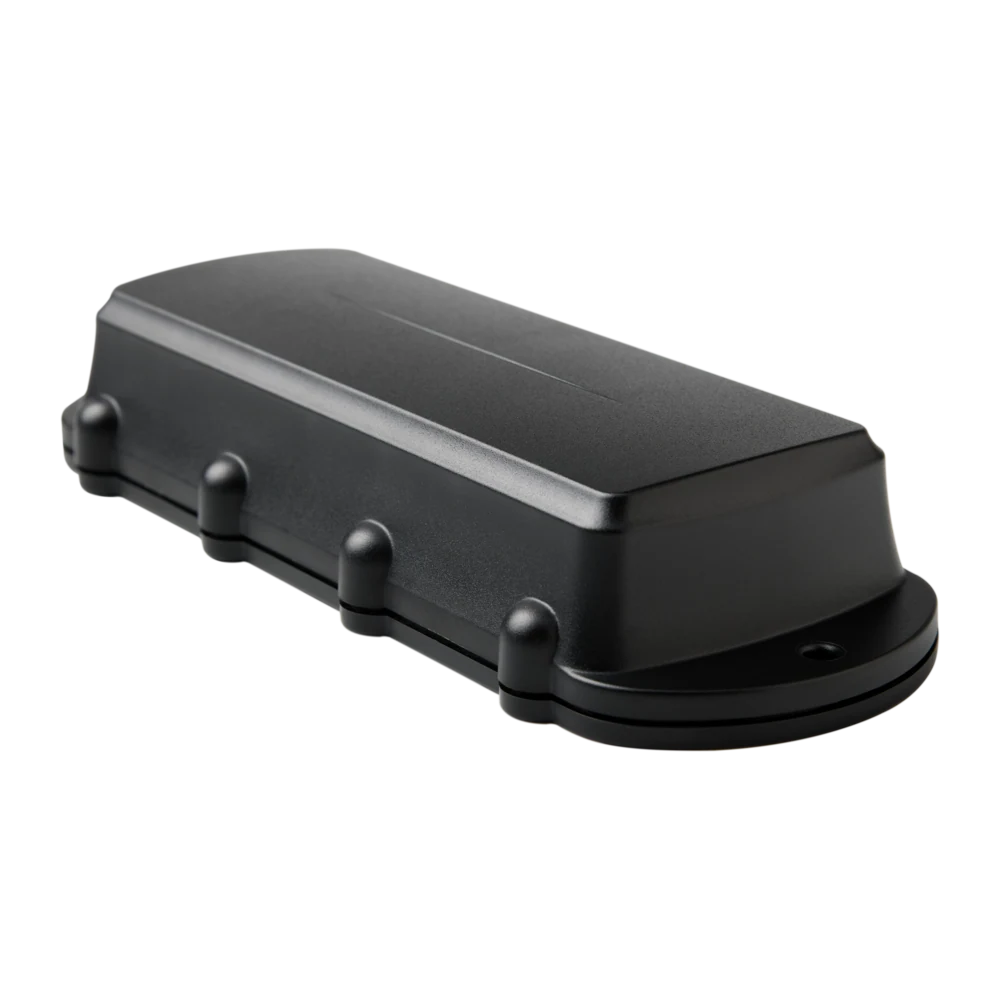
Remora3 Global GPS tracker on 4G Cat1bis with 2G fallback, Bluetooth 5.2 gateway
Remora3 GPS tracker on 4G LTE-M / NB-IoT with Bluetooth 5.2, massive battery life
Manta form-factor GPS-only tracker on 4G LTE-M / NB-IoT
Tell us what you run, where you run it and the risk profile. We'll match the hardware, platform and rollout plan to your operation.