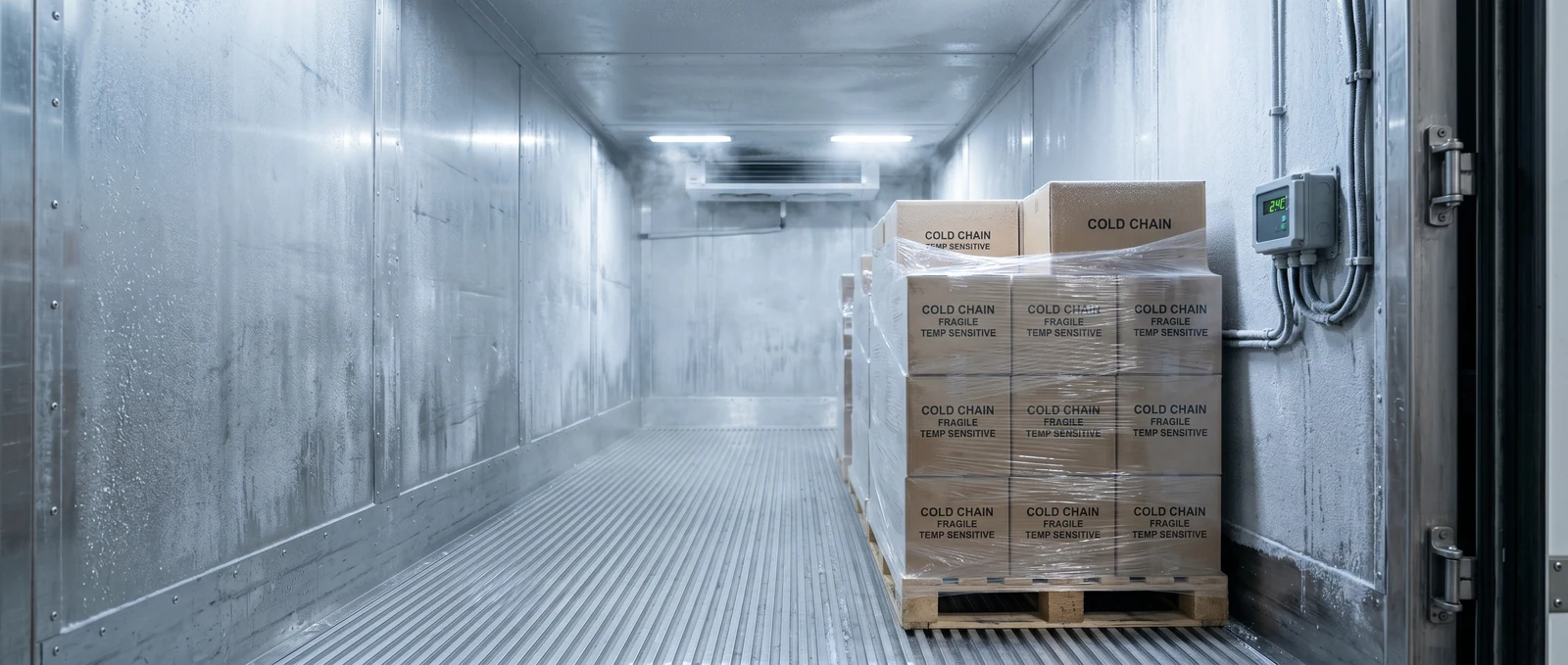
A Sandton corporate server room carries a 14-rack ICT footprint behind a Friday-night unattended weekend. Sunday at 02:47 the load-shedding curtailment window cuts grid power, the UPS holds the racks but the HVAC compressor sits outside the UPS scope, and the room temperature begins to climb. The on-call engineer's uptime monitoring is watching ping latency and CPU; nothing in the dashboard is watching the room. By 03:34 the ambient hits 30 degrees, by 04:12 a switch in the top of rack reboots itself thermally, and the after-incident report on Monday morning says "intermittent network event, root cause under investigation." It was the room. That is the gap this page closes.
Direct answer
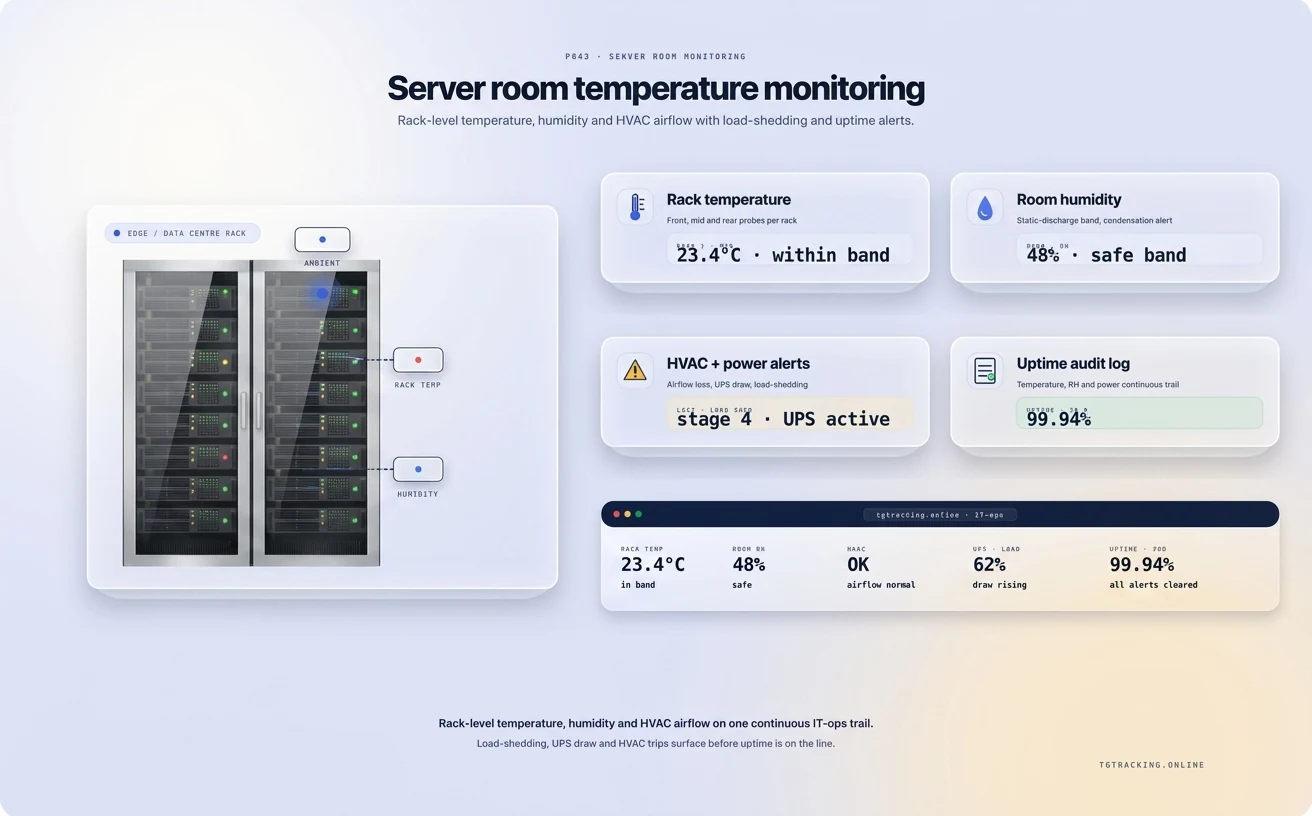
Server room temperature monitoring from TG Tracking puts rack-level temperature, humidity, airflow and power-state sensors into your IT environment, with alerts that escalate to the on-call rotation before ambient drift becomes a hardware-failure event. The platform sits inside Temperature and Cold Chain Monitoring on a shared sensor stack, but the operating context is IT uptime not food safety, and the configuration, escalation and reporting are tuned for an IT operations manager under Business solutions.
Why uptime monitoring alone misses the room
A modern uptime stack watches the application, database and network. None of those layers see the physical room until hardware fails because of it. By the time a switch reboots thermally, the room has been out of spec for 30 to 90 minutes.
Rack-level ambient drift. A wall-mounted thermometer averages hot and cold aisles. The hot aisle in front of a high-density rack can be 12 degrees warmer. Rack-level probes catch the drift before servers throttle.
HVAC failure that does not trip a UPS. A blown condenser does not interrupt rack power. The UPS holds, the application stays up, and temperature climbs. A dedicated airflow and power-state sensor catches the cooling loss inside minutes.
Humidity drift driving static discharge. A hall below the discharge threshold creates failure conditions for patching. A humidity probe per zone catches the conditions before the event.
Hardware failure rate, replacement cost and the load-shedding multiplier
Server-room monitoring is rarely about catastrophic failure. It is about the slow drift that drops a rack three years short of life and multiplies replacement cost across the estate.
Hardware failure rate is non-linear with ambient temperature. A rack at 30 degrees ages faster than one at 22. A rack hitting 35 degrees on load-shedding Sundays racks up exposure warranties do not cover. The platform writes the per-rack curve over months.
Load shedding makes the math worse. SA HVAC compressors typically sit outside the UPS envelope; when the grid drops and the genset is slow, the room heats up while racks stay powered. Grid, genset and ambient probes show the cooling-gap per outage. The case for recommissioning HVAC onto the genset lives in the data.
For a multi-site estate, per-site dashboards roll up into Business Intelligence Dashboards with four numbers: rack-hours over spec, HVAC events, humidity deviations, grid-to-genset timing.
South African IT context: edge sites, MDF rooms and remote hubs
SA enterprises rarely operate a single data hall. The pattern is one or two larger rooms in Sandton or Cape Town and a long tail of MDF rooms, comms cabinets and edge sites from Polokwane to Port Elizabeth.
The platform handles those topologies in one stack. Wireless sensors keep deployment simple at remote sites. One control room covers the Sandton hall, the branch comms cabinet and the DR site. For IT equipment moving between sites, Asset Tracking and Recovery and Wireless asset tracking sit in the same platform. For UPS rooms and outdoor ambient, see Environmental sensor monitoring under Remote sensor monitoring. See also Cold storage, Refrigerated transport, Food production, Farming temperature monitoring and Industries we serve.
Frequently asked questions
How does this differ from my UPS or BMS monitoring?
A UPS reports power. A BMS reports the building. Neither watches rack ambient or per-zone humidity at the granularity needed to catch slow thermal drift. The platform fills that gap.
Can I monitor at the rack level rather than the room level?
Yes. Rack-level probes report front, top and rear ambient, with airflow sensing on high-density racks. The per-rack log catches drift the room average misses.
How fast is the alert?
The alert escalates on the next reporting cycle after a sustained breach. An HVAC failure on a Sunday night reaches the on-call engineer within minutes.
Will the sensor still report during a full grid and genset outage?
The sensor runs on its own power and continues recording. Cellular reporting depends on connectivity. Where the network is also down, readings cache and upload when it returns.
Can I integrate the alerts into my existing on-call rotation?
Yes. The alert tree pushes to email, SMS, app push and webhook for PagerDuty, Opsgenie or an ITSM stack. Escalation keeps logging when the first responder does not acknowledge.
Does it work for a small MDF room or branch comms cabinet?
Yes. A two- or three-sensor deployment for a small MDF room is typical. The platform supports sites from a single cabinet to a multi-hall data centre.
Can I prove a hardware-warranty claim with these logs?
Yes. The continuous per-rack ambient log, HVAC timeline and humidity record give the warranty claim the environmental record vendors ask for.
Watch the room before the room takes the rack down
Uptime monitoring sees the symptom. The platform sees the cause. The temperature curve on the night the switch rebooted closes the post-incident review.
Recommended hardware
The right tracking layer for server room temperature monitoring.
Vehicle, asset, driver and reporting hardware tuned to the way real businesses run fleets.
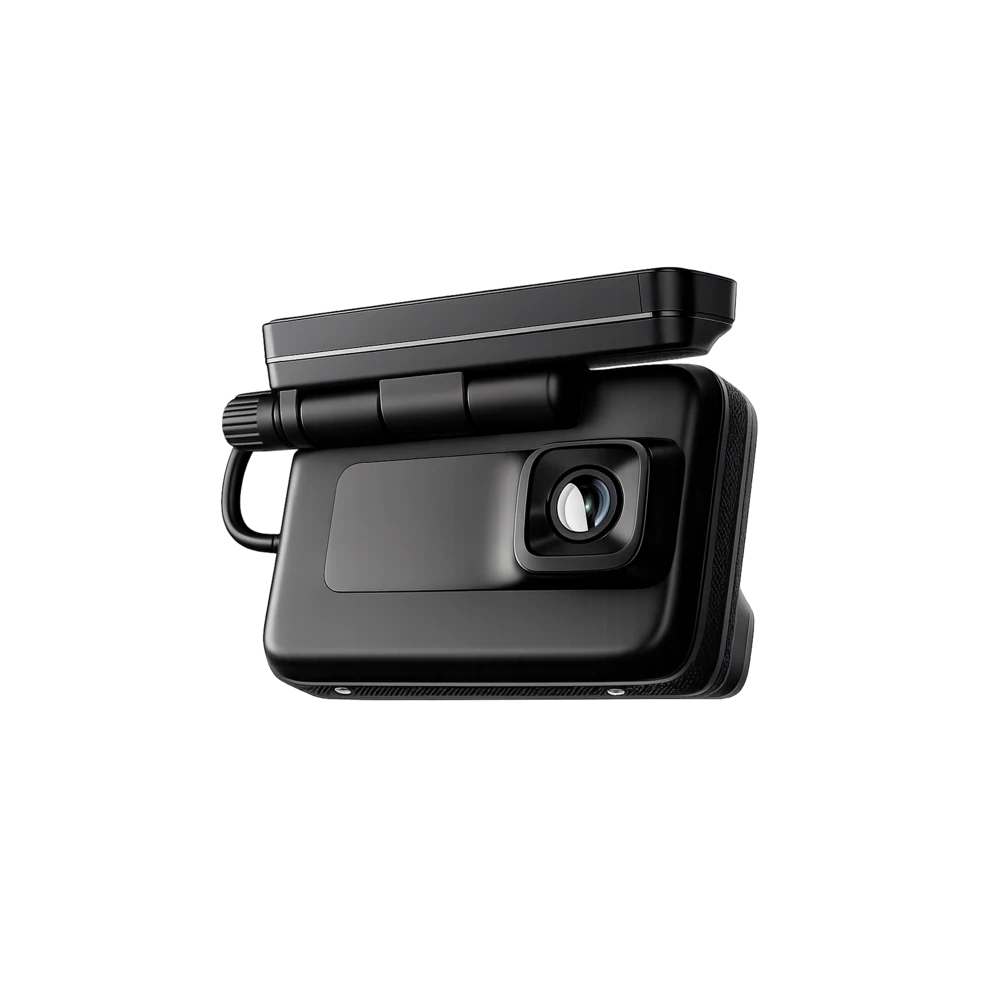
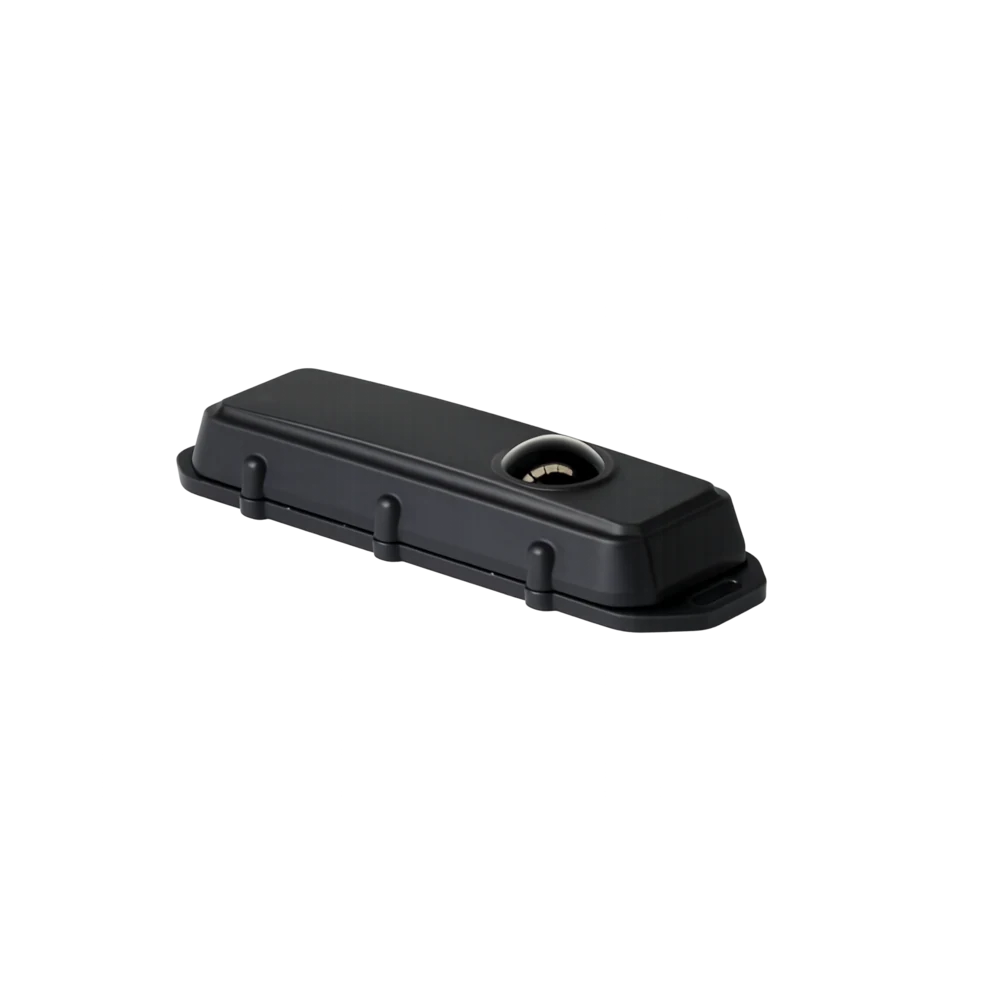
BARRA-RADAR-BLE · Wireless trackers
Barra Radar BLE
Object and Level Detection via Radar Bluetooth device in Barra form-factor (batteries not included)
IN STOCK · ZAR
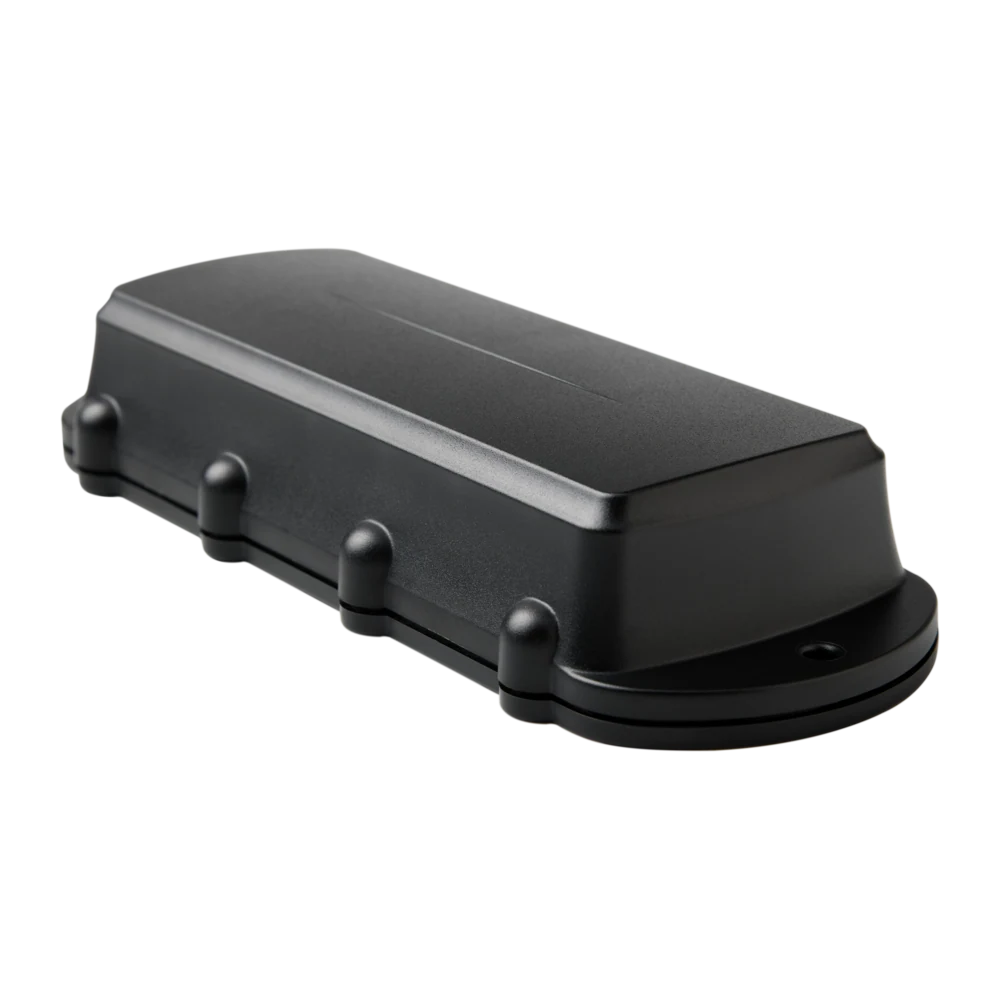
REMORA3-GLOBAL · Wireless trackers
Remora3 Global
Remora3 Global GPS tracker on 4G Cat1bis with 2G fallback, Bluetooth 5.2 gateway
IN STOCK · ZAR
More in Business
Business overview
Related business solutions.
Talk to TG Tracking
Add Server Room Temperature Monitoring to your fleet operating layer.
Tell us what you run, where you run it and the risk profile. We'll match the hardware, platform and rollout plan to your operation.