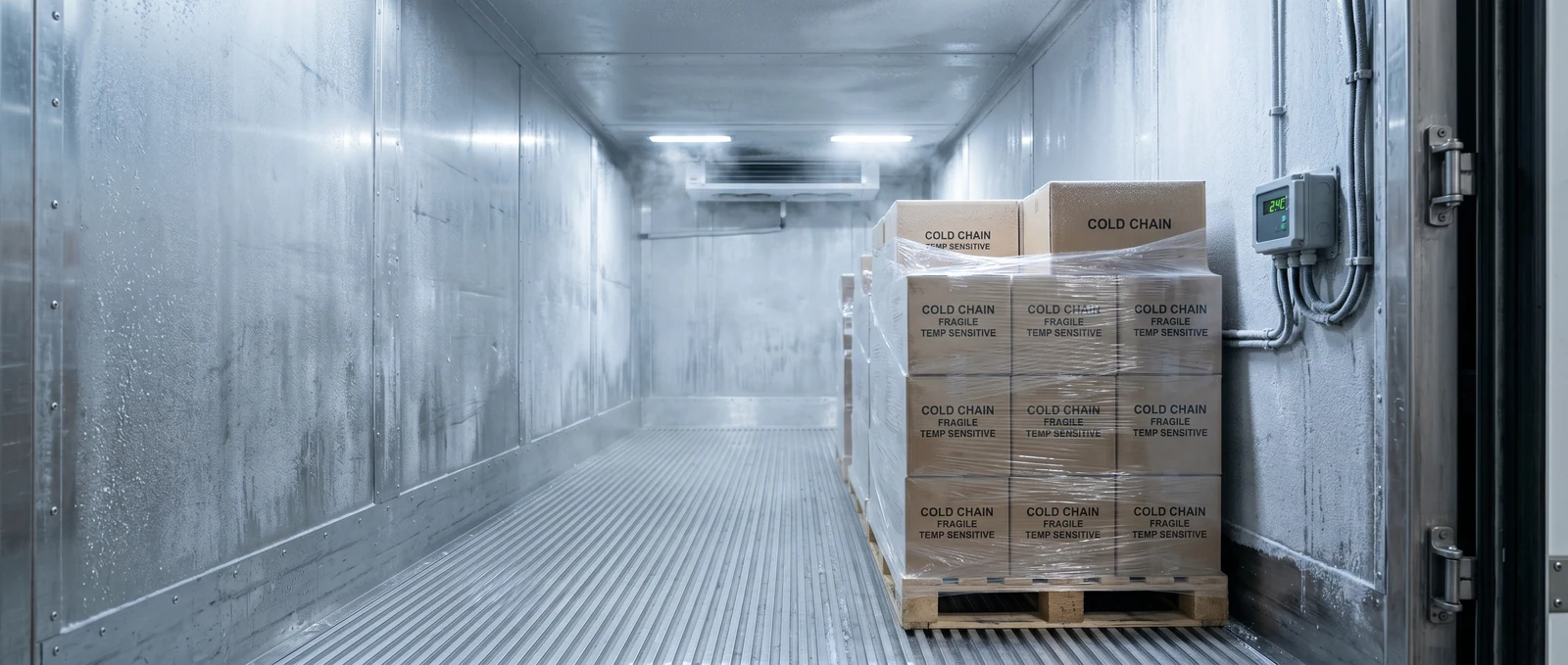
A reefer trailer pulls out of a Cape Town packhouse at 03:00 with 22 pallets of late-season citrus on a four-day run to the Durban port and a vessel sailing for Rotterdam on Wednesday afternoon. Somewhere on the long climb between Beaufort West and Three Sisters the compressor short-cycles, runs four minutes on, six off, and the rear-door zone drifts up by 4 degrees before the driver notices at the next refuel. The buyer at the other end will reject any pallet outside spec. The difference between a delivered load and a write-off is the alert that fires inside that gap, plus a log that proves every other hour of the trip held inside the spec window.
Direct answer
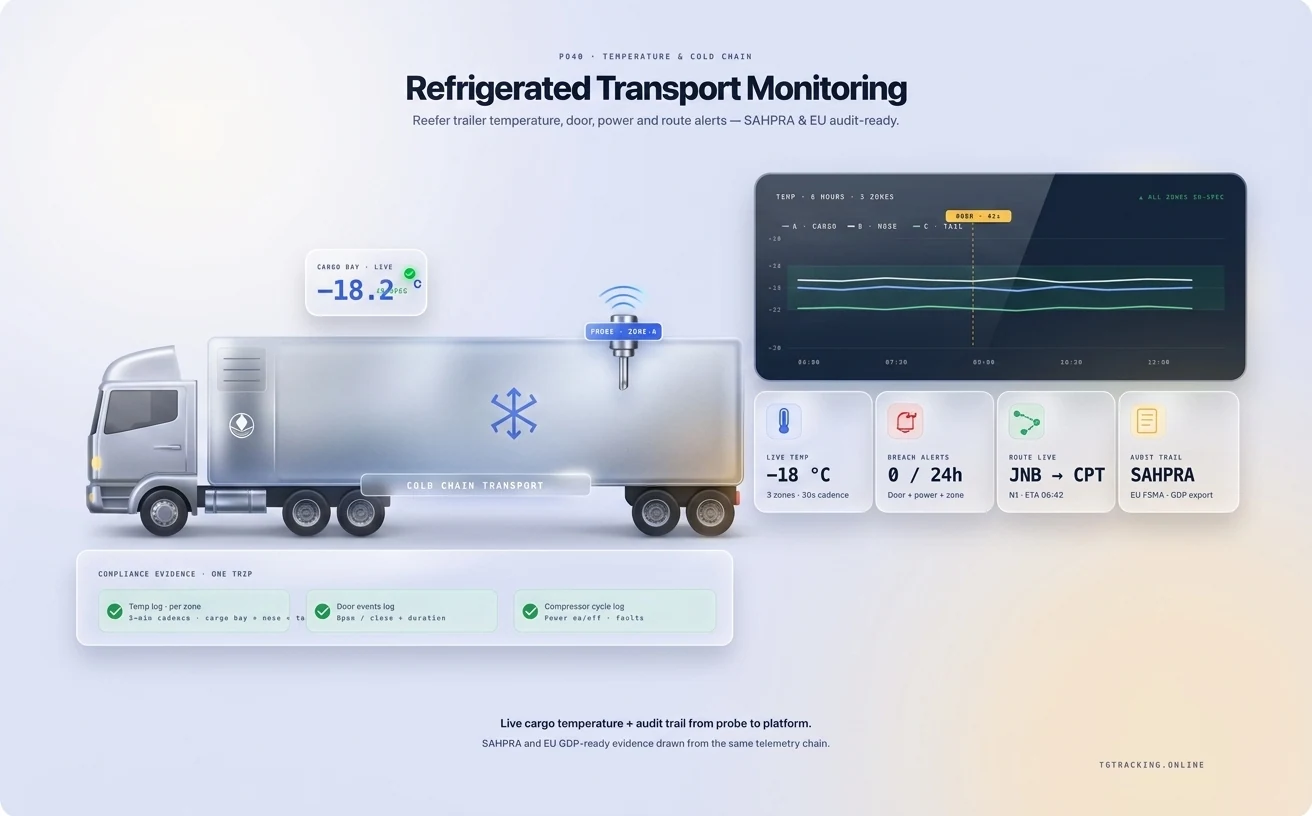
Refrigerated transport temperature monitoring from TG Tracking covers reefer trailers, refrigerated trucks and refrigerated vans on long-haul, regional and last-mile routes. Multi-zone in-transit probes, door sensors, compressor power-loss alerts and route-linked audit logs run on the same platform as your Trailer Management and Fleet Tracking and Management, and feed into the parent pillar Temperature and Cold Chain Monitoring for cross-application reporting.
What goes wrong inside a moving reefer
A reefer is a pressurised micro-climate moving at 90 km/h. Three things go wrong, often in combination, and a temperature gauge alone catches none in time.
Compressor short-cycle on idle or hill descent. The unit cycles too fast, the cold air does not redistribute, and the rear zone drifts before the front-zone gauge shows it. A multi-zone probe with 5-minute reporting catches the divergence early.
Door-open events at customer drops. Multi-stop loads spend time with the back door open while a forklift swings pallets out. A 3-minute door-open threshold turns long stops into an alert before the cold air is gone.
Power loss on idle or coupling change. A tractor change at a yard, a fault on the diesel circuit, each one cuts cooling. A power-state sensor distinguishes a planned defrost from an unplanned stop.
Building an audit trail that survives a customer dispute
The temperature reading is the easy part. The hard part is producing a record, weeks later, that satisfies an EU buyer, a SAHPRA inspector or an insurer that cargo held spec for the trip.
The platform writes a continuous, time-stamped log per zone, with GPS, door state and power state on the same timeline. When a customer queries a load, the export is one PDF with the curve, the deviation, the cause and the recovery. A SAHPRA-style audit window is a 10-second filter.
The integrated record also holds together an insurance claim. Without an in-transit log, the claim depends on goodwill. With a curve, a door-open log and a power-state event tied to GPS, it has evidence behind it.
South African corridors that put cold chains under pressure
South African reefer routes have specific stress points. The Cape Town to Durban citrus run hits N1 passes where ambient temperature swings 20 degrees inside an hour. The Joburg to Cape Town meat loop goes through Karoo heat that pushes any compressor to its duty-cycle limit. Cross-border runs into Maputo and Beit Bridge hit border-post dwell times where a reefer sits idling in 35-degree heat.
Multi-network connectivity carries the in-transit feed across corridors where one network drops. Where signal is weak, the device caches readings locally and uploads when coverage returns.
For reefer trailers without constant power during depot stays, Wireless asset tracking hardware sits inside the same platform. For conditions at the depots and packhouses, see Environmental sensor monitoring and the parent Remote sensor monitoring page. The cold-chain story lives at Temperature and Cold Chain Monitoring, with the broader view at Business solutions.
Frequently asked questions
How many temperature zones can I monitor on one reefer?
A typical reefer runs front and rear zones. Mixed loads where one pallet is at minus 18 and another at plus 4 need pallet-level probes. The platform supports multi-zone configuration, with the count decided per cargo profile.
How fast does an alert fire after a temperature breach?
The alert fires on the next reporting cycle after the breach is sustained beyond the configured tolerance. The default interval is short enough that a real breach is on the dispatcher's screen within minutes.
What happens when the truck is out of cellular coverage?
The probe caches readings locally and uploads when signal returns. The time-stamp is set at the moment of measurement, so the audit log is continuous rather than gappy.
Will the system catch a compressor short-cycle?
Yes. A short-cycle shows up as repeated power-state transitions inside a window where the duty cycle says the compressor should be steady. Both the pattern and the resulting drift fire alerts.
Does it work for pharmaceutical and vaccine consignments?
Yes. Vaccines and lab materials run on the same platform with tighter spec windows and a different audit-log template. Local pharmaceutical references are reviewed during onboarding.
Can I share an in-transit cold chain report with my customer?
Yes. Customer-share links and per-load delivery reports are part of the platform. A retail buyer who insists on a temperature trace per delivery can have it, scoped to that load.
How does this fit with my reefer manufacturer's onboard logger?
The manufacturer's logger reports to its own portal. The TG platform runs alongside or replaces it, and joins the temperature record to the GPS track, the driver, the door and the power state. The integrated record is the one that wins disputes.
Protect every load from depot to dock
If your cargo is rejected at spec, the in-transit record is what stands between a delivered load and a write-off.
Recommended hardware
The right tracking layer for refrigerated transport temperature monitoring.
Vehicle, asset, driver and reporting hardware tuned to the way real businesses run fleets.
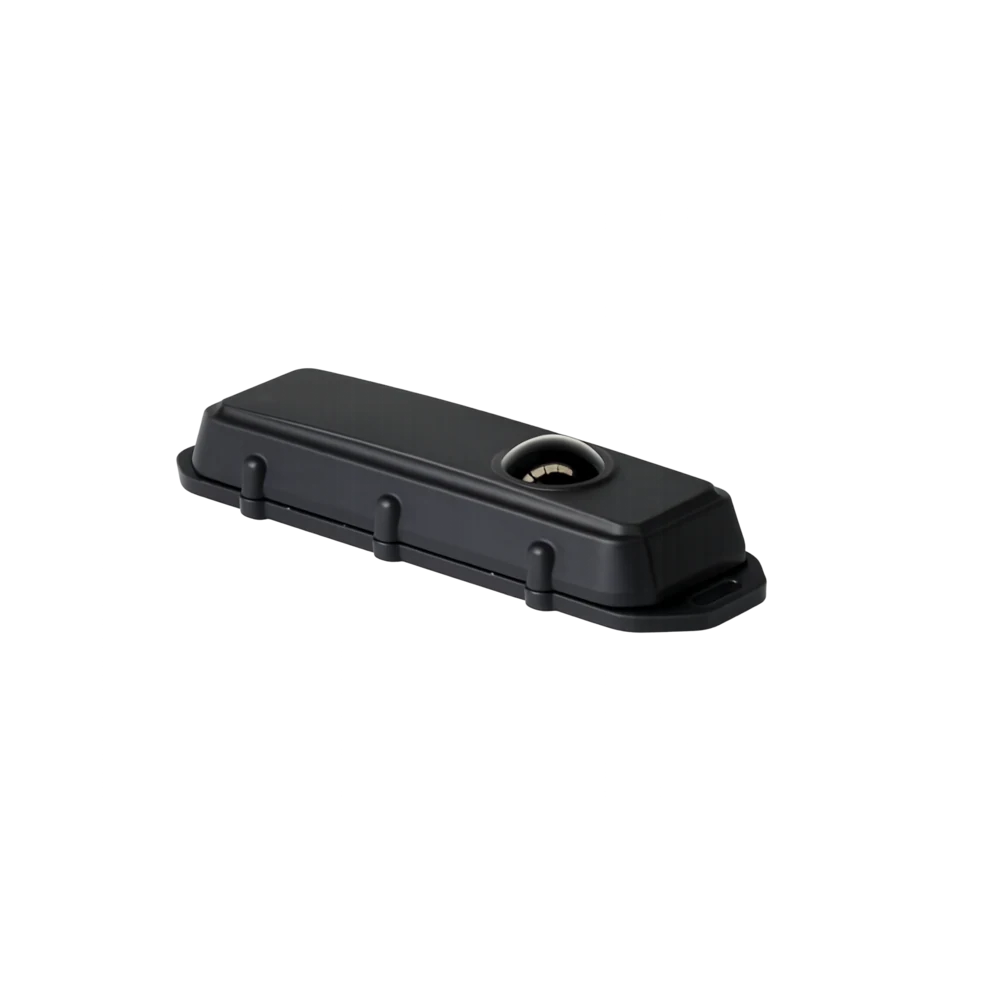
BARRA-RADAR-BLE · Wireless trackers
Barra Radar BLE
Object and Level Detection via Radar Bluetooth device in Barra form-factor (batteries not included)
IN STOCK · ZAR
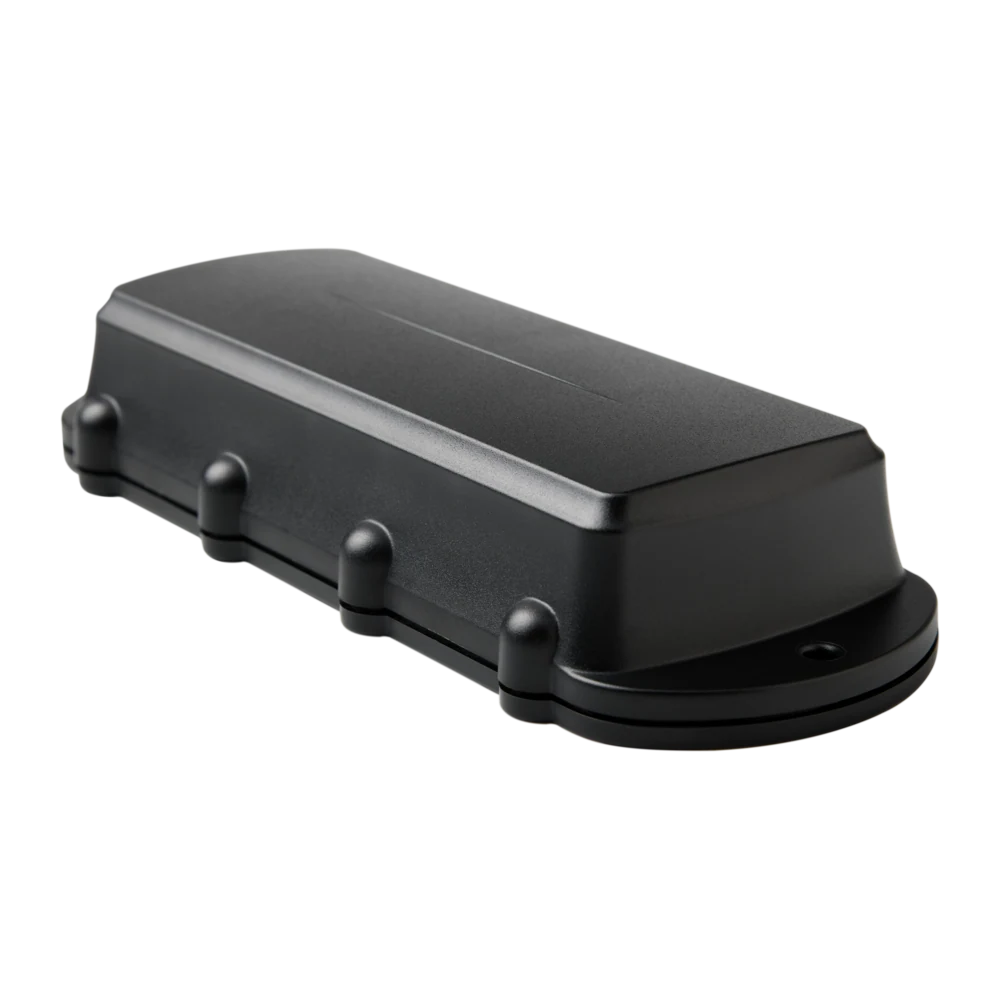
REMORA3-GLOBAL · Wireless trackers
Remora3 Global
Remora3 Global GPS tracker on 4G Cat1bis with 2G fallback, Bluetooth 5.2 gateway
IN STOCK · ZAR
More in Business
Business overview
Related business solutions.
Talk to TG Tracking
Add Refrigerated Transport Temperature Monitoring to your fleet operating layer.
Tell us what you run, where you run it and the risk profile. We'll match the hardware, platform and rollout plan to your operation.