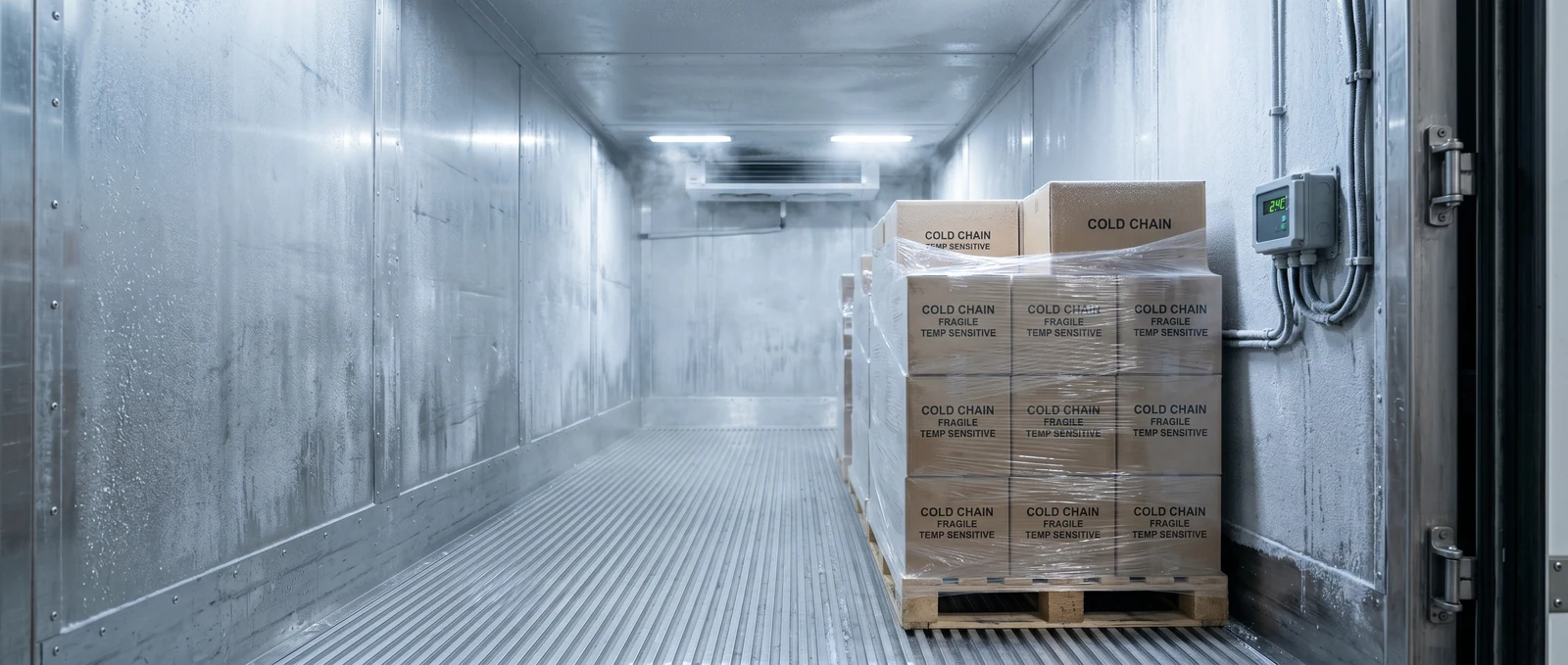
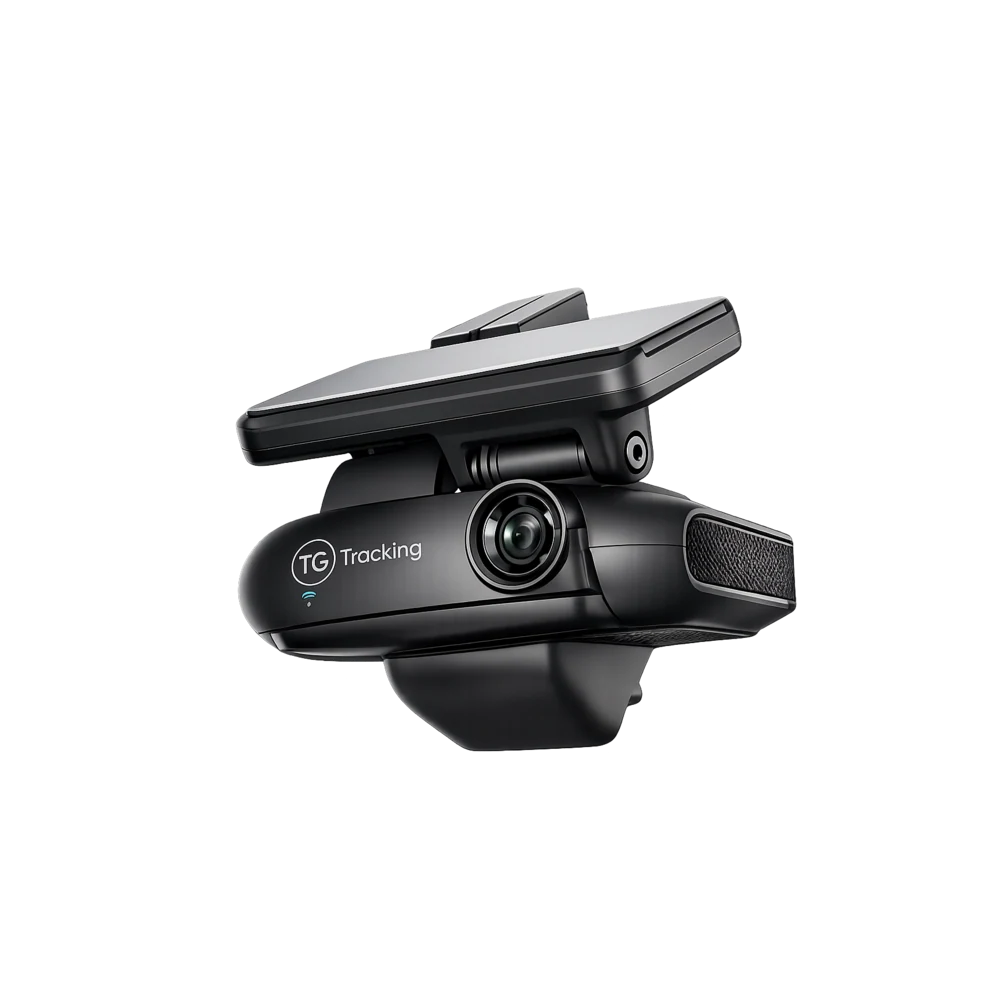
Every packhouse, cold room, hatchery, wine cellar and bulk tank reports its temperature curve continuously to one platform. The export-ready record runs from harvest through pre-cooling and into the reefer that leaves for the Durban port, paired with the door cycles, the power state and the grid-state events along the way. The EU buyer sees a customer-share link with the per-load curve. The packhouse manager opens the dashboard at 06:00 and sees the full season's history on one screen.
Direct answer
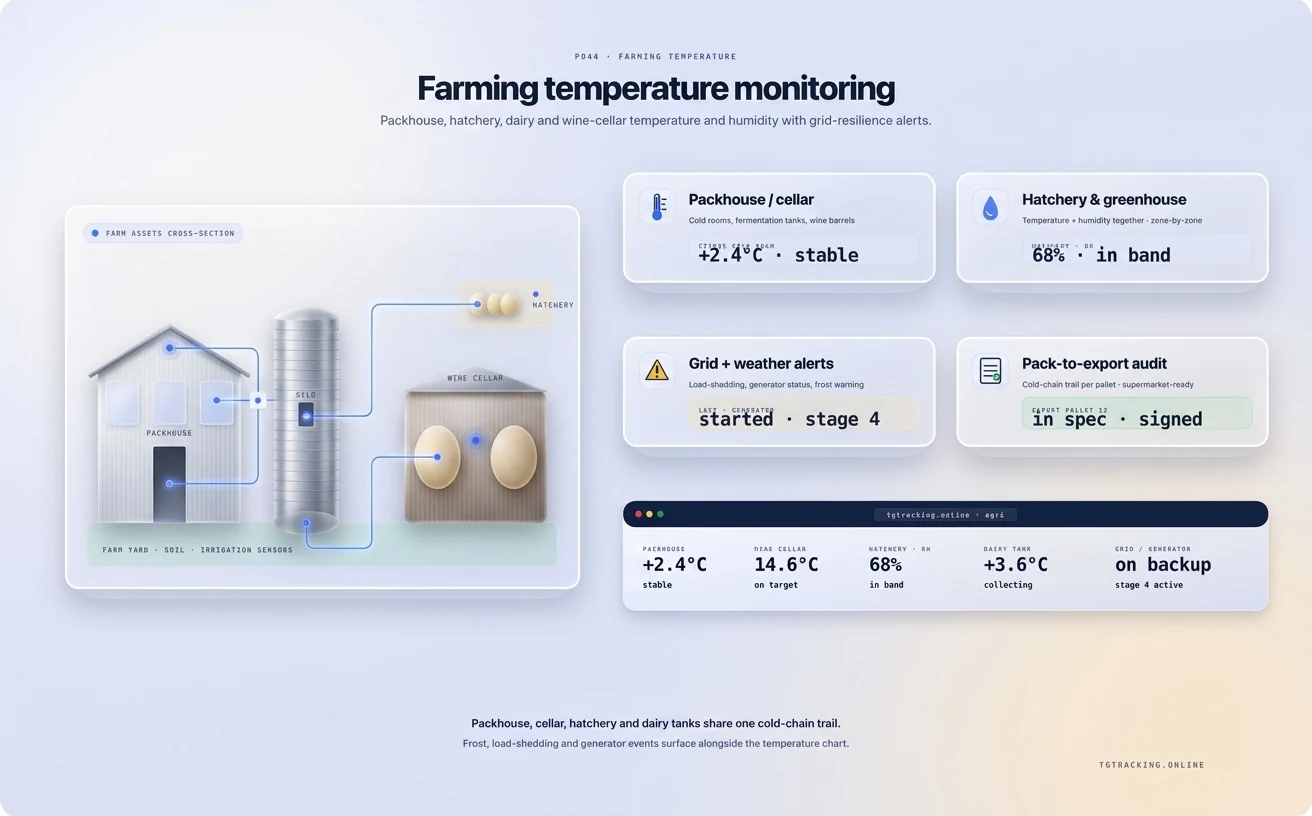
Farming temperature monitoring from TG Tracking puts wireless temperature, humidity and ventilation sensors across packhouses, cold rooms, tunnels, greenhouses, hatcheries, dairies, wine cellars, sheds and bulk tanks, with weather, grid and genset resilience tuned for remote-farm operations. The platform sits inside Temperature and Cold Chain Monitoring and shares the audit-grade record with downstream cold-chain transport on Refrigerated transport for export-bound product, all under Business solutions.
Five very different farm environments, one sensor stack
A farm in South Africa is a broad term. A Limpopo citrus packhouse looks nothing like a Western Cape wine cellar or a Mpumalanga broiler hatchery. The platform configures per environment.
Packhouses and on-farm cold rooms. Citrus, table grape, avocado. Pre-cooling, holding and dispatch checkpoints matter for pre-shipping inspection. The platform writes the per-room curve.
Wine cellars and fermentation tanks. Malolactic fermentation runs on a tight spec where 1 degree changes the wine. A hand-written sheet does not catch a 4-hour drift overnight.
Hatcheries and livestock housing. Broiler hatcheries hold a tight window; a 30-minute deviation drops hatch rate. Layer barns and dairy parlours manage heat stress.
Greenhouses and tunnels. Vegetable and seedling production runs on temperature, humidity and ventilation. Combined probes catch drift on one screen.
Dairy bulk tanks. Milk holding temperature is a regulatory line. The probe writes the per-tank record per collection.
Yield, export readiness and the season's record
The same platform serves four agricultural use cases in parallel, each with the evidence the next buyer or auditor expects.
Pre-cooling and packhouse spec. Citrus, table grape and avocado exporters get an unbroken curve from the cold room through to the reefer, joined on Refrigerated transport. The pre-shipping inspection starts with the data already in the export pack.
Hatchery yield. Broiler and layer houses run on a tight thermal window. The platform logs every degree per house and fires an alert on the half-hour drift, so the hatch-rate decision stays inside the controllable window.
Wine cellar consistency. Fermentation runs to spec when the per-tank curve is continuous. The variance log survives a buyer audit, and the cellarmaster sees the same data through the season.
Dairy collection compliance. The bulk tank's holding curve is continuous between collections, time-stamped per cycle. The record settles the dispute on spec before it starts.
For agricultural assets, Asset Tracking and Recovery and Wireless asset tracking run on the same account. For weather, soil and water-tank conditions, Environmental sensor monitoring and Remote sensor monitoring sit alongside. Rollups feed Business Intelligence Dashboards.
South African farm context: distance, grid, weather, season
South African farms operate at distance from the grid, on intermittent rural connectivity, through summers hitting 40 degrees and winters below freezing. The platform is built for that reality.
Solar-assisted devices run packhouse probes where the building has solar. Multi-network SIMs cover farm roads where one network drops. Cached readings carry through coverage gaps. Power-state probes catch the genset-startup gap on load-shedding.
Seasonal pressure varies by region. Limpopo citrus peaks April to September for the EU window. Hex and Orange table grape runs December to April. Wine harvest runs February to April. Dairy runs year-round. See also Cold storage, Food production, Server rooms and Industries we serve.
Frequently asked questions
Can I monitor a packhouse cold room and a hatchery on one account?
Yes. A diversified farm with citrus packhouse, broiler hatchery, dairy parlour and wine cellar runs under one login with environment-specific alert profiles.
Will the device work where there is no Wi-Fi?
Yes. The cellular SIM connects on multi-network roaming and does not depend on Wi-Fi. Where cellular is weak, the device caches readings and uploads when signal returns.
Does it run during load shedding?
The sensor runs on its own power. Cellular reporting depends on tower power and backup duration. Grid-state and genset-state probes log recovery time, so the operator sees how long the cold room ran without cooling.
Can I share an export-pack temperature record with my EU buyer?
Yes. Customer-share links and per-load reports cover the buyer-side QA pack. The export joins the packhouse curve to the reefer on Refrigerated transport.
How does the dairy bulk tank monitoring fit with my milk collection?
The probe writes the holding curve continuously. Collection time, entry temperature and reset cycle log against the tank. Processor and farmer share the record.
Will a wine cellar fermentation probe survive the cellar conditions?
Yes. The probes are rated for cellar wash-down and humidity conditions. The right device is decided during onboarding.
Can I add weather and soil-moisture monitoring on the same account?
Yes. Environmental sensor monitoring under Remote sensor monitoring covers weather, soil and water-tank monitoring on the same platform.
Carry the season's record from packhouse to port
Harvest, packhouse, reefer and port all log to the same record. The export buyer sees the unbroken curve, the packhouse manager sees the full season on one screen, and the platform carries the audit trail through every load of the export window.
Recommended hardware
The right tracking layer for farming temperature monitoring.
Vehicle, asset, driver and reporting hardware tuned to the way real businesses run fleets.
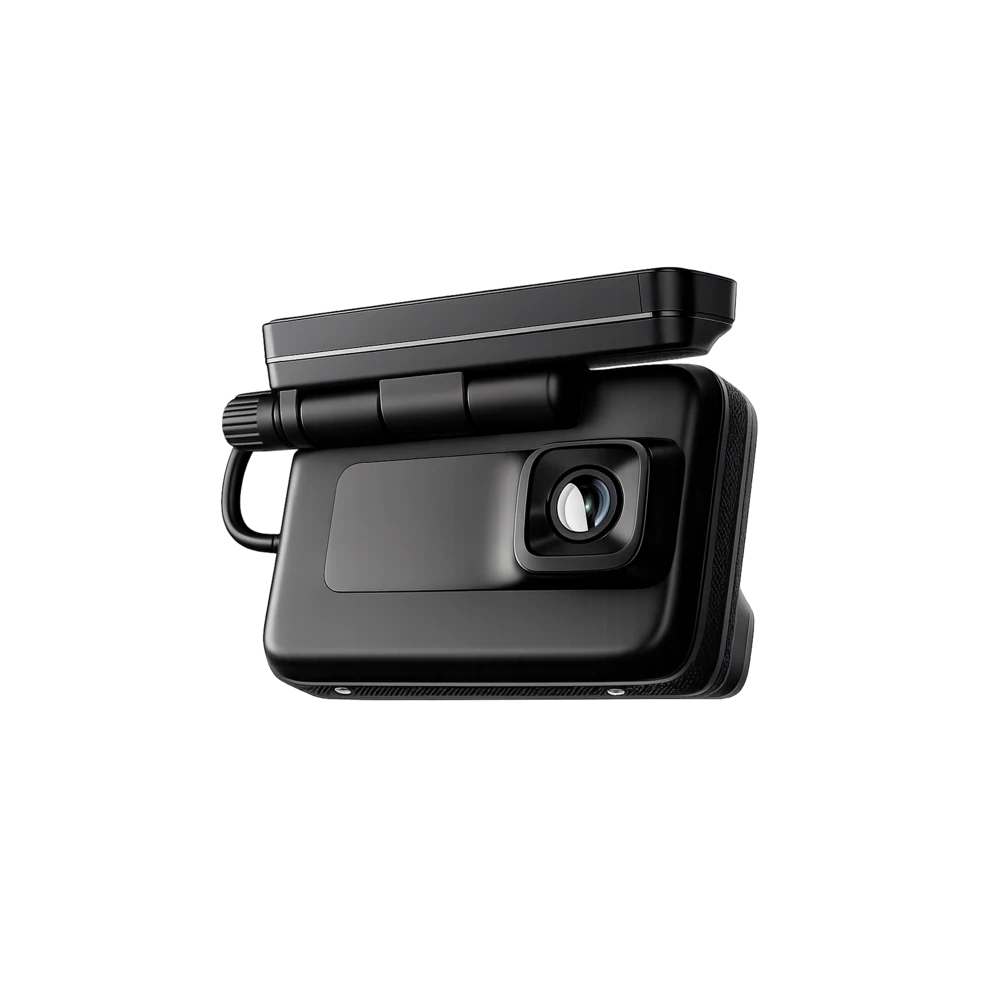
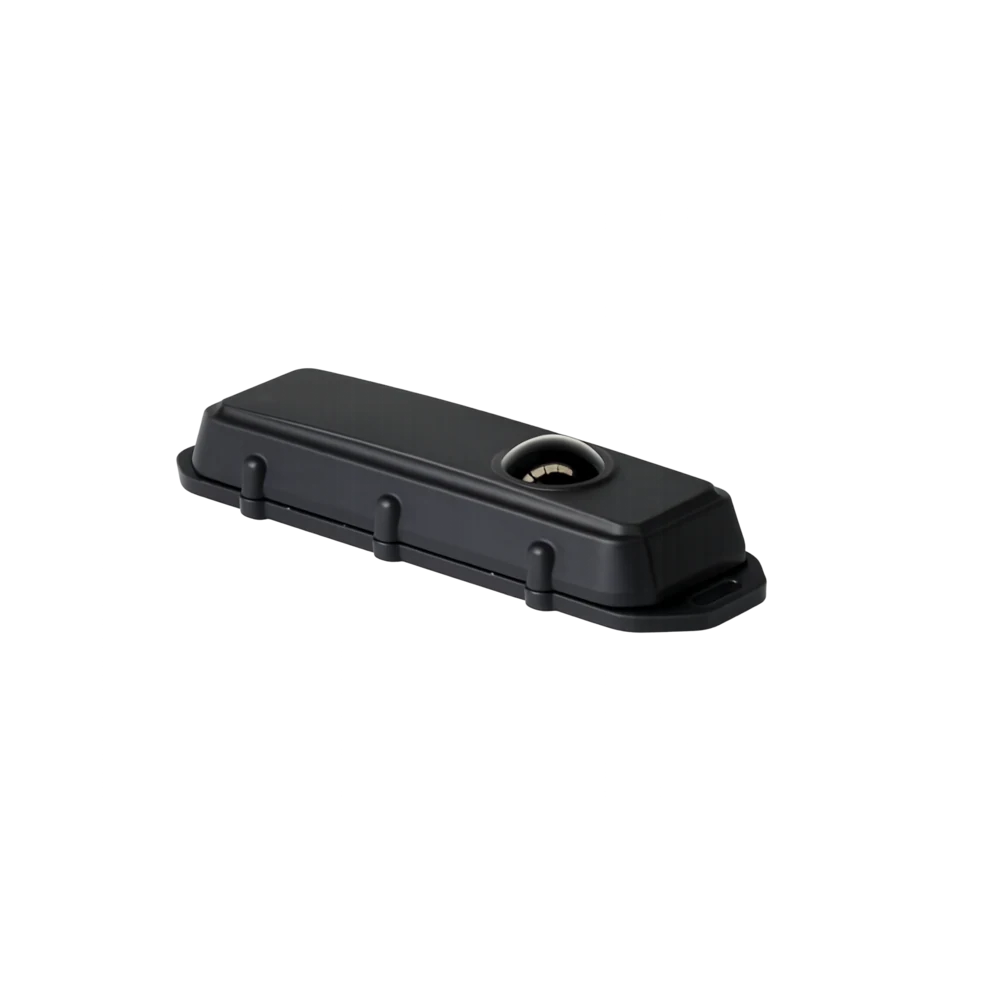
BARRA-RADAR-BLE · Wireless trackers
Barra Radar BLE
Object and Level Detection via Radar Bluetooth device in Barra form-factor (batteries not included)
IN STOCK · ZAR
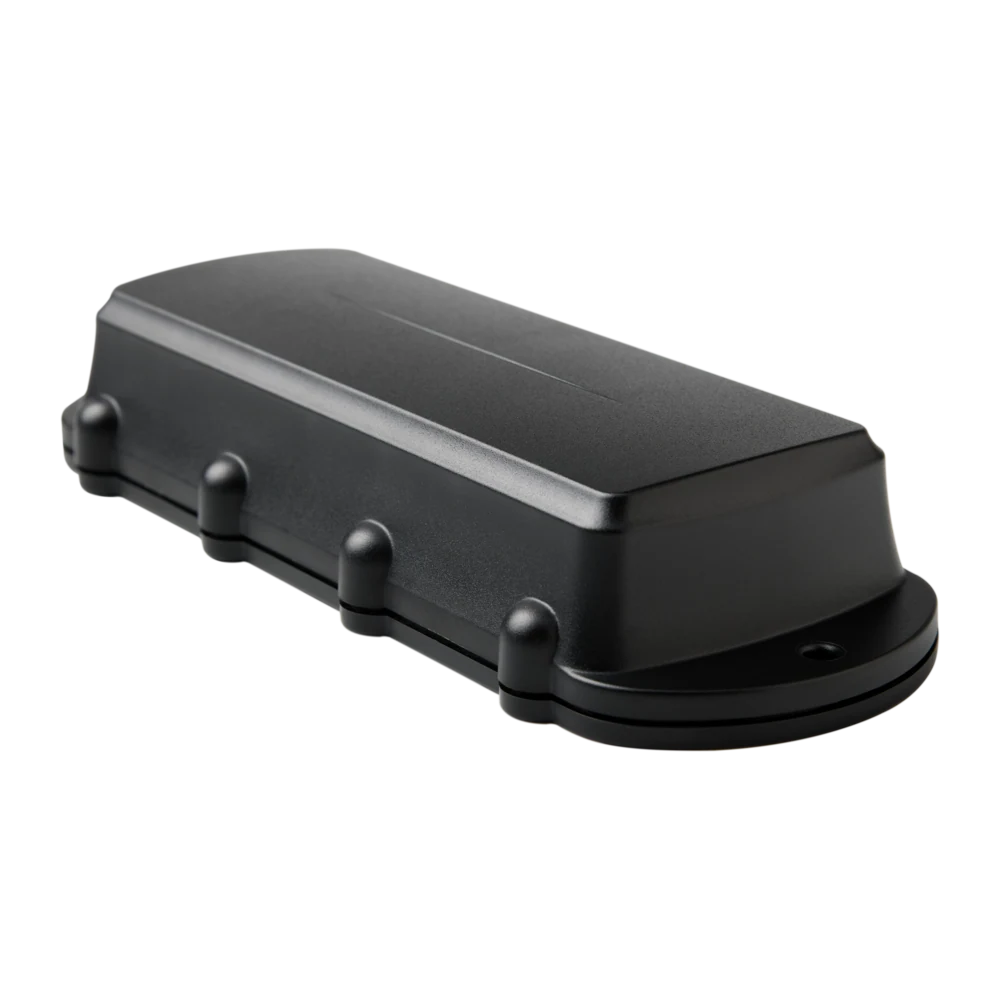
REMORA3-GLOBAL · Wireless trackers
Remora3 Global
Remora3 Global GPS tracker on 4G Cat1bis with 2G fallback, Bluetooth 5.2 gateway
IN STOCK · ZAR
More in Business
Business overview
Related business solutions.
Talk to TG Tracking
Add Farming Temperature Monitoring to your fleet operating layer.
Tell us what you run, where you run it and the risk profile. We'll match the hardware, platform and rollout plan to your operation.